
.png)
When I was a kid, my mom sent me to the supermarket to buy groceries.
She said, “Buy milk, bread, rice, and sugar.”
I replied, “Okay!”
I went to the store.
I bought most of the things.
And I always forget one item.
Sometimes it was milk.
Sometimes it was sugar.
But something was always missing.
Then one day, she stopped telling me the items.
She gave me a written list. And suddenly, I stopped forgetting things.
Getting ISO 9001 certified is exactly like that.
Most companies don’t fail because they are careless. They fail because they don’t have a clear checklist.
They work hard.
They create documents.
They prepare for months.
But during the audit, one small requirement is missing.
In 2026, audits are even stricter. Auditors don’t just check if you have documents. They check whether your system really works or not. And now, climate change must also be considered as part of your management system.
That’s why this guide is your list.
This is your complete ISO 9001 checklist for 2026.
So you don’t forget anything important.

ISO 9001 is a global standard for quality management systems, also called QMS.
In simple words, it shows that your company has a clear system to deliver consistent quality without random work or guesswork. Many organizations pursue certification because of the long-term benefits of ISO 9001 for businesses.
If you run a manufacturing company, engineering firm, logistics business, healthcare service, or SaaS company, or work with government contracts in the US, you have likely seen ISO 9001 in:
• RFP documents
• Vendor approval forms
• Client contracts
In many cases, it decides whether you make the shortlist or not.
Right now, the active version is ISO 9001:2015. It is still the official ISO standard.
But there is one important update.
In 2024, ISO added a climate change requirement. Now, every company must clearly consider how climate change could affect its business. This cannot be a simple sentence added to a policy. You must show real thought and analysis.
Auditors in the US are already asking about this.
This checklist is based on ISO 9001:2015, with updates that reflect the 2024 climate amendment and what auditors are focusing on in 2026.
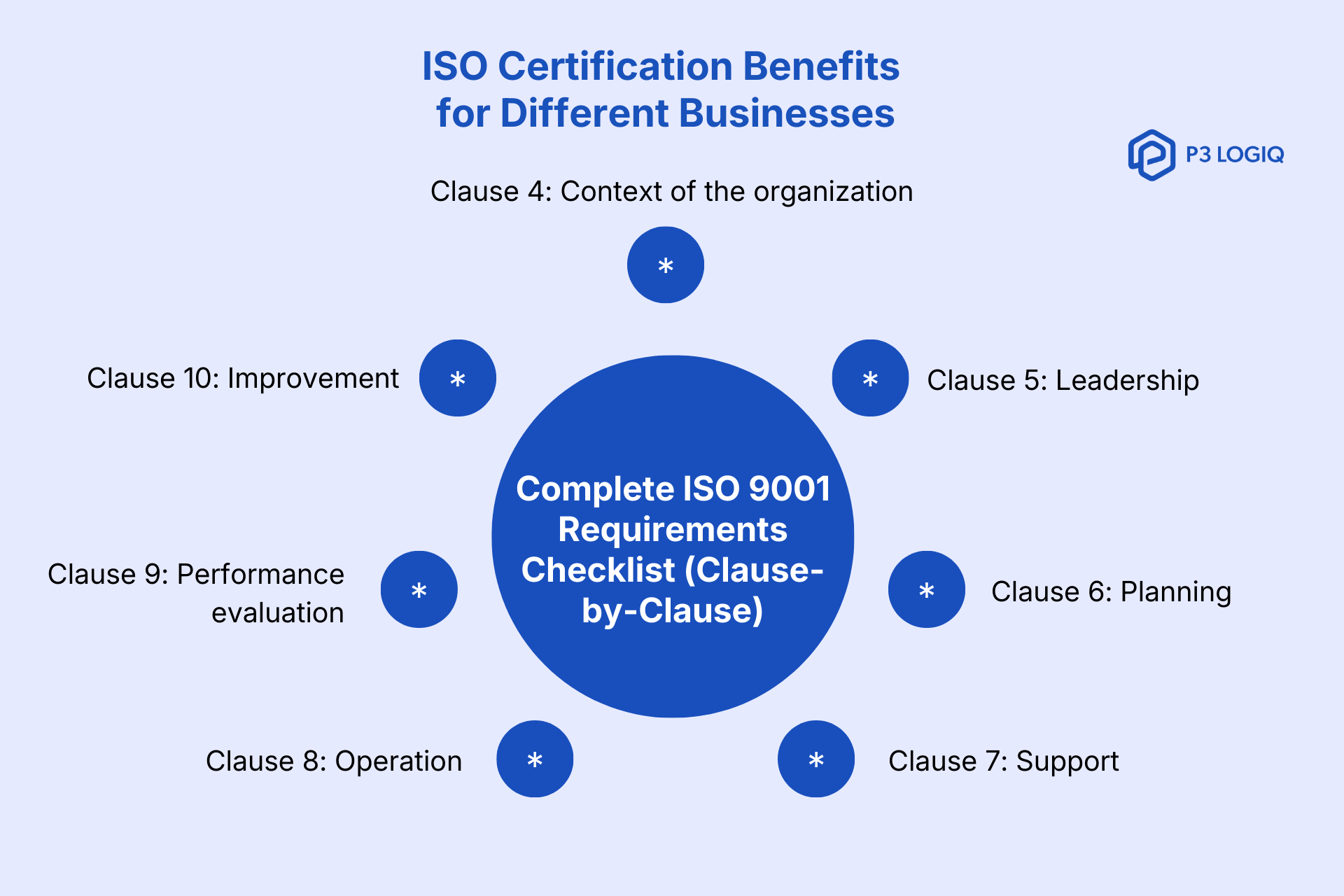
This is the heart of your implementation work. Use it as a working checklist as you get ready for certification.
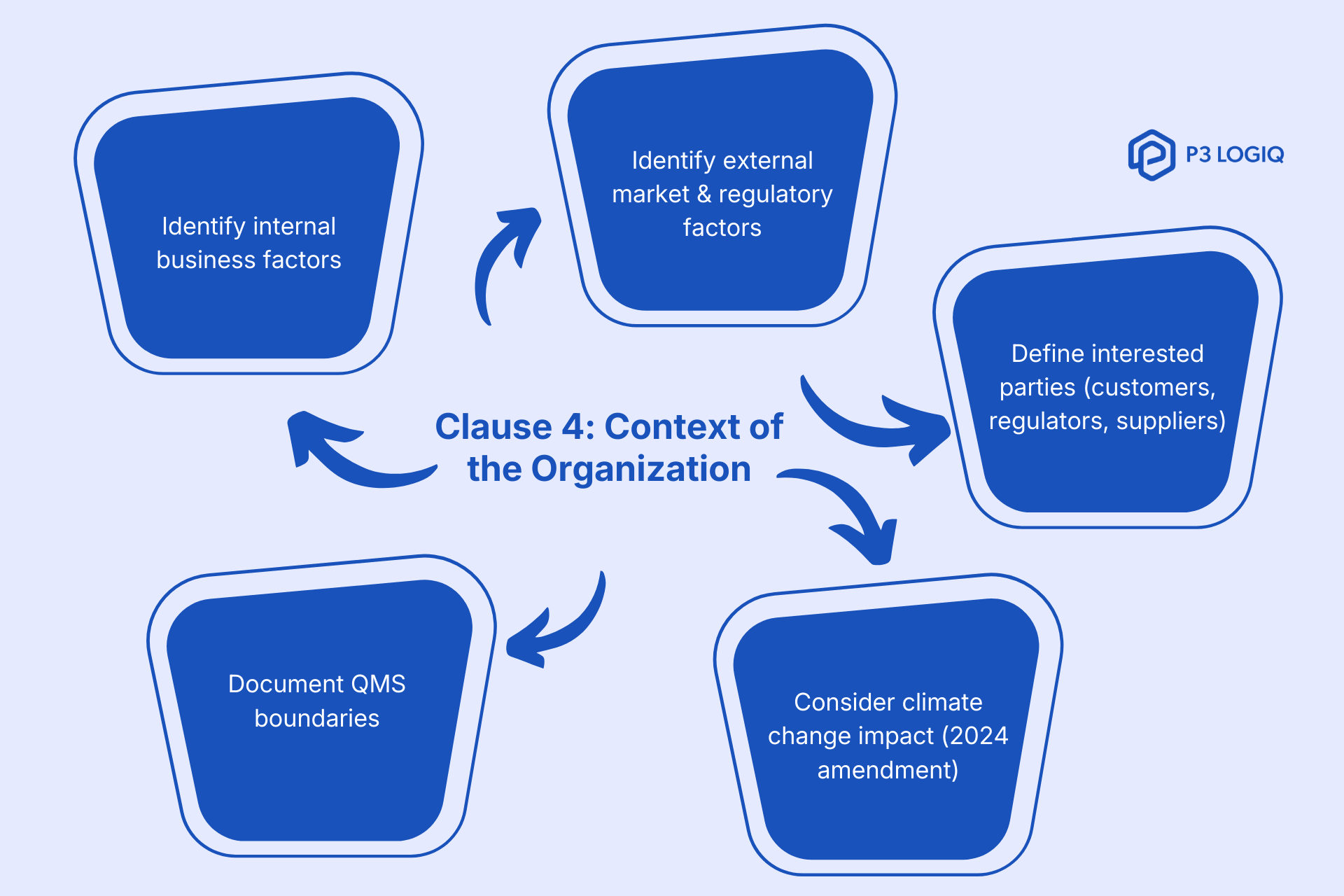
Before you build anything, you need to understand the environment you're operating in. This clause is about knowing your world and documenting it. In this clause you have to
Auditors will expect more than “climate change doesn’t affect us.” They’ll look for evidence that you actually thought about physical, regulatory, and supply chain impacts before you reached that conclusion.

For leadership, auditors want to see behavior, not just a policy on paper. That means things like
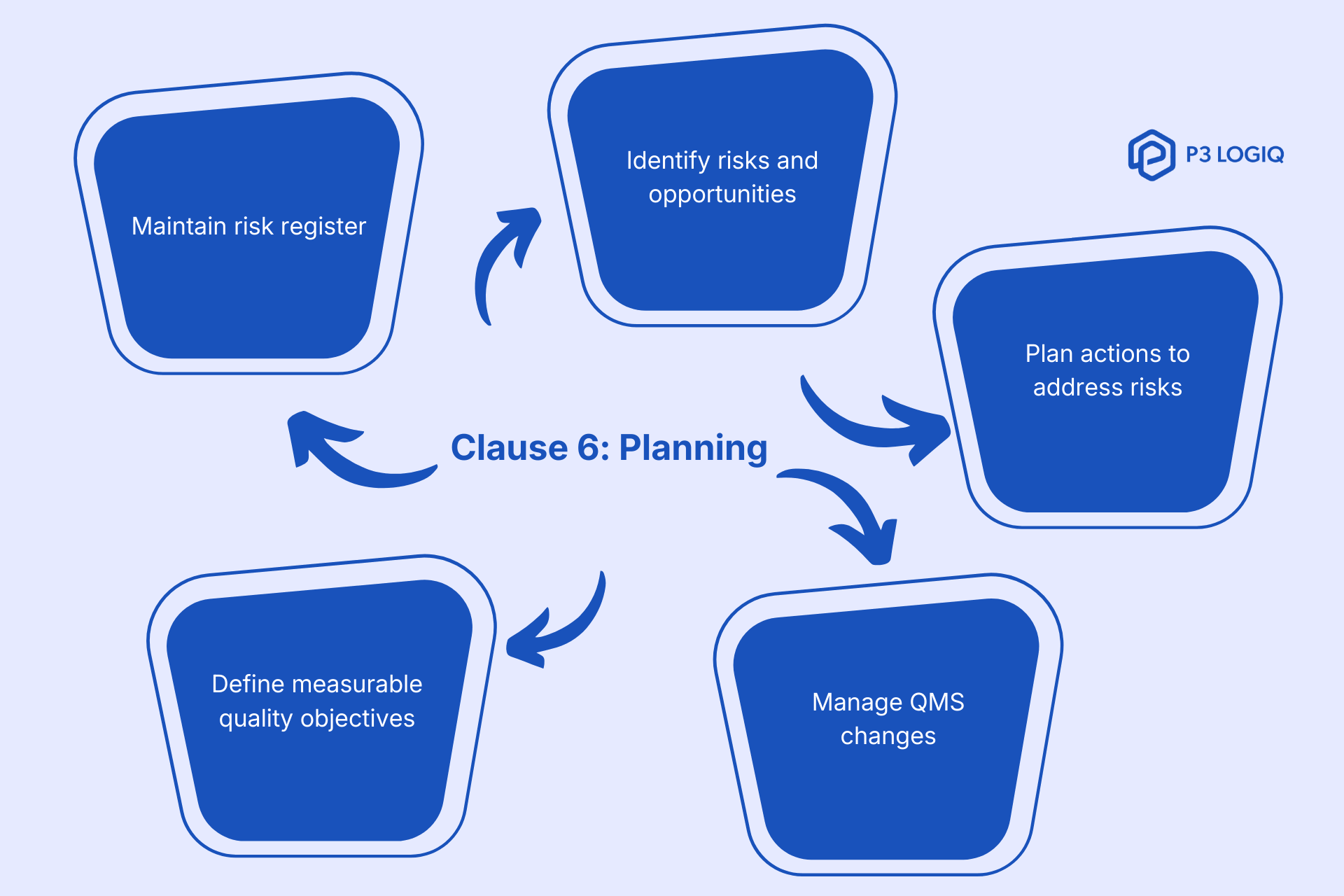
You can't build a quality system by reacting to problems after they happen. Strong systems rely on proactive risk management practices to identify issues early. That’s why ISO 9001 expects organizations to think ahead, especially when it comes to risks, opportunities, and changes.
In practice, auditors usually look for things like
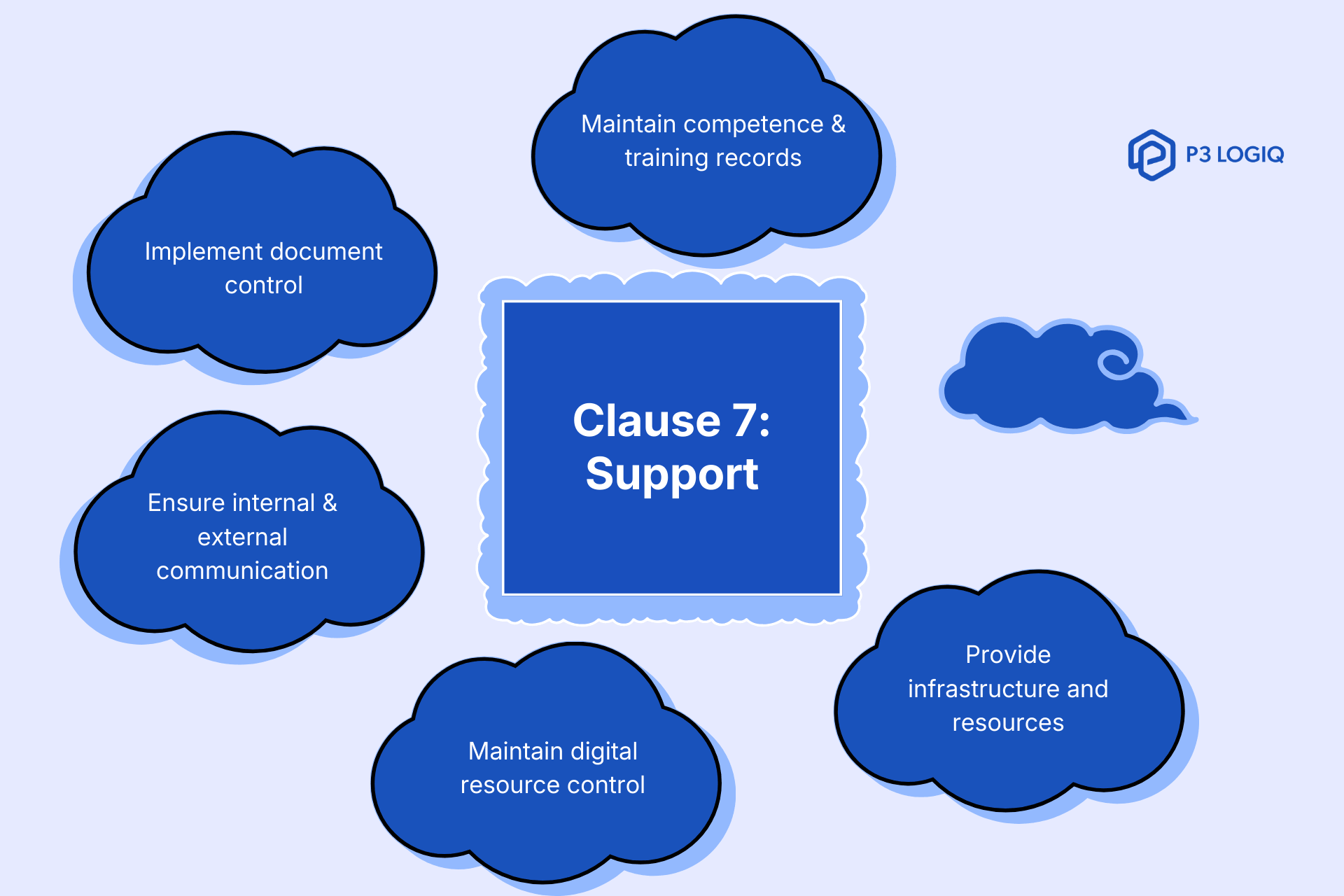
This clause asks: do your people actually have what they need to do their jobs properly?
ISO 9001 expects organizations to provide the right skills, tools, systems, and environment so processes can run consistently. Many teams now support this with training management software to track employee skills and certifications.
Auditors usually look for things like
If your QMS currently lives in shared drives and Excel sheets, that is not automatically a problem. But many organizations eventually move toward structured document management systems to maintain proper version control, traceability, and easier audit preparation.
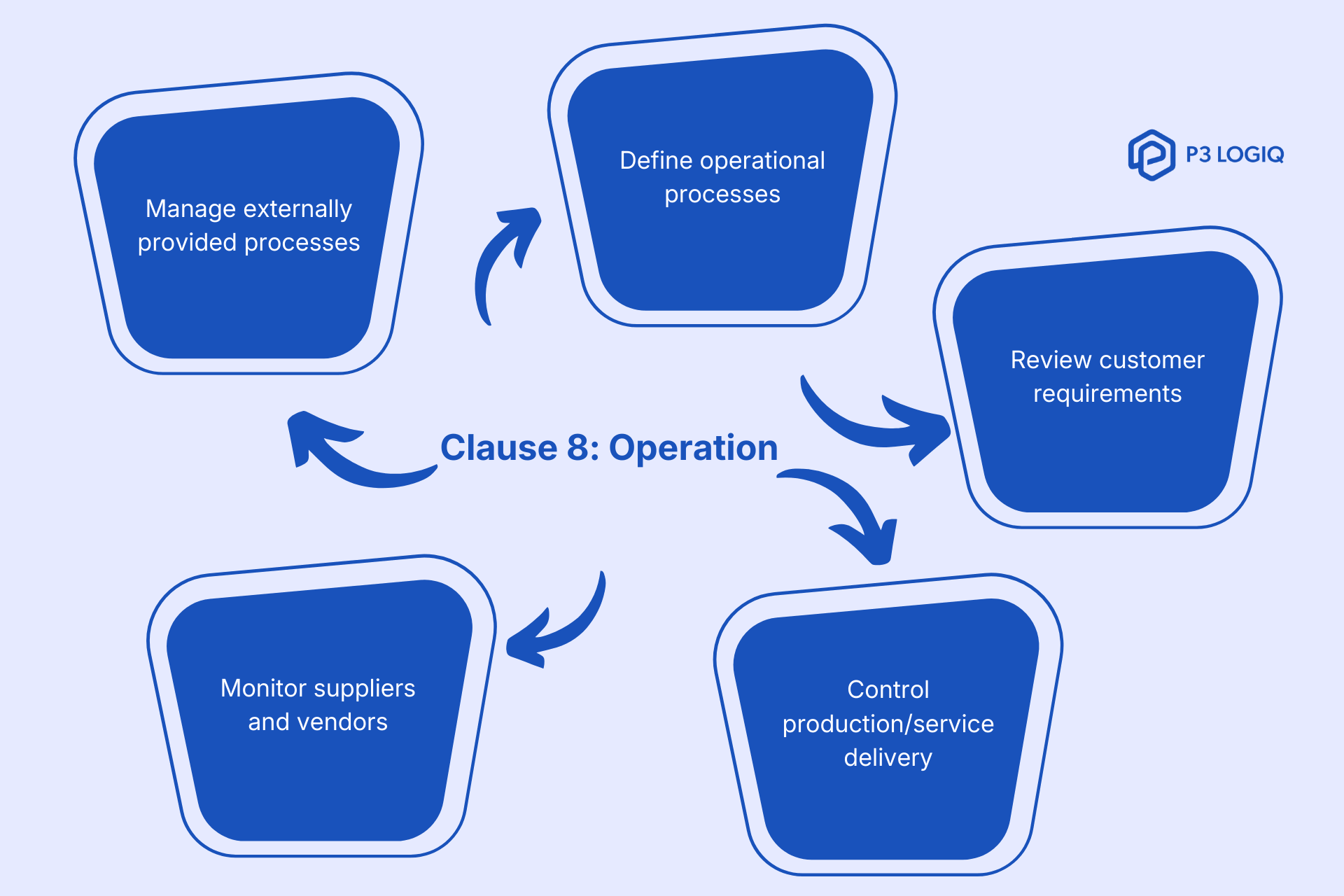
This is where your QMS meets real life. It focuses on how your organization actually delivers its products or services.
Auditors want to see that your processes are clearly defined and consistently followed.
In practice, they usually look for things like
One area getting more attention for US businesses is Clause 8.4: Control of Externally Provided Processes.
After the supply chain disruptions of the past few years, auditors are asking harder questions about how you qualify, monitor, and manage your suppliers.
If you can show that ISO 9001 helps you build a stronger and more reliable supply chain, not just obtain a certificate, it makes your quality system much more convincing during an audit.
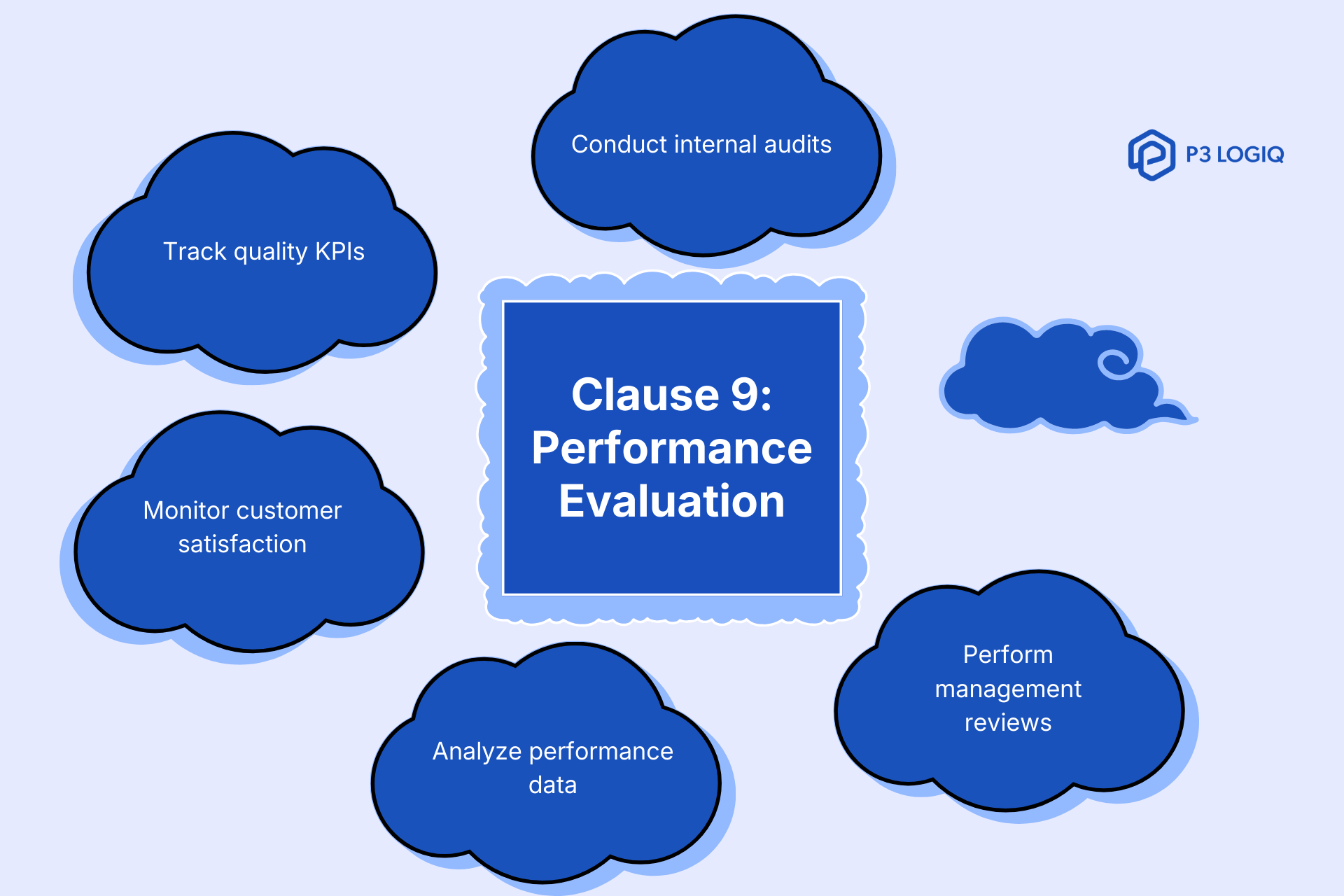
In performance evaluation, you need proof that your QMS is working and not running on gut feeling. In practice, this usually means:
If you are still doing one annual management review from a printed report, you are not automatically noncompliant. But many organizations are moving toward digital dashboards that track quality metrics continuously. This helps teams spot problems earlier and makes audit preparation much easier.
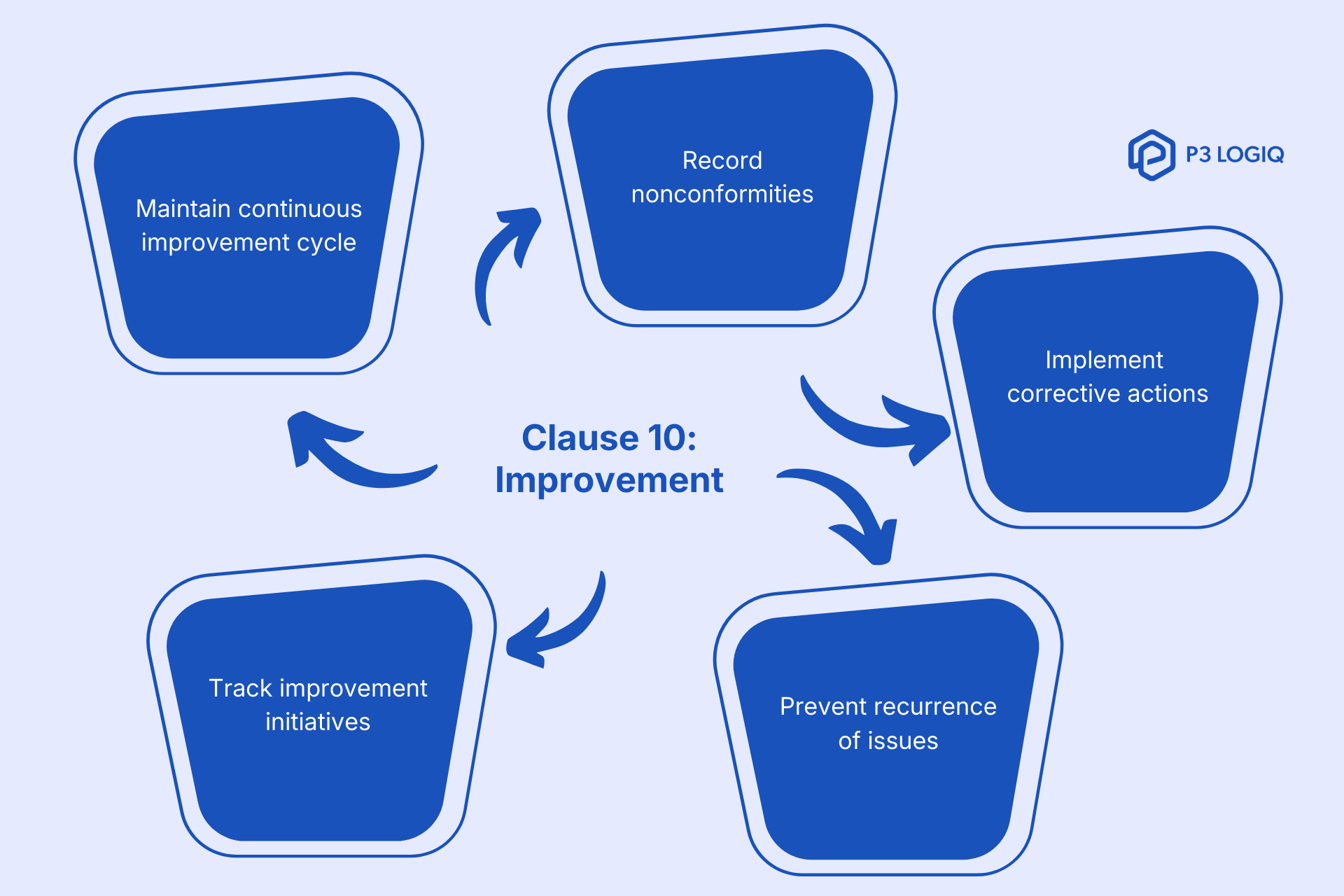
ISO 9001 certification is not a finish line. It is a continuous cycle. Problems are identified, corrected, and prevented from happening again.
This clause focuses on how your organization learns from issues and improves the system over time.
To meet this requirement, your system should include:
The difference between companies that pass recertification smoothly and those that struggle every three years often comes down to this clause.
Organizations that take Clause 10 seriously between audits build stronger systems. Those that ignore it usually end up scrambling to fix problems right before the next audit.

Remember the grocery list example from earlier?
Without a list, it’s easy to forget something small but important.
An ISO 9001 audit works the same way.
Auditors are not trying to read every clause line by line. Instead, they check whether the important pieces of your system are actually in place. Many follow a structured approach similar to what’s explained in this ISO 9001 certification audit guide.
Think of it like a checklist they carry in their head.
Most auditors review a company’s QMS in three simple layers:
1/ Documents - what your system says should happen
2/ Processes - what actually happens during daily work
3/ People - whether employees understand and follow the system
If these three layers match, the audit usually goes smoothly. If something is missing, that’s when nonconformities appear.
Let’s go through what auditors typically check in each layer.
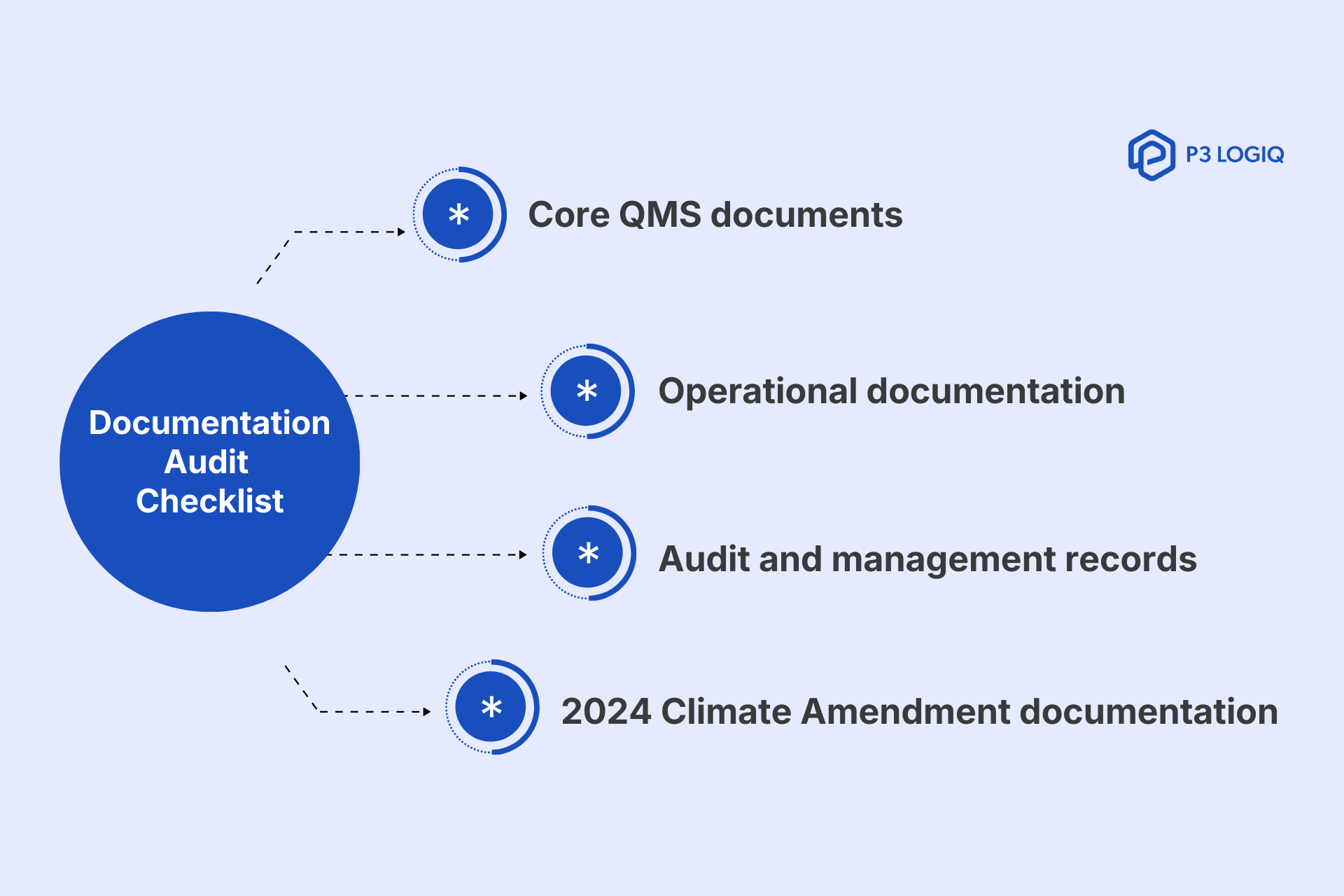
Before diving into operations, auditors normally review your key documents.
Make sure these are organized, controlled, and easy to access.
Auditors do not expect perfect formatting. What matters most is clear traceability, which is why companies adopt audit management systems for ISO compliance.
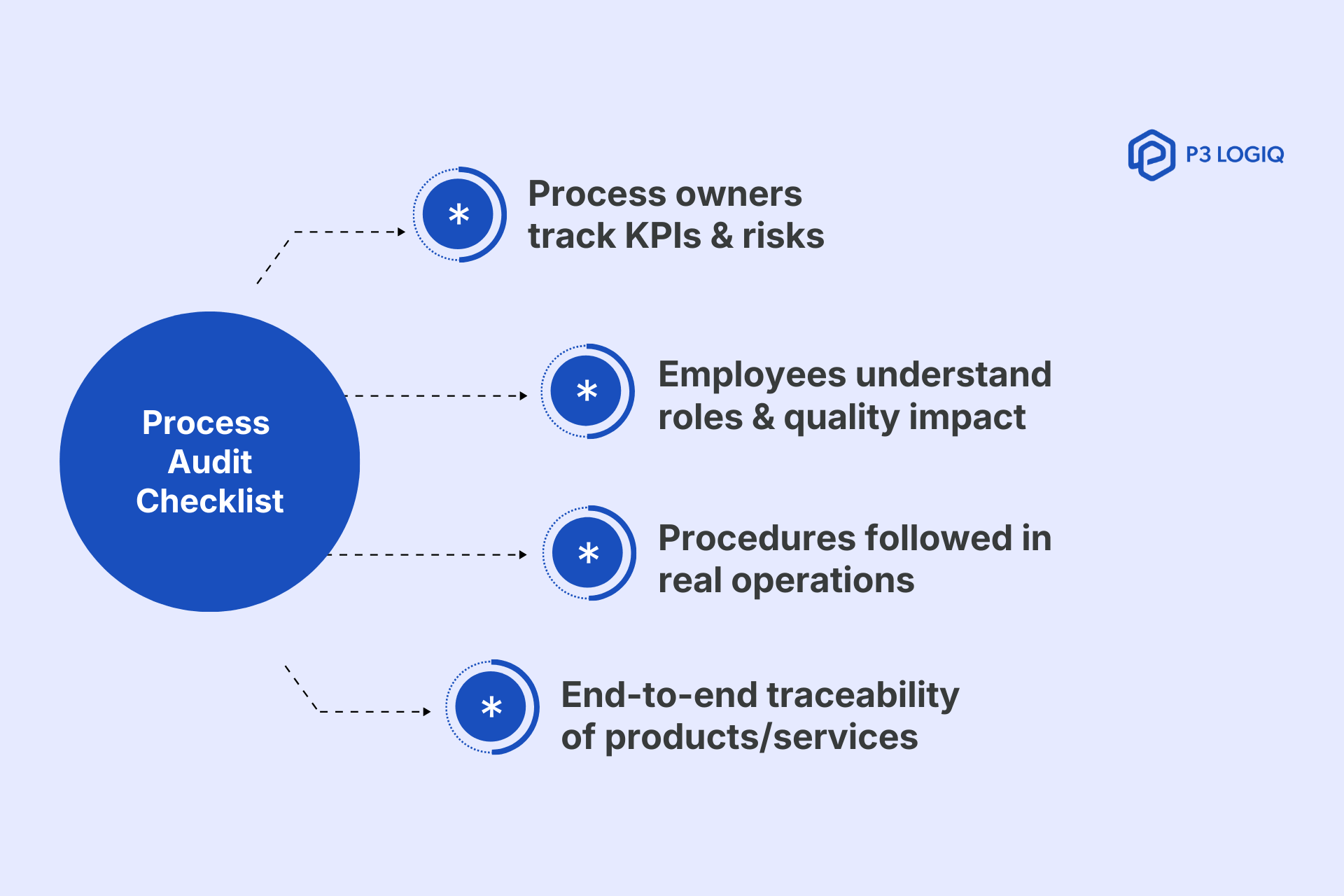
After reviewing documents, auditors start testing whether the system actually works.
They often “follow the trail” of a product, service, or customer request.
During this stage, auditors typically check whether:
This step is where many companies struggle. Documents may look perfect, but real processes tell a different story.
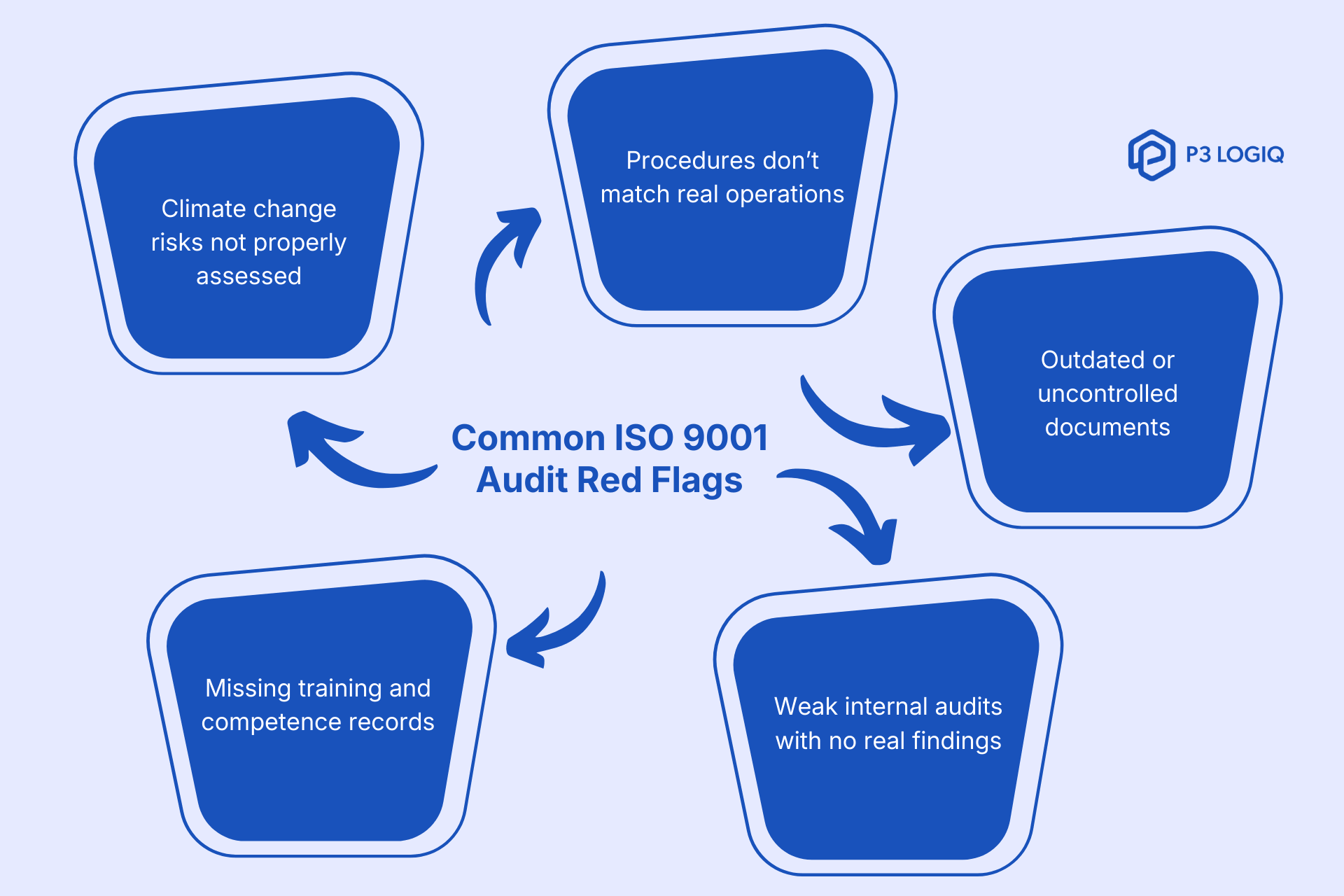
These are the most common reasons companies receive nonconformities during certification audits.
If climate change is marked “not applicable,” auditors, especially those from ANAB-accredited certification bodies, will often ask how that conclusion was reached.
Without supporting analysis, this can quickly become a nonconformist.

For most small to mid sized US organizations with some process maturity, ISO 9001 certification typically takes a few months from kickoff to certificate.
This assumes leadership is involved and resources are available.
The certification process usually happens in two main stages.
At this stage, the certification body reviews your QMS design.
The goal is to confirm that:
• Your QMS scope is defined correctly
• Required documents exist
• Key processes are documented
• The organization is ready for the main audit
This stage is usually shorter and focused on system readiness.
This is the main audit.
Auditors evaluate whether your system is actually implemented and working across departments, sites, and processes.
They will:
• Interview employees
• Review records
• Follow process trails
• Verify that procedures match real work
If your organization is starting from scratch, you will likely need additional time to build processes, stabilize operations, and collect enough records to show consistent implementation. Many organizations also evaluate the ROI of ISO risk management certification as part of planning their long-term quality and compliance strategy.
Costs vary depending on company size, complexity, and how mature your processes already are.
One cost that often surprises companies in 2026 is QMS software.
Paper-based systems and Excel trackers are not forbidden, but they are becoming harder to manage and audit. Modern compliance management software helps centralize documentation and controls.
Auditors now look more closely at:
• document control
• version history
• access permissions
• record integrity
Because of this, many US companies now invest in dedicated QMS platforms such as P3 LogiQ to manage documentation, audits, and corrective actions more efficiently.
For many teams, the time saved during audit preparation alone justifies the investment.
Another important step is selecting a properly accredited certification body.
In the United States, certification bodies should be accredited by:
• ANAB (American National Accreditation Board)
• UKAS (United Kingdom Accreditation Service)
Certification from an unaccredited body may not be accepted in procurement, vendor approvals, or major contracts.

Many organizations run into trouble not because ISO 9001 is difficult, but because they approach it the wrong way. The process becomes much easier when teams use structured compliance management tools to keep documentation, audits, and workflows organized.
Common mistakes include:
Good auditors will eventually uncover these issues.
It’s always better to identify and fix them internally before the certification audit begins.
If you’ve made it this far, you’re probably not just reading. You’re preparing.
Use this ISO 9001 checklist as your working list. Walk through each clause, check what you already have, and mark what’s missing. Once the gaps are clear, the path forward becomes much easier.
Many US organizations now use platforms like P3 LogiQ to manage documents, audits, corrective actions, and supplier controls in one place instead of scattered spreadsheets and folders. It makes implementation cleaner and audit preparation far less stressful.
If you want help turning this checklist into a working system, the next step is simple.
Book your free discovery call with P3 LogiQ.
We’ll review your current setup, identify gaps, and help you move toward ISO 9001 certification with a clear and practical plan.



Businesses need document management systems (DMS) to ensure ISO and R2 compliance, improve efficiency, and stay audit-ready. The article highlights key features like version control, security, and automation while reviewing the top 5 DMS solutions. P3 LogiQ stands out for its compliance-focused automation and secure document tracking
Read More
Recycling businesses gain efficiency, compliance, and sustainability with RIOS certification. It streamlines quality management, environmental responsibility, and worker safety, helping companies avoid legal risks and boost credibility. P3 LogiQ simplifies the certification process with automation, document control, and compliance tracking, making operations smarter and safer.
Read More
Audit Management Software (AMS) automates compliance tracking, streamlines workflows, and reduces audit risks. Key features include automated scheduling, compliance checklists, CAPA tracking, vendor risk management, and integrations.
Read More
Learn how audit management systems simplify ISO and R2 compliance by automating audits, managing documentation, and minimizing compliance risks efficiently.
Read More
In 2025, many businesses still face challenges in compliance management due to outdated methods like spreadsheets and fragmented software. This inefficiency leads to missed deadlines, increased risk, and regulatory penalties. The blog emphasizes the importance of modern compliance tools that automate workflows, enhance risk management, and streamline regulatory processes to meet ISO and R2 standards.
Read More
The rise in e-waste and environmental concerns makes responsible electronics recycling essential. The R2 Certification sets a global standard for safe, sustainable, and data-secure recycling practices. Developed by Sustainable Electronics Recycling International (SERI), R2 helps businesses manage environmental risks, data security, worker safety, and legal compliance.
Read More
Businesses face increasing challenges in managing complex regulatory compliance. Manual methods such as spreadsheets and paperwork can lead to missed deadlines, inefficiencies, and costly penalties. Compliance management software offers a streamlined solution to reduce risks, automate processes, and improve operational efficiency.
Read More
Maintaining R2 Certification is crucial for businesses in the e-waste recycling industry, ensuring regulatory compliance, sustainability, and strong stakeholder trust. This guide outlines 10 best practices to help businesses simplify operations, reduce risks, and stay compliant.
Read More
Unlock the value of ISO risk management certification. Explore its impact on compliance, risk mitigation, and business expansion.
Read More
Explore the top 5 ISO risk management software tools for 2025, including document management solutions for streamlined compliance and increased efficiency.
Read More
Find the ideal document management software (DMS) for your business. Learn how to choose with expert tips, key features, and insightful guidance
Read More
Unlock the power of a Document Management System (DMS). Learn how it can revolutionize your business operations.
Read More







.png)


.png)



.jpg)



.jpg)
.jpg)





.jpg)

.png)

.png)



.png)

