
You know that moment when you decide to fix one small thing, and it somehow turns into a whole project?
Like you sit down to organize one folder on your laptop, and suddenly you’re sorting files, deleting old stuff, renaming everything, and thinking, “Okay… this got out of hand.”
That’s exactly how ISO 14001 feels in the beginning.
According to the latest International Organization for Standardization survey data, which is the official organization for ISO certifications,
There are over 500,000 valid ISO 14001:2015 certificates issued worldwide, spanning organizations across more than 180 countries.
This widespread adoption highlights how businesses globally are prioritizing environmental responsibility and structured sustainability practices.
Achieving ISO 14001 standards for your business can be a bit overwhelming when you are just starting out.
You start with “let’s get certified,”
and then it turns into policies, documents, audits and a lot of,
“Wait, what’s next?” moments.
But here’s the thing, just like that messy folder, it’s not actually hard once you know the order of things and you break it down properly.
You don’t need to have everything perfect from day one. You just need a clear path-what to do first, what comes next, and how it all connects.
That’s what this guide is here for. No fluff, no overwhelming jargon, just a simple, step-by-step way to help you move from “I have no idea where to start” to “Okay, this actually makes sense.”
By the end of this blog, you’ll know exactly how to approach the ISO 14001 certification process without turning it into a stressful, never-ending project.
Let's break down the certification process, so you know exactly what to do, from that first spark of interest to holding your certification in hand. Let’s take this journey together.
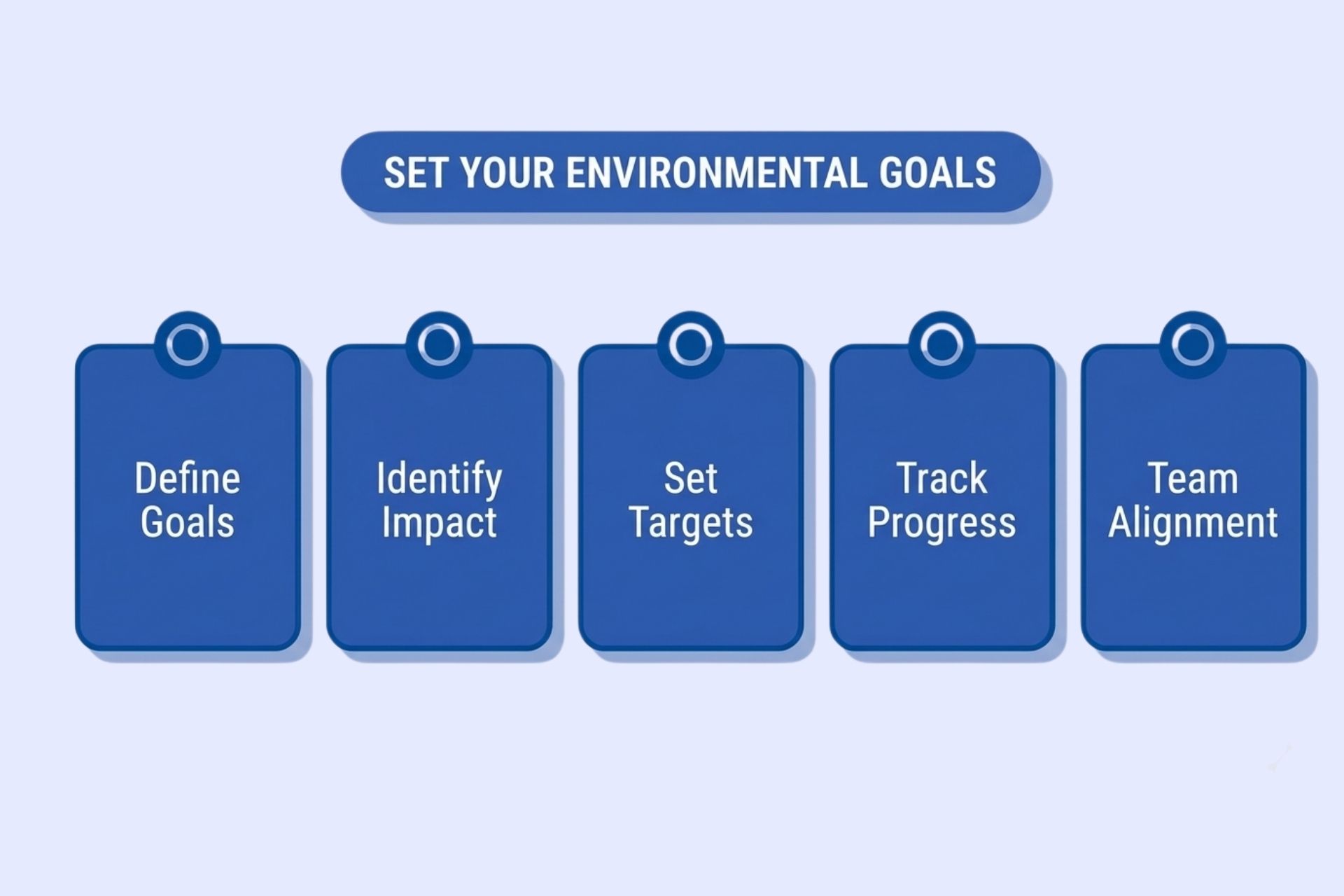
Imagine you’re zooming in on the exact impact you want to make. Think of this as your north star, what change do you truly care about? It could be reducing energy use by 15% in a year, or cutting down plastic waste. Be super specific, because these goals will guide every other decision you make. Once you’ve got clarity, write them down and share them with your team-this is your foundation.
Now here’s the thing most businesses miss that ISO 14001 isn’t just about “being greener.” It’s about building a clear system that improves your environmental performance over time while staying aligned with ISO 14001 certification and compliance requirements.
So when you set goals, you want them to be realistic, measurable, and actually meaningful to your day-to-day operations, not just something that looks good on paper.
Start by asking yourself a few simple questions:
Your goals might look something like this:
Once your goals are clear, document them. Put them in writing inside your environmental policy or internal sustainability plan.
Most importantly, communicate these goals to your team. When people understand why these goals matter, they’re much more likely to support the changes needed to reach ISO 14001 certification.
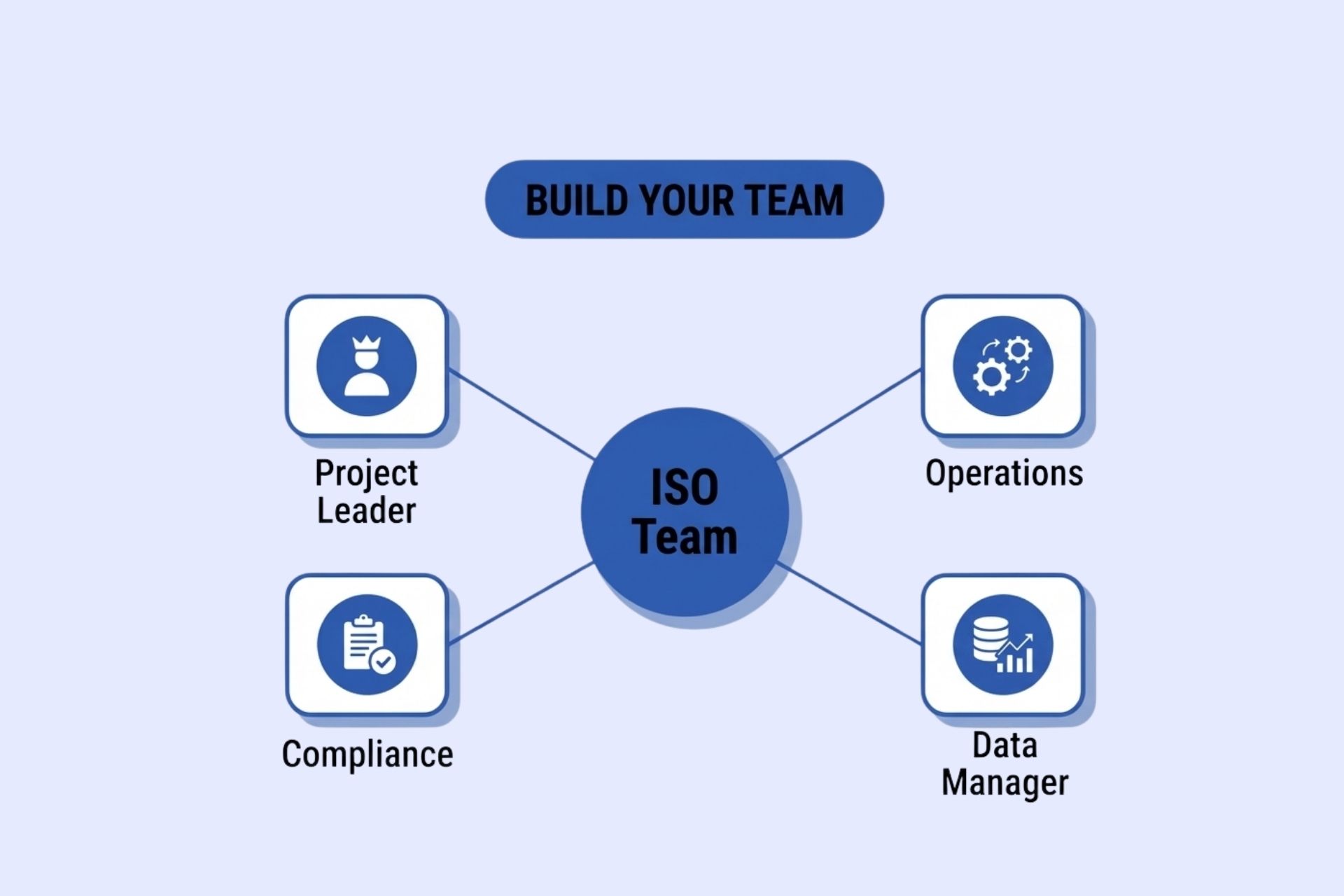
Think of this like forming a coalition of sustainability advocates. You don’t just need one person, you need a core team that represents different parts of your business.
Bring in someone from operations, a member of leadership, and maybe someone from HR or procurement. They’ll help you look at both the big picture and the daily details, while also making sure your document management systems are organized and up to date so nothing gets lost in the process.
ISO 14001 works best when it’s not treated as one person’s project. Instead, it should be a shared effort across departments. Each team member brings a different perspective about how the business actually operates.
For example:
A small but effective ISO team usually includes 3-6 people.
Here’s how you can structure it:
Once your team is formed, define everyone’s responsibilities clearly. This prevents confusion later during audits.
Also schedule regular check-in meetings. Even a quick 30-minute update every couple of weeks keeps the project moving forward.
Remember, ISO 14001 certification becomes much easier when the work is shared instead of carried by one person.
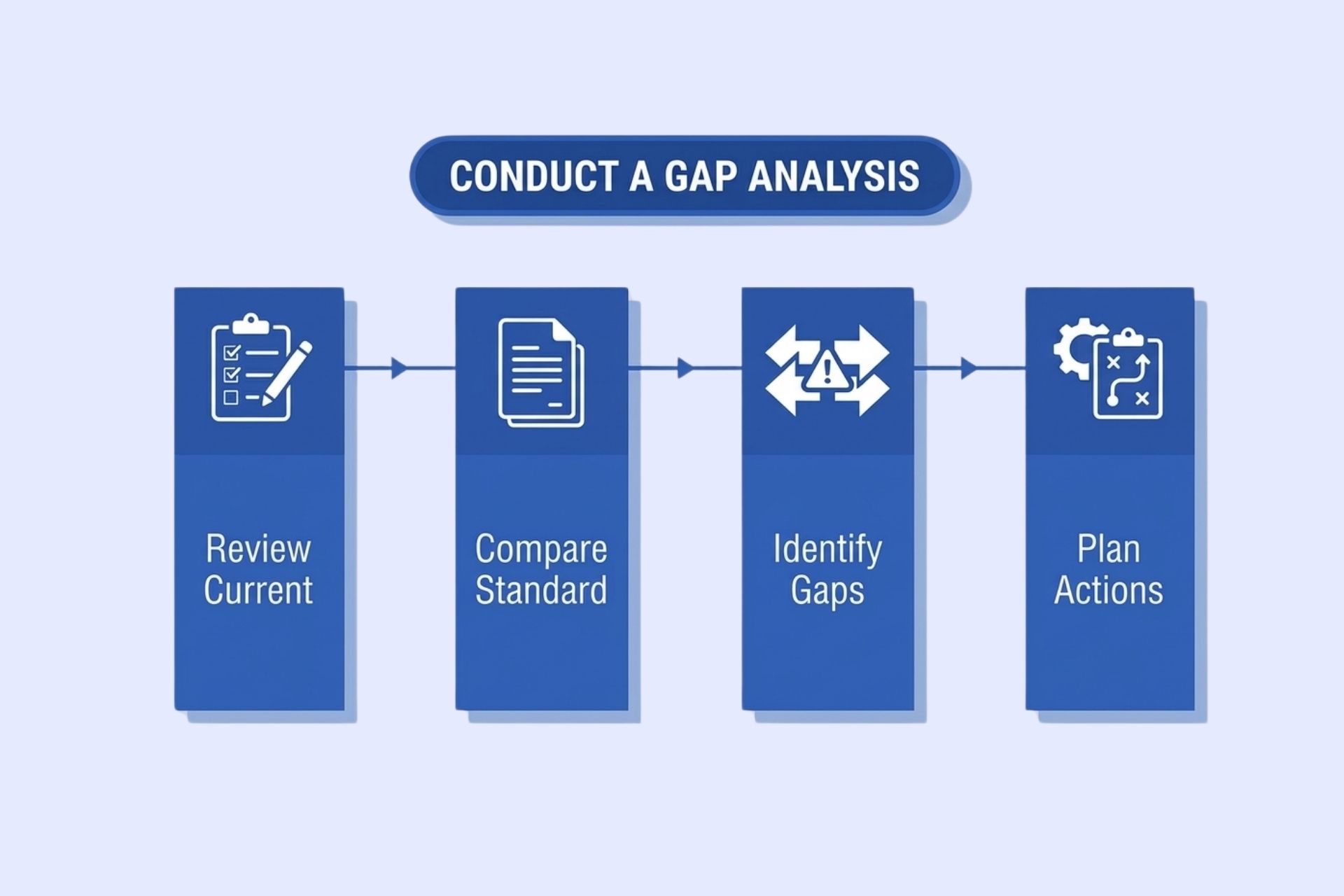
This is where you roll up your sleeves and get honest with yourself. Compare your current processes against ISO standards. Go department by department, look at how you manage waste, how you track emissions, and how you engage suppliers.
A gap analysis is essentially a reality check. It helps you understand exactly where your business stands today compared to what ISO 14001 requires.
Start by reviewing the main areas the standard focuses on following:
Now evaluate your current systems.
Ask yourself:
Do we already track energy usage?
Are we documenting waste disposal?
Do we have environmental procedures written down?
Are employees trained on environmental responsibilities?
You’ll probably discover three types of situations:
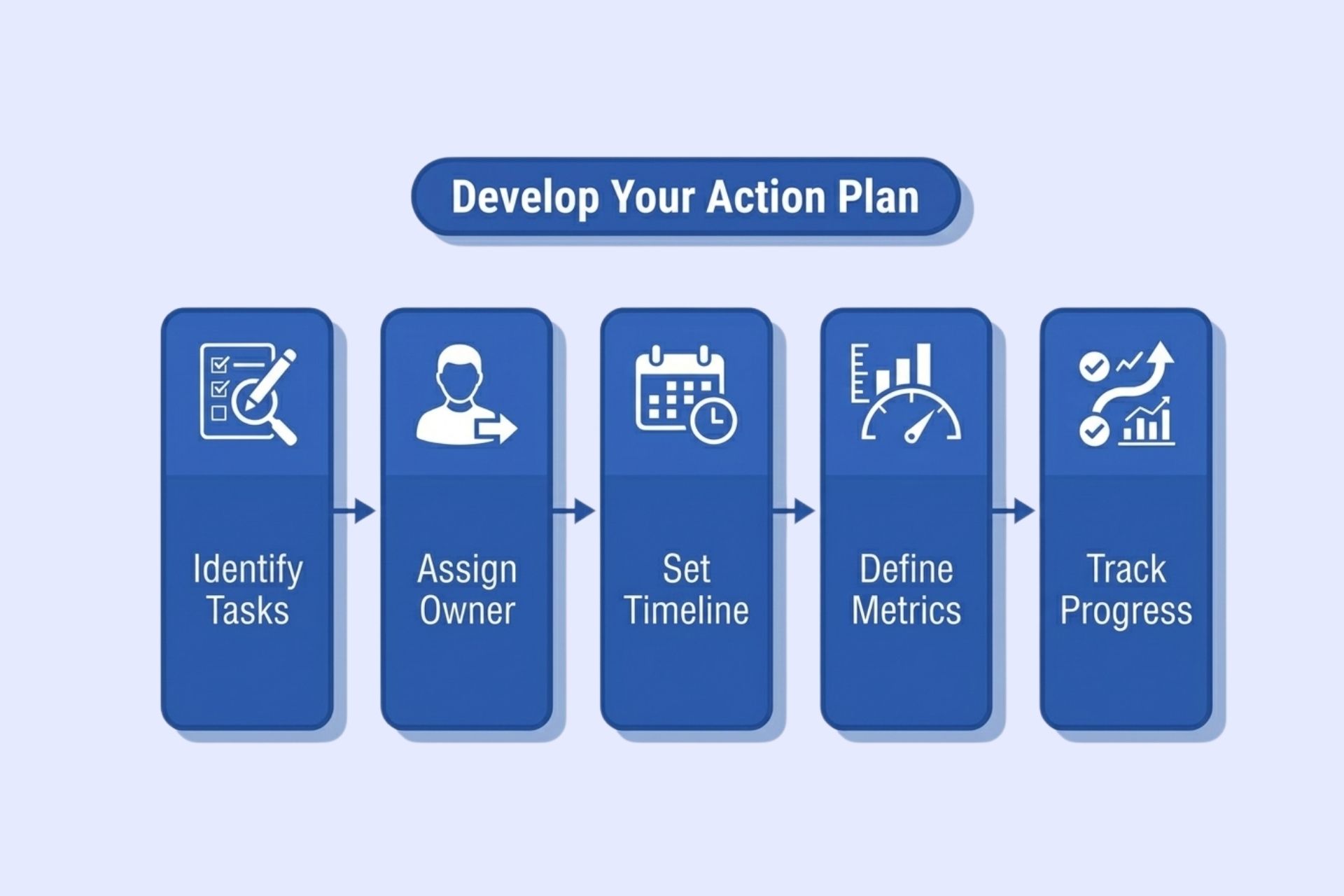
Now that you know where the gaps are, it’s time to get tactical. Break down every gap into small, achievable tasks. Assign each task a deadline and a responsible person.
Think of this step as turning your insights into action.
Without a plan, even the best ideas stay stuck on paper. Your action plan ensures every improvement actually gets implemented.
Start by listing all the changes your gap analysis revealed.
For each improvement, define:
For example, if your gap analysis shows poor waste tracking, your action plan might include:
Break large goals into smaller milestones, smaller tasks are much easier to complete and track, especially when you’re using improvement management tools to monitor progress and keep everything on course.
You should also set realistic timelines, because ISO 14001 certification doesn’t happen overnight.
Most businesses take around 3-6 months to fully implement their environmental management system.
Once your action plan is ready, share it with your team so everyone knows what’s coming next and where they fit in.
A clear plan, supported by the right tools, keeps everyone aligned and makes the entire certification journey feel a lot smoother and more manageable.
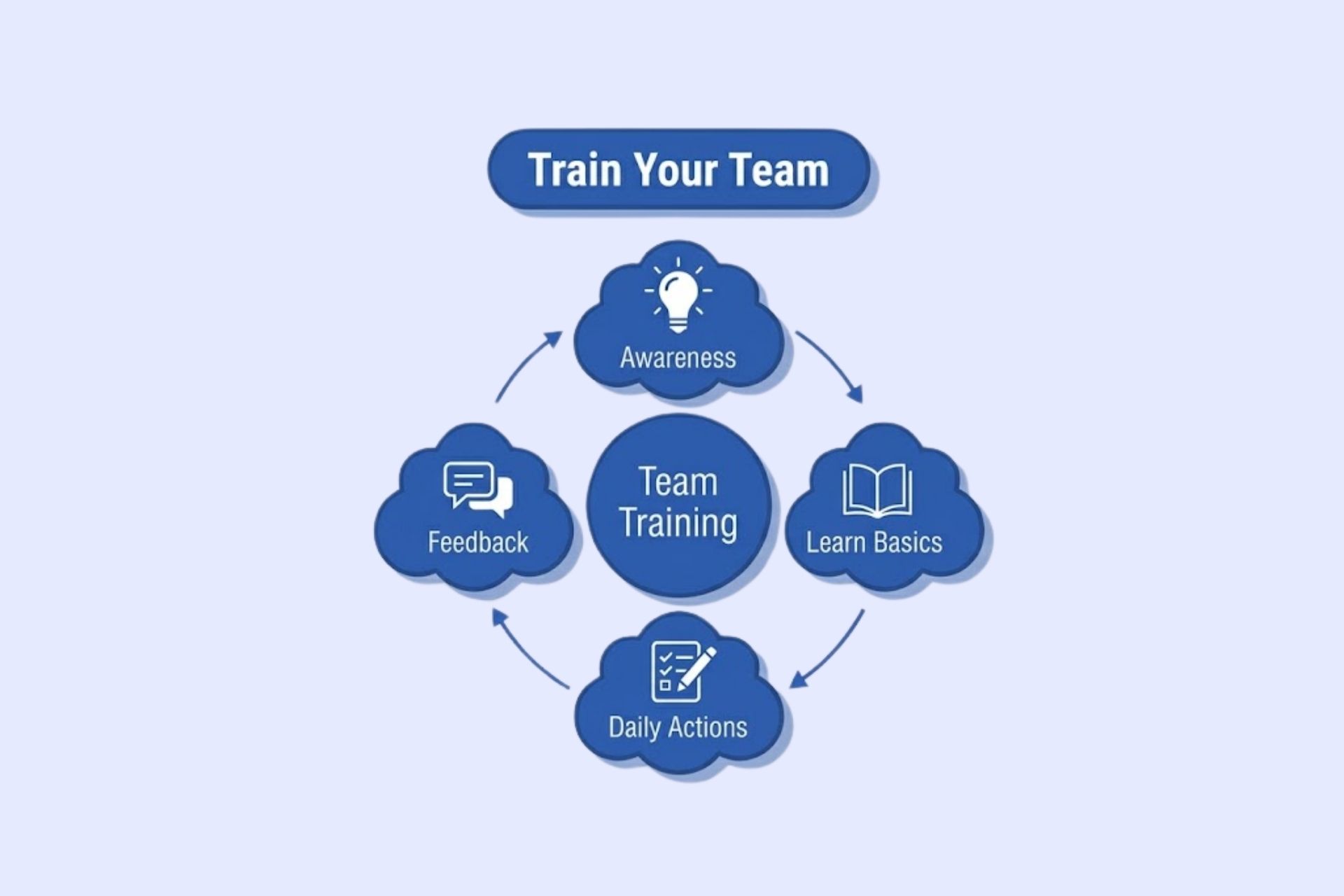
You can’t just hand people a checklist and expect magic, you need everyone on the same page.
Training is one of the most important parts of ISO 14001 implementation. Even the best environmental system won’t work if employees don’t understand how to follow it.
Start by explaining why environmental management matters. People are far more motivated when they understand the bigger picture.
Your training sessions should cover:
Keep the sessions simple and practical. Avoid technical jargon.
For example, instead of saying “environmental risk mitigation,” explain it like this
“Here’s how we reduce waste and protect the environment in our daily work.”
You can also introduce small habits that make a big difference:
Using the right training management software ensures everyone understands their role, stays updated on procedures, and feels confident taking action when needed.
Another great tip is to celebrate progress. If your team reduces waste or saves energy, acknowledge the effort. This builds a culture where environmental responsibility becomes part of everyday work.
When your team is properly trained, ISO 14001 stops feeling like a compliance requirement and starts becoming part of your company culture.
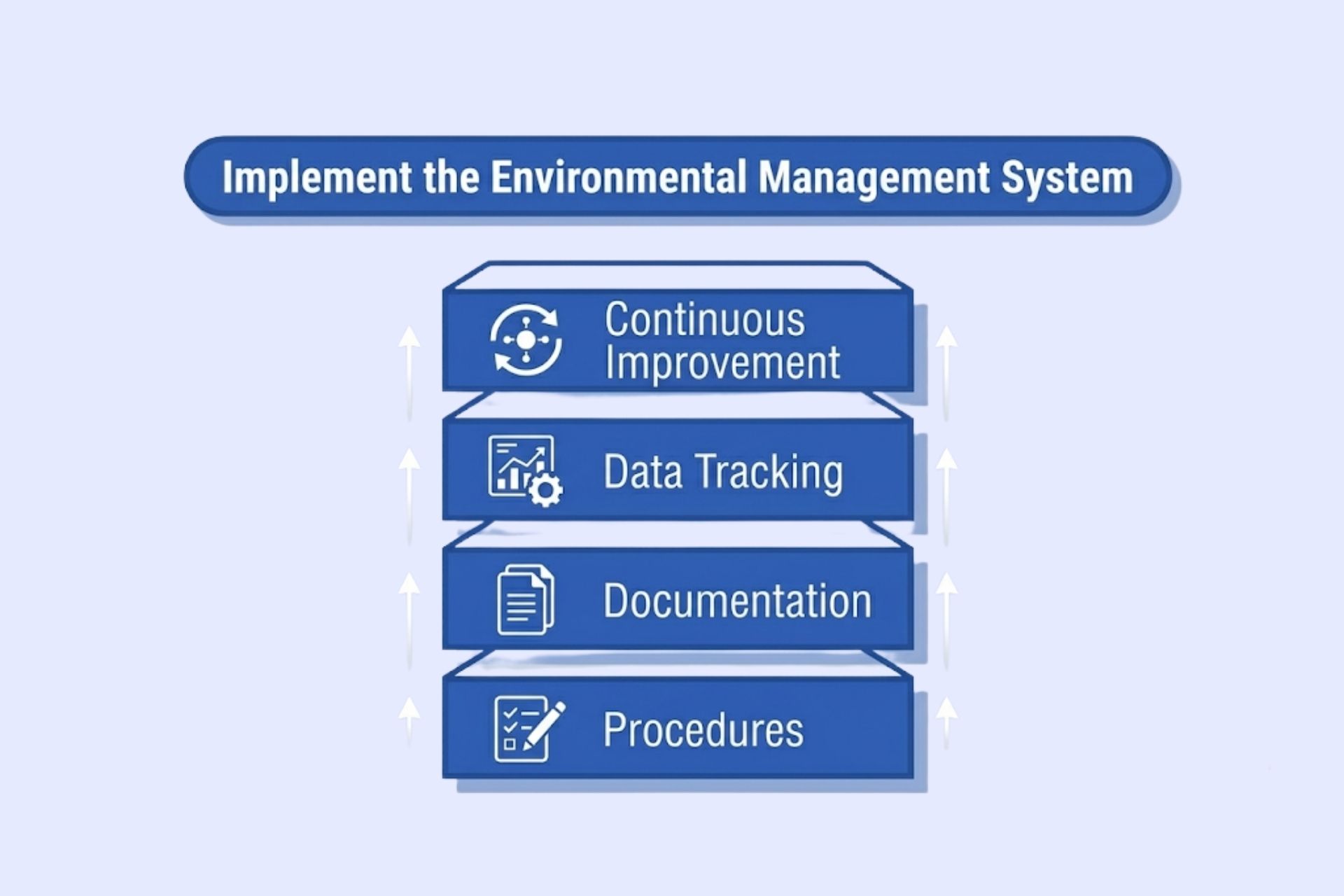
This is where your plan goes from paper to reality.
Up until now, you’ve been preparing-setting goals, building a team, and creating plans. Now it’s time to put everything into action.
Start rolling out the procedures you designed in your action plan.
This will include:
One important part of ISO 14001 is documentation.
Your environmental management system should include written procedures that explain how things work.
For example:
You should also start collecting environmental data regularly. This might include:
Tracking these metrics helps you measure improvement.
During implementation, some processes may need adjustments. That’s completely normal.
If something isn’t working smoothly, tweak the process until it fits your operations.
The goal isn’t perfection immediately, the goal is building a system that works consistently over time.
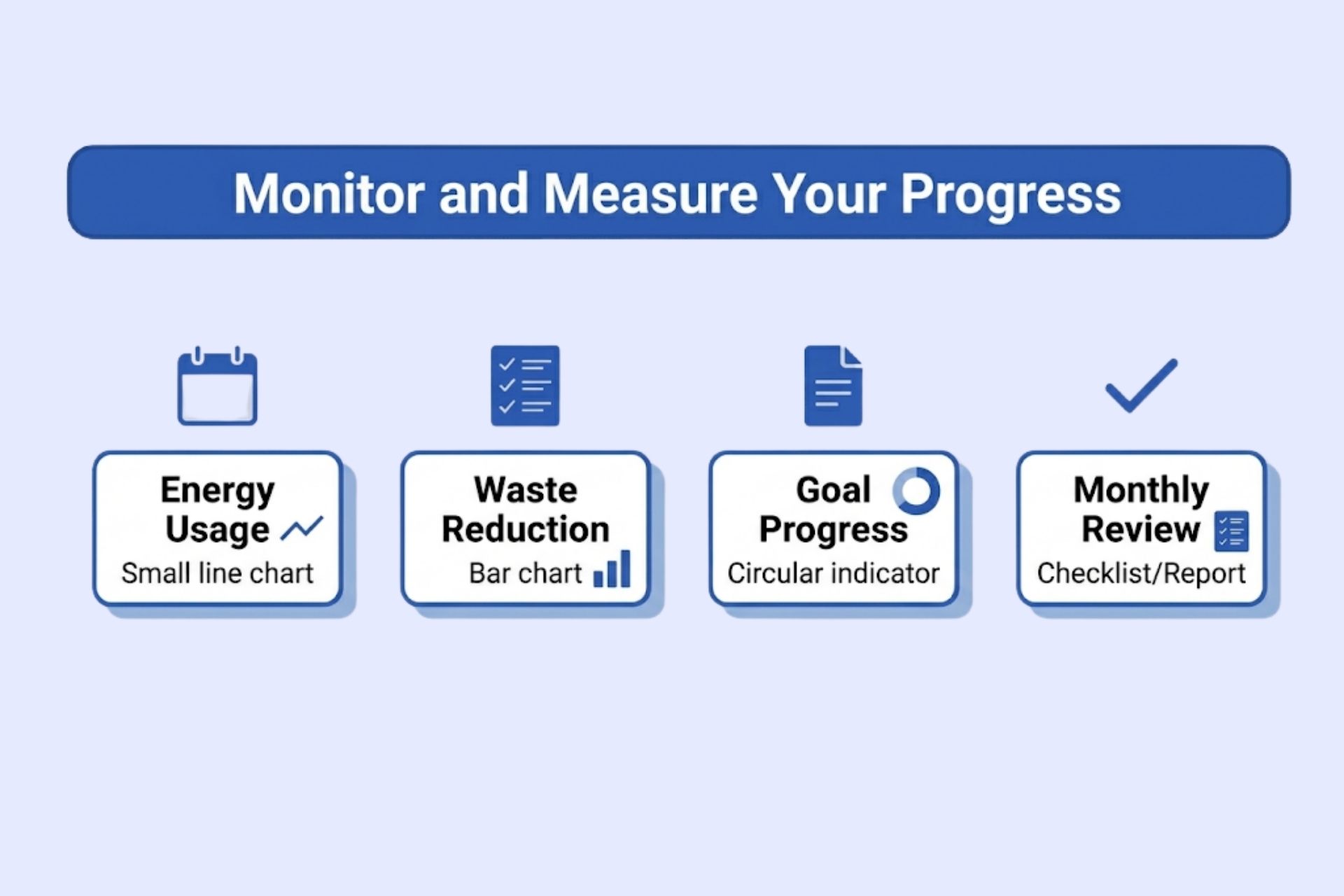
Once your environmental management system is in place, the next step is to track whether your efforts are actually making a difference.
One of the core ideas behind ISO 14001 is continuous improvement, which means regularly measuring performance and making adjustments where needed.
This is where a QEHS management system quietly supports the process, helping you bring quality, environmental and health and safety data together in a more structured way.
Start by revisiting the environmental goals you set earlier, and then begin collecting the data that shows how well you’re progressing toward those targets.
Some common metrics businesses monitor include:
Create a simple reporting routine to review these numbers. Many companies evaluate their environmental performance monthly or quarterly.
You don’t need complex tools to begin with, even a basic spreadsheet can help you track your progress effectively.
During these reviews, ask questions such as:
Are we meeting our environmental targets?
Have we reduced waste since introducing new processes?
Are there areas where improvement is still needed?
If progress feels slower than expected, that’s completely normal. The purpose of monitoring is to learn, adjust, and improve over time. Small process improvements made consistently can lead to significant long-term results.
Regular monitoring keeps your environmental management system active and effective rather than letting it become just another document sitting on a shelf.
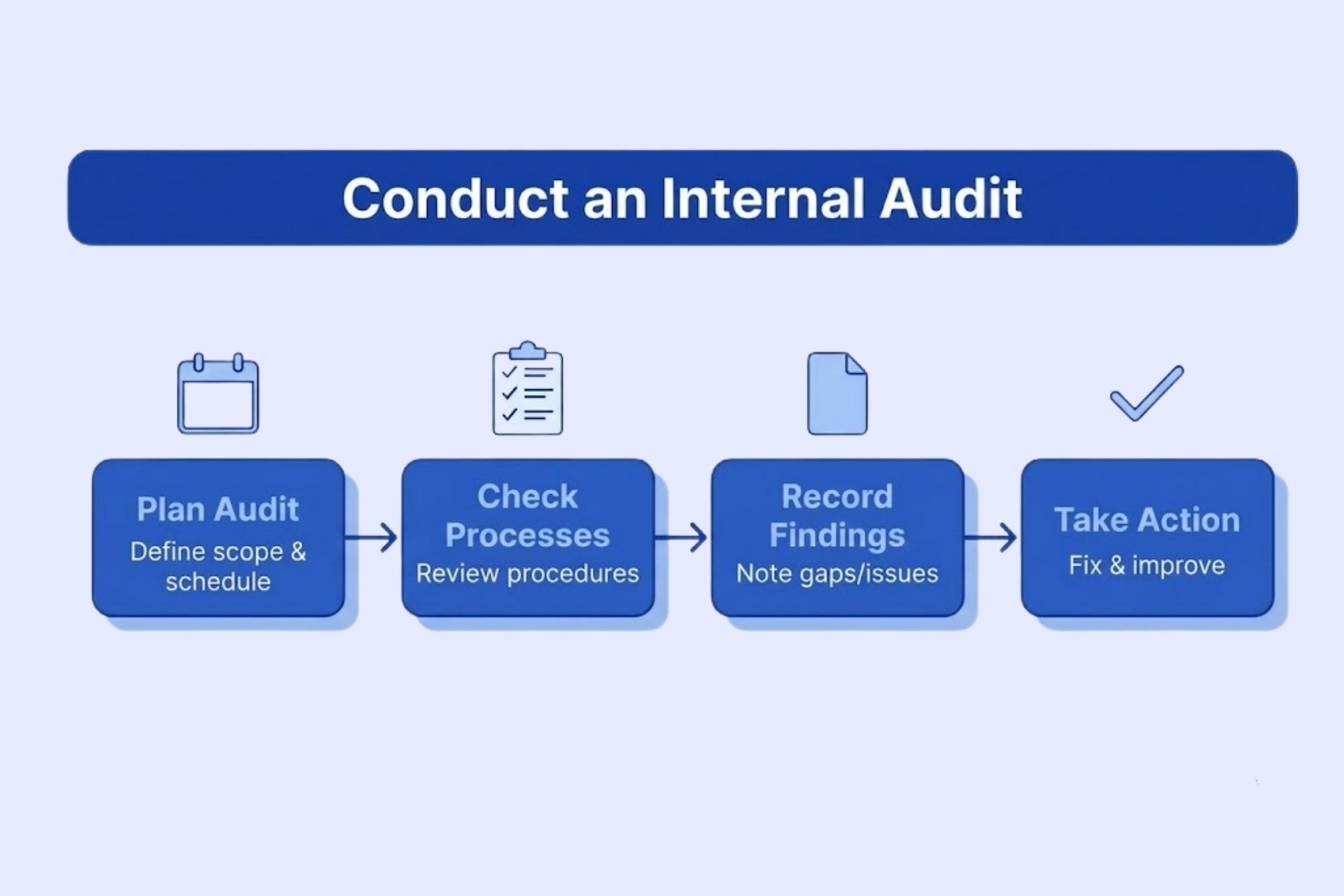
Before inviting an external certification auditor, it’s important to carry out an internal audit, think of this as a practice run before the official evaluation.
Using audit management tools at this stage can make the process much more structured, helping you track findings, assign actions, and stay organized.
An internal audit ultimately helps confirm that your environmental management system aligns with ISO 14001 requirements.
During this process, you or a trained internal auditor will review key elements such as:
The objective of this audit isn’t to achieve perfection. Instead, it’s about identifying potential issues early so they can be corrected before the official certification audit.
Common findings during internal audits include:
Every issue discovered should be documented carefully. From there, corrective actions can be planned and implemented.
This step is incredibly valuable because it ensures your organization is well prepared for the external certification audit.
By the time the official auditors arrive, most problems should already be resolved.
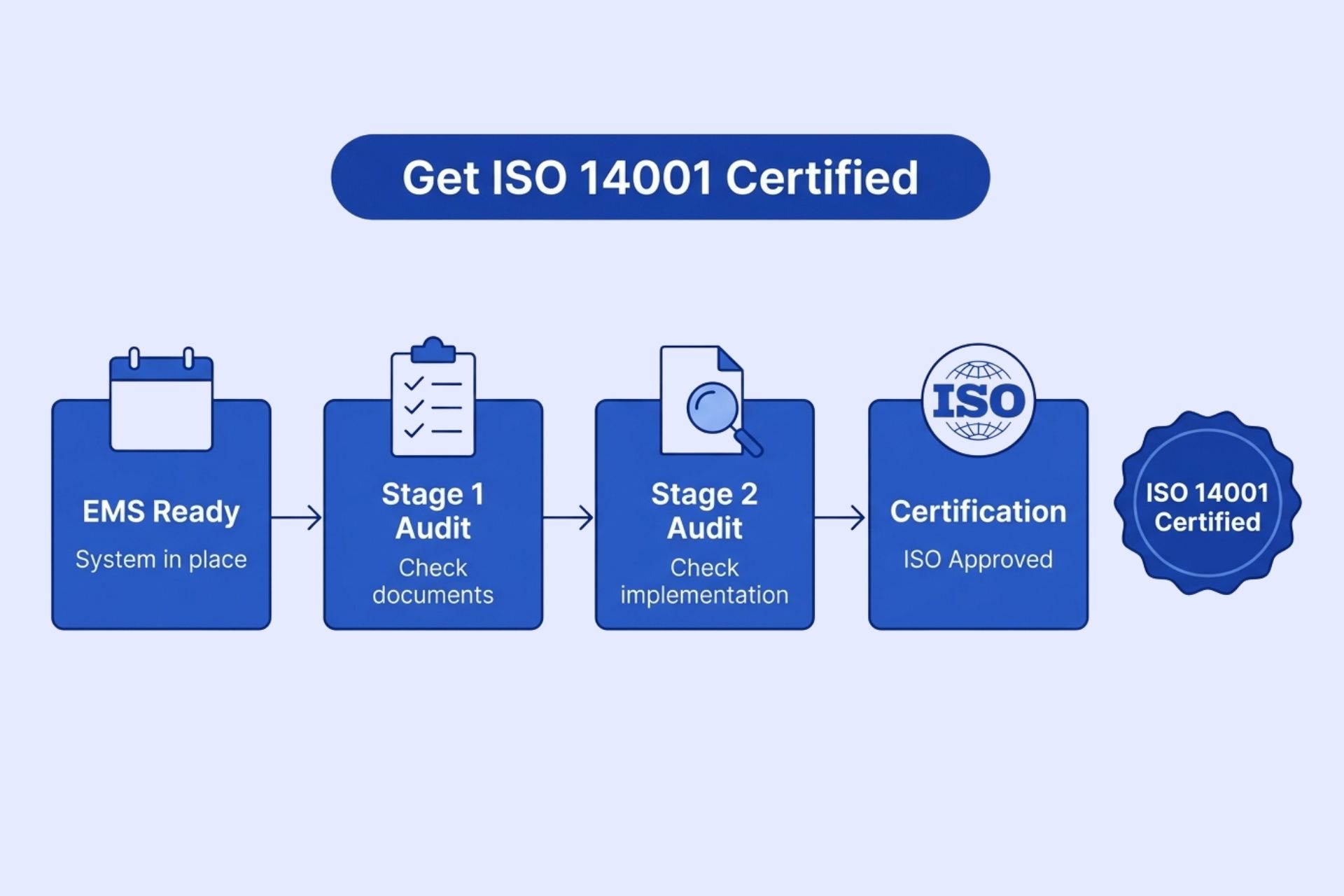
Once your environmental management system is operating effectively and the internal audit has been completed, you’re ready to move forward with certification.
At this stage, an accredited certification body will conduct an official audit. This typically happens in two stages.
The auditor reviews your documentation to confirm that your environmental management system meets the ISO 14001 requirements.
The auditor evaluates how the system works in practice. This may include interviewing employees, reviewing operational records, and observing day-to-day activities.
If everything meets the standard, your organization will receive ISO 14001 certification.
This certification demonstrates to customers, partners, and regulators that your business takes environmental responsibility seriously.
However, certification is not the end of the journey. ISO certifications generally remain valid for three years, with annual surveillance audits to ensure the system continues to perform effectively.
By maintaining your environmental management system and focusing on ongoing improvements, you can keep your certification while also building a more sustainable and efficient business.
If all these steps feel a little overwhelming, that’s completely normal. Managing documentation, tracking environmental data, preparing audits, and keeping everything aligned with ISO 14001 can quickly become a lot to handle.
This is where P3 LogiQ can make things much easier. Instead of juggling spreadsheets and scattered files, it helps you keep everything organized in one place-from environmental documentation to audit preparation.
The goal is to make the certification process smoother, clearer, and far less stressful for your team.
If you’re planning to pursue ISO 14001 certification, Book a free demo today and make your ISO 14001 certification process hassle-free and seamless.
Getting ISO 14001 certification in the United States usually takes about 4 to 12 months for most organizations. The exact timeline depends on factors like company size, operational complexity, and whether some environmental processes are already in place.
Here’s a quick breakdown of typical timelines:
The journey toward ISO 14001 certification usually includes a few key steps:
Companies begin by learning the requirements set by the International Organization for Standardization and reviewing how their current processes compare.
This step helps identify what environmental practices are already in place and what needs improvement.
Organizations develop policies, set environmental goals, document procedures, and train employees.
This stage typically takes the most time because it involves real operational changes.
The company reviews its system internally to ensure everything works as expected.
An accredited certification body conducts a two-stage audit to confirm the organization meets all requirements.
In most cases, businesses in the United States should expect several months of preparation and implementation before receiving certification.
With proper planning and leadership support, the process becomes much smoother and helps companies improve their environmental performance.
If you run a small business in the USA, getting ISO 14001 certification might sound like a big, complicated process. But when you break it down step by step, it’s actually much more manageable than most people expect.
First, take a moment to understand what ISO 14001 is really about. At its core, it focuses on building a simple environmental management system (EMS) that helps your business reduce environmental impact and improve processes over time.
For small businesses, this doesn’t mean creating piles of paperwork. It’s more about putting practical systems in place,like tracking waste, managing resources responsibly, and staying aware of environmental risks.
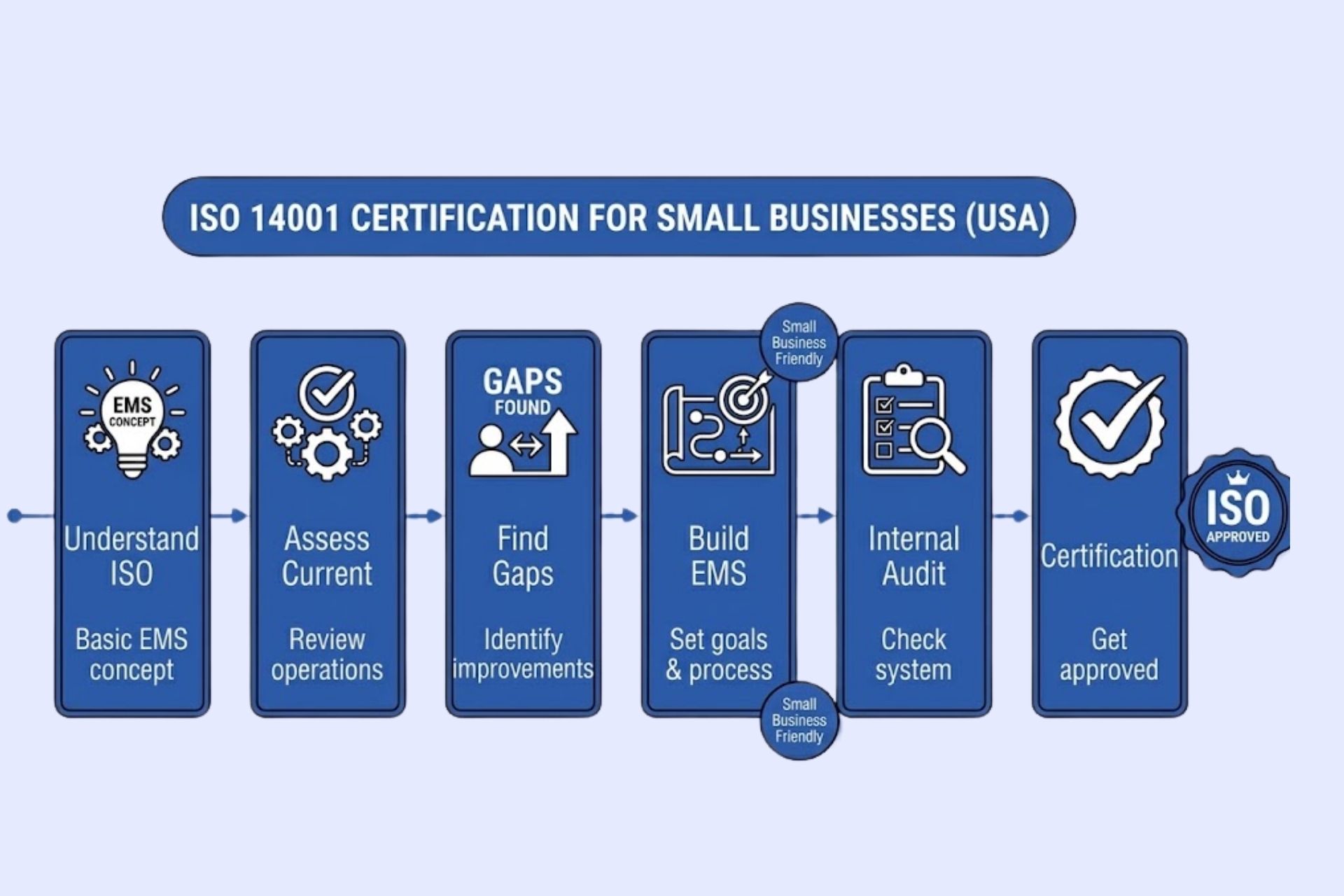
Start by reviewing your current operations, materials, energy use, waste, and compliance. This helps you quickly identify gaps.
Once gaps are clear, build your EMS, set goals, document simple processes, assign roles, and get your team aligned. Even small changes can make a big impact.
Run an internal audit, then go through the final certification audit. If everything checks out, you’re certified.
And honestly, the real win isn’t just the certificate, it’s having a system that keeps your business compliant, efficient, and environmentally responsible.
When you’re running a small business or just stepping into the certification world, the ISO 14001 certification process can feel like a lot to take on.
But with cloud-based platforms like P3 LogiQ, it doesn’t have to be that complicated.
P3 LogiQ guides you through the entire process step by step, cutting through the confusion and making everything feel way more manageable.
.jpg)
Instead of getting lost in paperwork and requirements, you get a smoother, more structured path to certification, without the usual stress.
P3 LogiQ helps businesses to structure their environmental management system in a way that fits their operations without making the process overwhelming.
You don’t have to constantly second-guess what comes next. Everything is organized in one place, making it easier to track your progress and stay compliant.
ISO 14001 certification might seem complicated at first, but once you have the right system in place, it gets a lot more manageable than most businesses expect.
If you’re serious about getting certified and don’t want to deal with the usual chaos, having the right platform in your corner changes the game.
Instead of juggling scattered documents, endless spreadsheets, and manual tracking, P3 LogiQ keeps everything in one place, so you can manage environmental goals, organize documentation, track performance, and stay audit ready without the constant back-and-forth.
It gives your team a clear, structured way to move forward, without second-guessing every step.
Book a free demo call and see how P3 LogiQ ensures your entire ISO 14001 journey feels smooth, streamlined, and genuinely hassle-free from start to finish.
ISO 14001 certification is an international standard for environmental management systems. It helps businesses create a structured system to manage their environmental impact, reduce waste, improve resource efficiency, and comply with environmental regulations. Companies that achieve ISO 14001 certification demonstrate their commitment to sustainability and responsible environmental practices.
The time required to get ISO 14001 certification usually ranges from 3 to 6 months, depending on the size of the organization and its existing environmental practices. Businesses that already have structured processes in place may complete the certification faster, while others may need additional time to implement improvements.
ISO 14001 certification offers several benefits for businesses, including:
It also helps organizations identify opportunities to reduce waste and energy consumption.
No, ISO 14001 certification is not mandatory. It is a voluntary international standard. However, many businesses pursue it because it improves environmental performance, builds customer trust, and may be required by certain clients, partners, or government contracts.
The cost of ISO 14001 certification varies depending on factors such as company size, complexity of operations, and the certification body. Small businesses may spend a few thousand dollars, while larger organizations may invest more due to broader environmental systems and audits.
ISO 14001 certification is valid for three years. During this period, organizations must undergo annual surveillance audits to ensure they continue meeting the standard. After three years, a recertification audit is required to maintain the certification.



Businesses need document management systems (DMS) to ensure ISO and R2 compliance, improve efficiency, and stay audit-ready. The article highlights key features like version control, security, and automation while reviewing the top 5 DMS solutions. P3 LogiQ stands out for its compliance-focused automation and secure document tracking
Read More
Recycling businesses gain efficiency, compliance, and sustainability with RIOS certification. It streamlines quality management, environmental responsibility, and worker safety, helping companies avoid legal risks and boost credibility. P3 LogiQ simplifies the certification process with automation, document control, and compliance tracking, making operations smarter and safer.
Read More
Audit Management Software (AMS) automates compliance tracking, streamlines workflows, and reduces audit risks. Key features include automated scheduling, compliance checklists, CAPA tracking, vendor risk management, and integrations.
Read More
Learn how audit management systems simplify ISO and R2 compliance by automating audits, managing documentation, and minimizing compliance risks efficiently.
Read More
In 2025, many businesses still face challenges in compliance management due to outdated methods like spreadsheets and fragmented software. This inefficiency leads to missed deadlines, increased risk, and regulatory penalties. The blog emphasizes the importance of modern compliance tools that automate workflows, enhance risk management, and streamline regulatory processes to meet ISO and R2 standards.
Read More
The rise in e-waste and environmental concerns makes responsible electronics recycling essential. The R2 Certification sets a global standard for safe, sustainable, and data-secure recycling practices. Developed by Sustainable Electronics Recycling International (SERI), R2 helps businesses manage environmental risks, data security, worker safety, and legal compliance.
Read More
Businesses face increasing challenges in managing complex regulatory compliance. Manual methods such as spreadsheets and paperwork can lead to missed deadlines, inefficiencies, and costly penalties. Compliance management software offers a streamlined solution to reduce risks, automate processes, and improve operational efficiency.
Read More
Maintaining R2 Certification is crucial for businesses in the e-waste recycling industry, ensuring regulatory compliance, sustainability, and strong stakeholder trust. This guide outlines 10 best practices to help businesses simplify operations, reduce risks, and stay compliant.
Read More
Unlock the value of ISO risk management certification. Explore its impact on compliance, risk mitigation, and business expansion.
Read More
Explore the top 5 ISO risk management software tools for 2025, including document management solutions for streamlined compliance and increased efficiency.
Read More
Find the ideal document management software (DMS) for your business. Learn how to choose with expert tips, key features, and insightful guidance
Read More
Unlock the power of a Document Management System (DMS). Learn how it can revolutionize your business operations.
Read More







.png)


.png)



.jpg)



.jpg)
.jpg)





.jpg)

.png)
.png)
.png)



.png)

