
A few years ago, managing ISO 14001 certification looked simple on paper.
You create documents, track a few environmental aspects, and run internal audits, and you’re good to go.
But that illusion doesn’t last long.
As your business grows, compliance becomes messy. Documents get outdated. Audit trails go missing. Teams across locations follow different processes. And when the external audit comes, everything suddenly turns into a last-minute scramble.
That’s the real problem.
ISO 14001 isn’t challenging because of the standard itself. It’s challenging because managing it manually doesn’t help you scale smoothly.
And on top of that headache, sometimes companies can be confused or overwhelmed about which ISO 14001 software to choose. That’s precisely why businesses are moving toward structured ISO 14001 software in 2026.
Not just to “stay compliant,” but to build a system where compliance becomes your second nature.
In this guide, you’ll find 9 of the best ISO 14001 software solutions, including dedicated ISO platforms and powerful EHS systems that support environmental compliance.
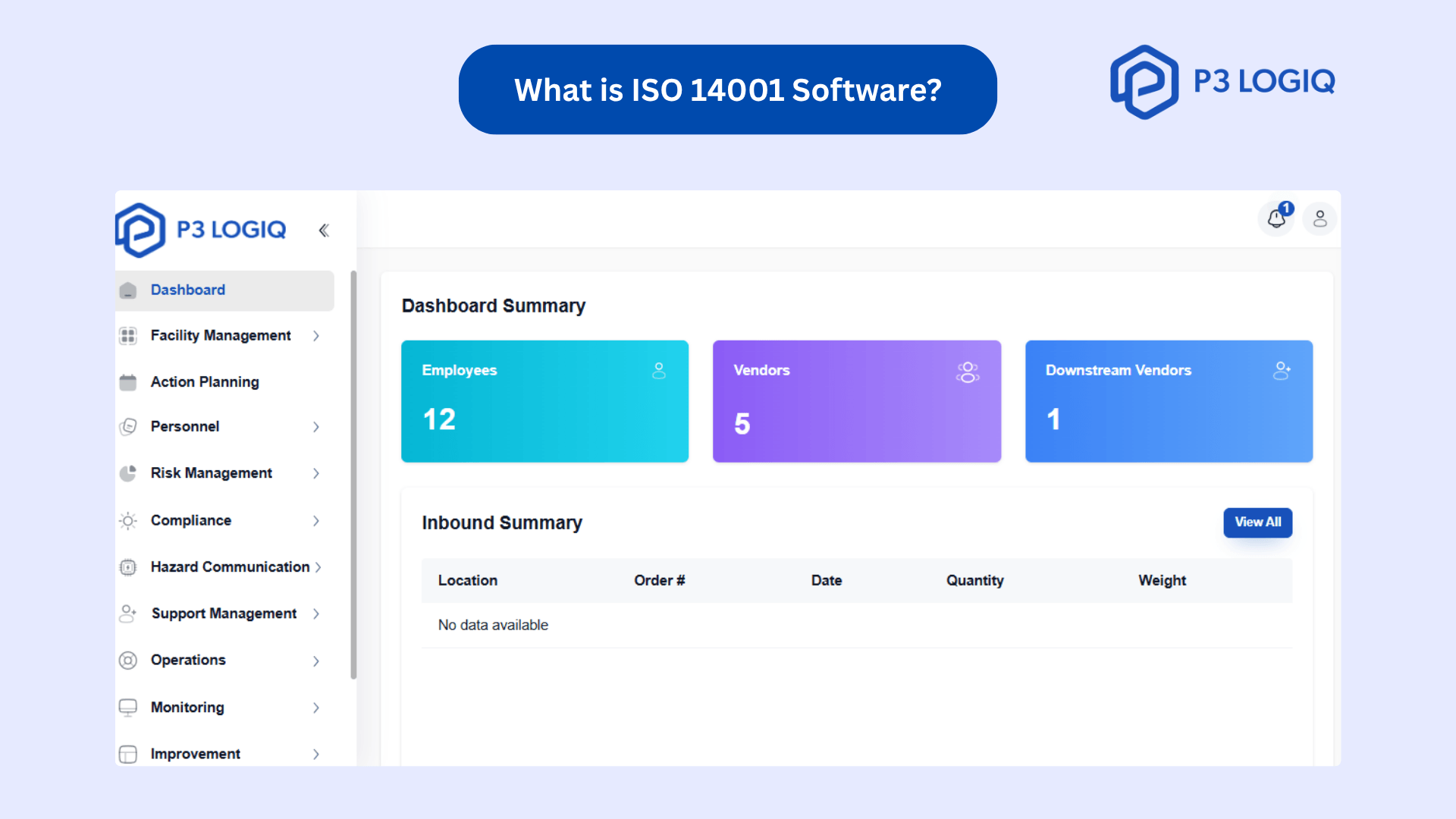
ISO 14001 software helps you manage your Environmental Management System in one place. You handle documentation, audits, risks, and compliance inside a structured system.
You move away from scattered files and manual tracking.
If you take a look at a practical standpoint, the benefits of ISO 14001 can look like this:
Instead of:
You get:
The result?
Less panic and chaos, more control and stability.
Not all tools are built the same or solve all your problems.
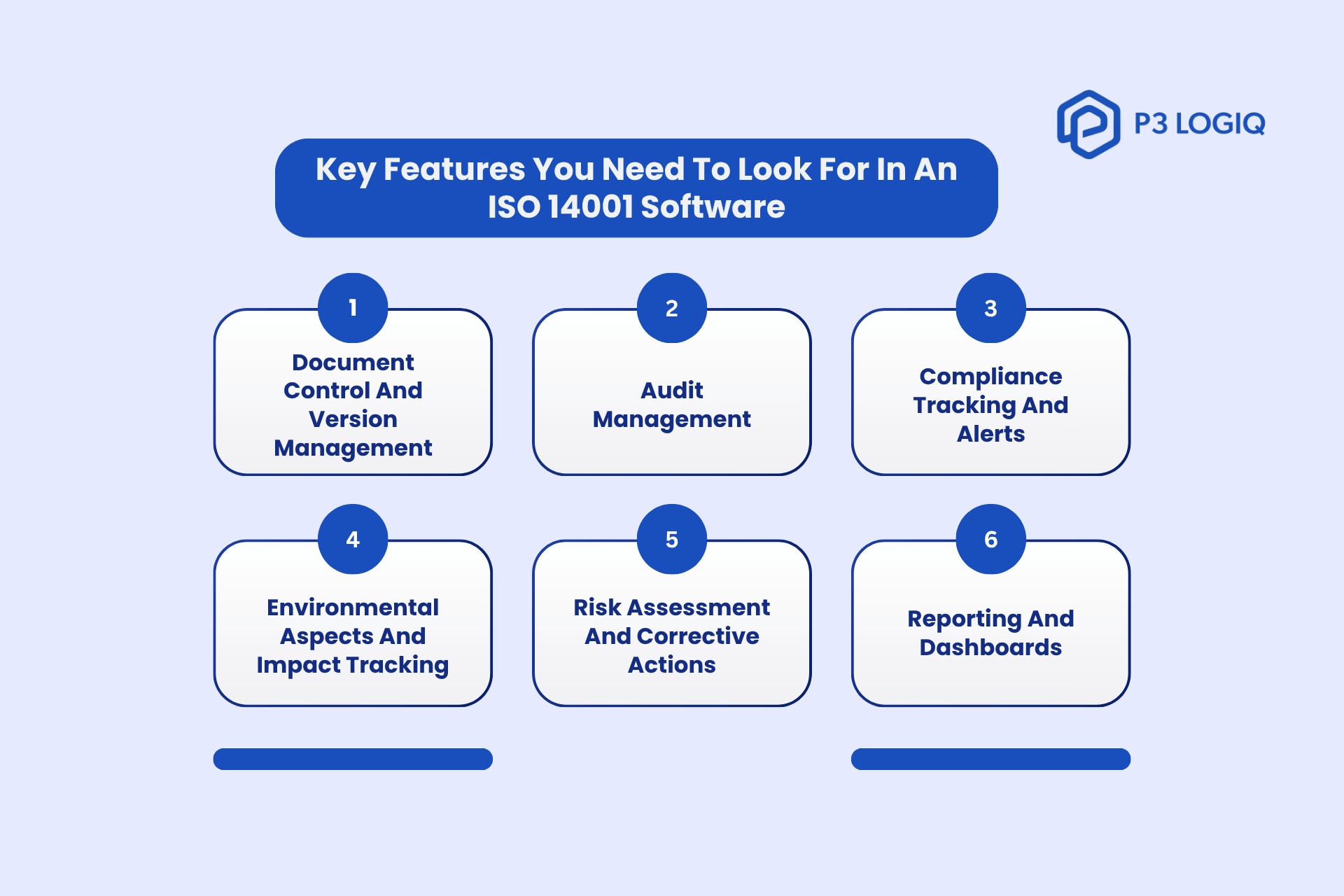
If you’re evaluating seriously, you are going to need features that support your daily ISO 14001 compliance work.
You need a system where your documentation updates are tracked, controlled, and audit-ready.
Plan, execute, and track audits with the audit management software. Gone are the days when spreadsheets and manual follow-ups were the trend.
Know what’s due, what’s overdue, and what needs attention right away, automatically.
You monitor environmental impact. This sits at the core of ISO 14001.
You identify risks and mitigate them early, assign actions to your team members, and track closure in one place. Implementing the risk management software helps you be proactive in this area.
Instead of just bland, raw data, you get to see insights in real-time, all in one go.
Some focus only on ISO compliance. Others combine EHS, ESG, and sustainability tools in one system.
Enterprise platforms often include mobile apps, risk tracking, audit workflows, and reporting dashboards. These systems handle large-scale operations across multiple locations. They also support sustainability tracking, such as emissions and resource usage.
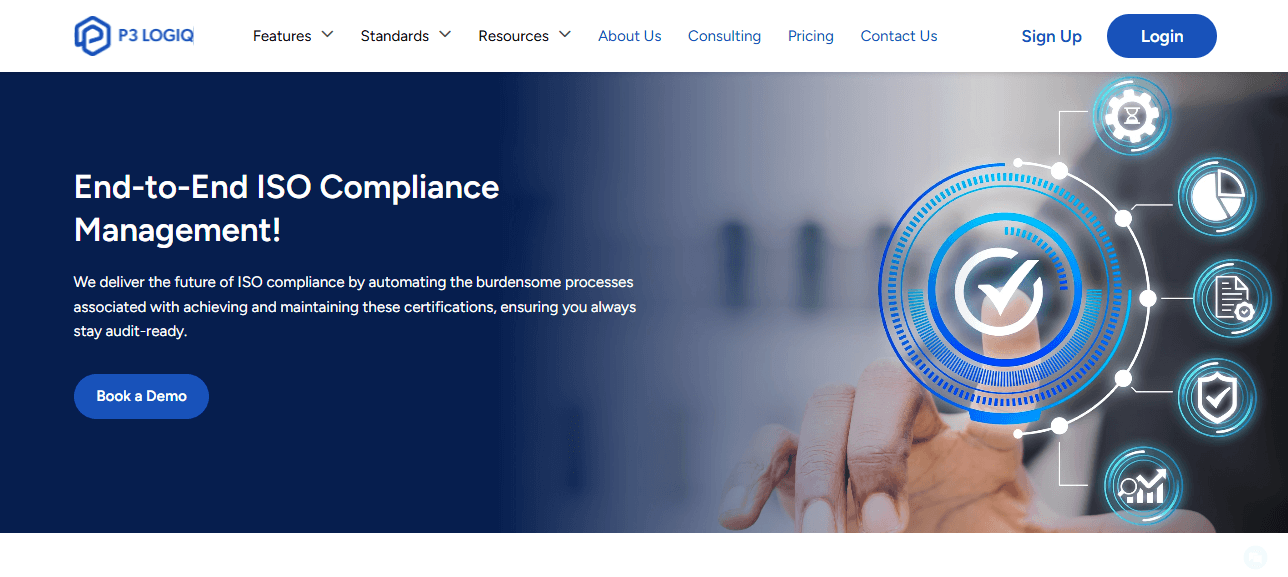
P3 LogiQ is an ISO compliance management platform that is dedicated to helping you simplify certification, audits, and ongoing compliance for you across multiple ISO standards, including ISO 9001, ISO 14001, ISO 27001, and ISO 45001, just to name a few.
It is designed for industries where compliance is part of daily operations, not something you revisit once a year.
Think about your current workflow.
When an audit is coming up, you start pulling documents.
You check if the versions are updated.
You follow up with your team for pending actions.
It turns into a rush.
Now shift that into a structured system.
Your documents are already controlled with version history.
Your audit workflows are predefined and mapped.
Tasks are assigned, tracked, and visible to the right people.
No last-minute scrambling.
You’re not preparing for audits.
You’re staying ready throughout.
Instead of using separate tools and files, everything sits in one place.
This structure matters more than features.
Because ISO 14001 is not about doing tasks once.
It’s about maintaining consistency over time.
We can turn your ISO compliance journey from a manual burden into a structured, automated system that is always audit-ready.
It is designed specifically for ISO standards, which reduces implementation complexity compared to generic EHS platforms.
Here’s where it separates itself from typical ISO tools.
One thing that stands out here.
P3 LogiQ is not built as a generic EHS tool trying to fit ISO workflows into it.
It comes from over 15 years of ISO consulting and auditing experience.
That shows up in how the system is designed.
The workflows follow how audits happen in real life.
The structure aligns with certification requirements.
The setup does not force your team to “figure things out.”
You’re not adapting your process to the software.
The software already reflects the process.
This is where the difference becomes clear.
Instead of reacting to compliance:
Reported outcomes include:
These are not surface-level improvements.
They come from removing manual coordination and replacing it with a system.
P3 LogiQ is used by companies that have not only outgrown spreadsheets and disconnected tools, but also that wants a dedicated ISO compliance system instead of a broad EHS tool.
It fits when:
It also works across both smaller teams and larger operations, because the structure remains the same even as complexity of your company increases.
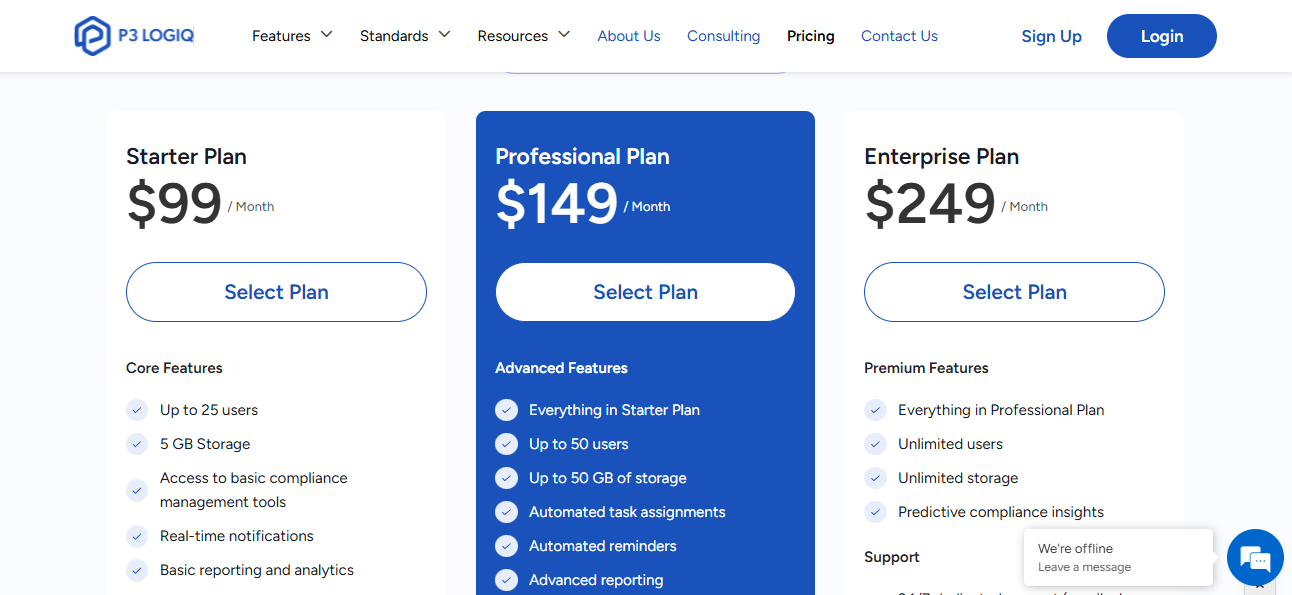
Custom pricing based on organization size and requirements:
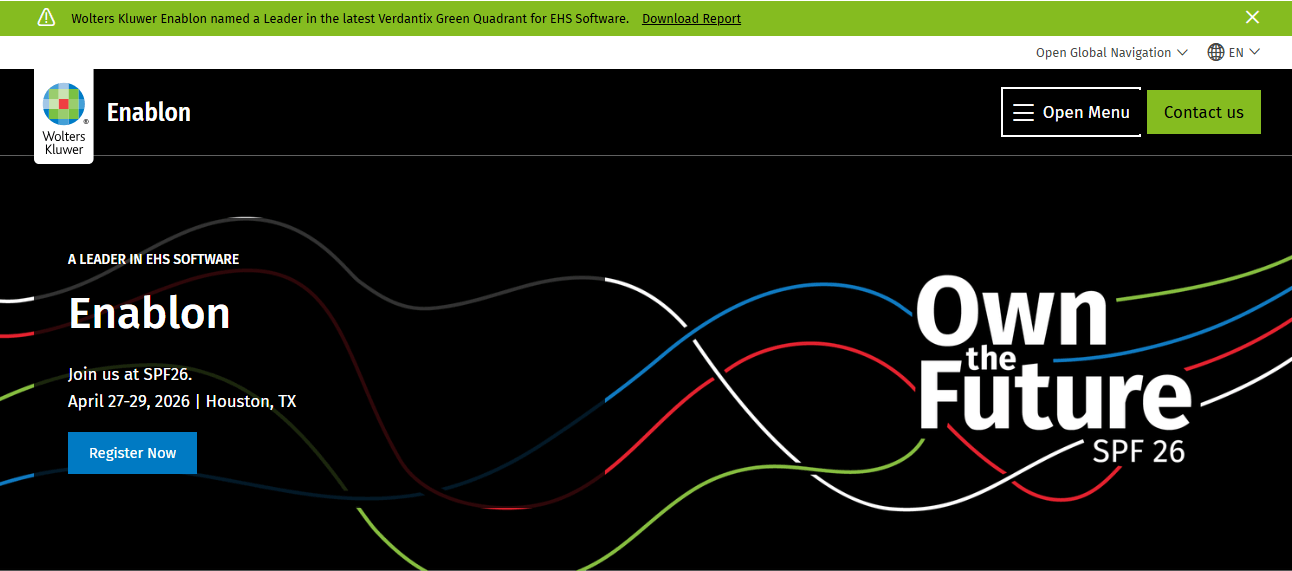
Enablon is a heavy-duty EHS, ESG, and risk management platform aimed at large companies dealing with multi-site environmental compliance. It is a Wolters Kluwer subsidiary, founded in France in 2000.
Enablon Go, the platform's mobile app, lets teams run inspections and log events from the field. Audit and inspection management works across global operations, and the risk framework covers operational, financial, and strategic exposure together. ESG reporting and sustainability performance tracking are also built in.
Large enterprises managing complex, multi-location environmental operations that need deep customization and the kind of scalability that smaller tools cannot handle.
Custom enterprise pricing is available upon request.
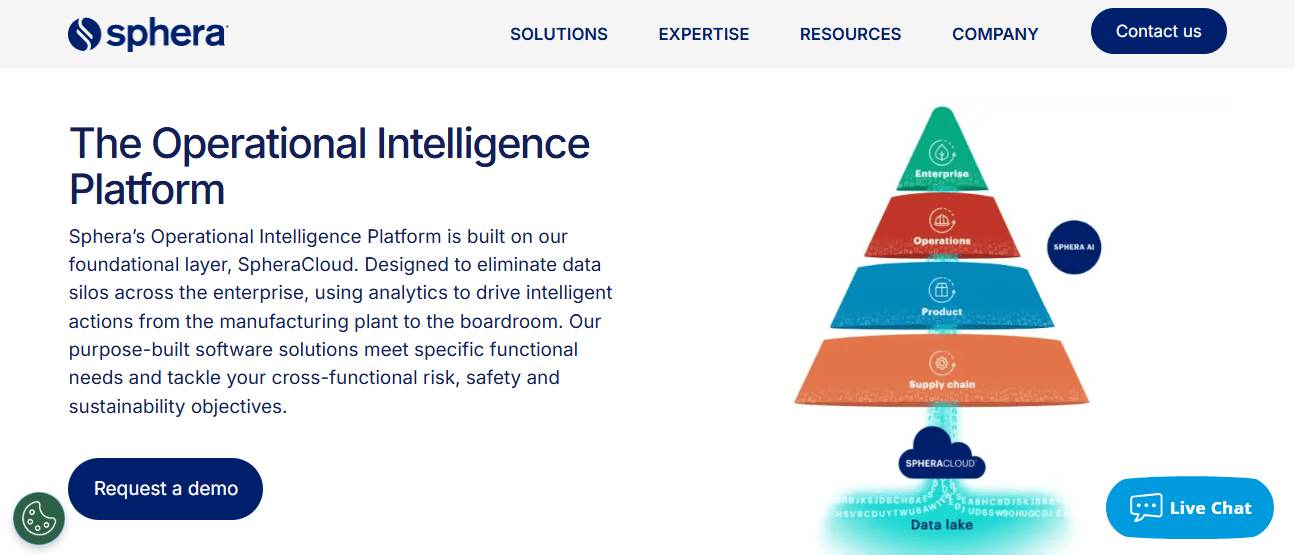
SpheraCloud is a cloud-based platform built for organizations that need serious environmental performance and sustainability management, not just a checkbox compliance tool.
It covers environmental impact modeling, automated GHG and water usage tracking, and mobile access for field teams. The platform also includes Sphera AI, which analyzes sustainability and risk data and surfaces action recommendations.
Companies focused on environmental impact and sustainability analytics
Custom enterprise pricing is available upon request.
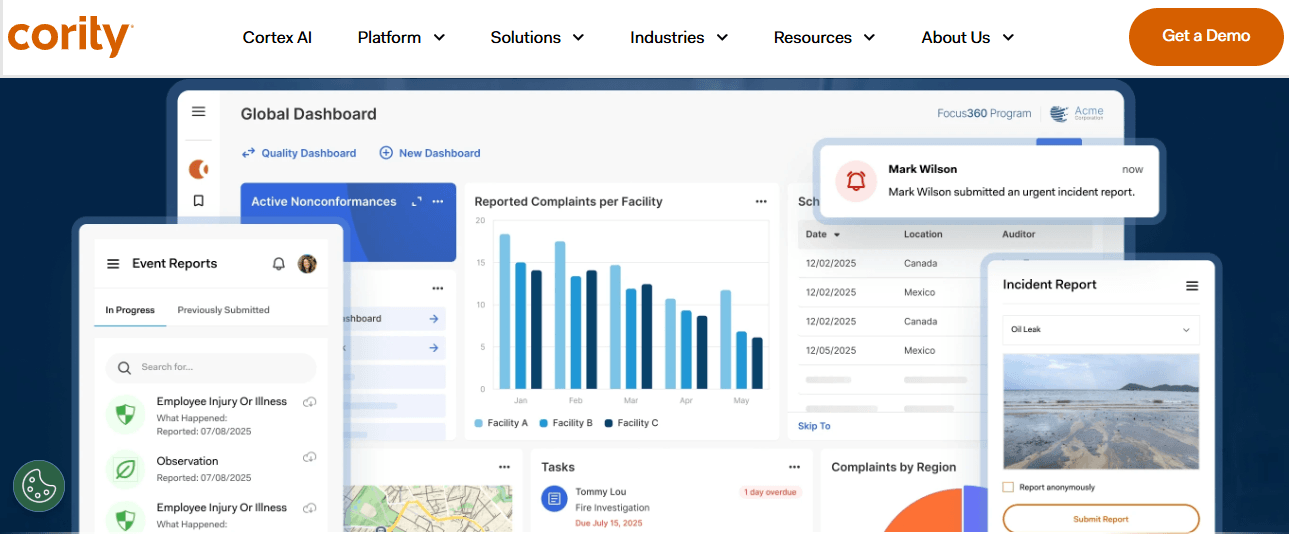
Cority is a full-suite EHS and ESG platform that brings environmental, health, safety, and sustainability management into a single system. The company was founded in 1989 under the name Medgate before rebranding.
The CorityOne platform centralizes all processes and EHS data for a full view of risk, with AI-assisted incident management for proactive detection. It also handles occupational health tracking and field reporting through the myCority mobile app, which works offline and syncs once reconnected.
Businesses that want an all-in-one system for EHS, ESG, and ISO compliance.
Custom enterprise pricing is available upon request.
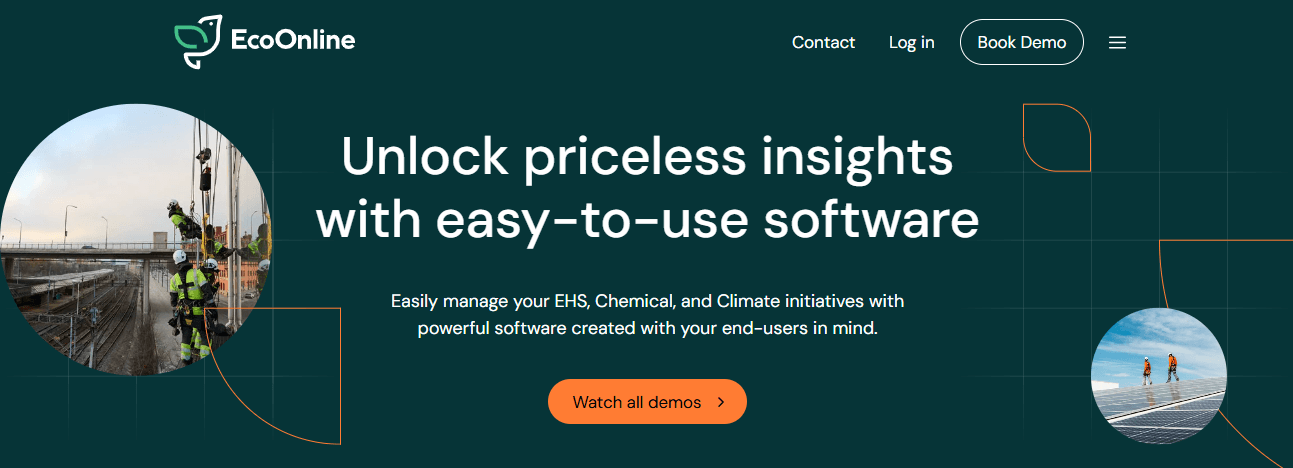
EcoOnline is an EHS platform where chemical safety and workforce protection sit alongside environmental compliance. It has been operating since 2000.
It centralizes safety data sheets with automatic updates and AI-assisted SDS creation, covers environmental compliance tracking, audit management software, and includes a mobile app built for field workers with features like timed check-ins, a panic button, and SMS fallback for low-signal areas. An AI-powered course builder handles employee training within the same platform.
Mid-to-large businesses prioritizing safety + environmental compliance together.
Custom enterprise pricing is available upon request.
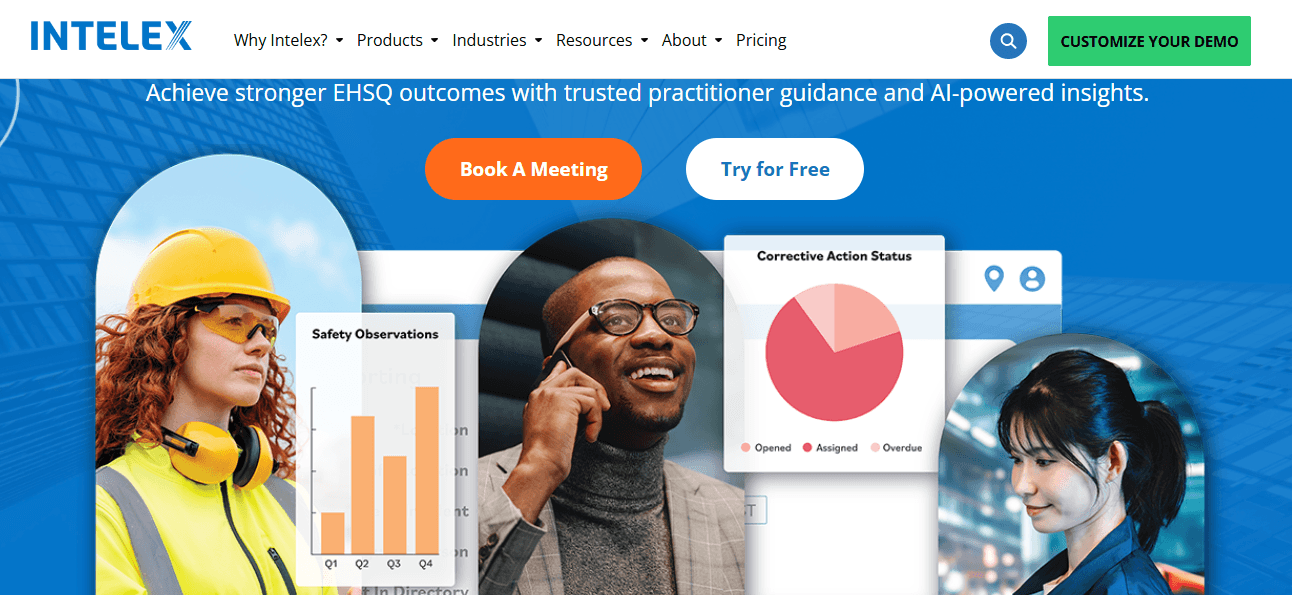
Intelex is an EHSQ (Environment, Health, Safety, and Quality) platform covering environment, health, safety, and quality management through configurable workflows. It has been around since 1992.
It offers no-code configuration for forms, workflows, and dashboards, audit and inspection tools that generate corrective action plans, and incident tracking that aligns with OSHA, ISO, and EPA requirements. Performance dashboards translate compliance activity into reporting your leadership team can act on.
Businesses managing multiple ISO standards together.
Starts at $44 USD/month for safety essentials, and the rest are advanced and enterprise; it is entirely based on custom pricing.
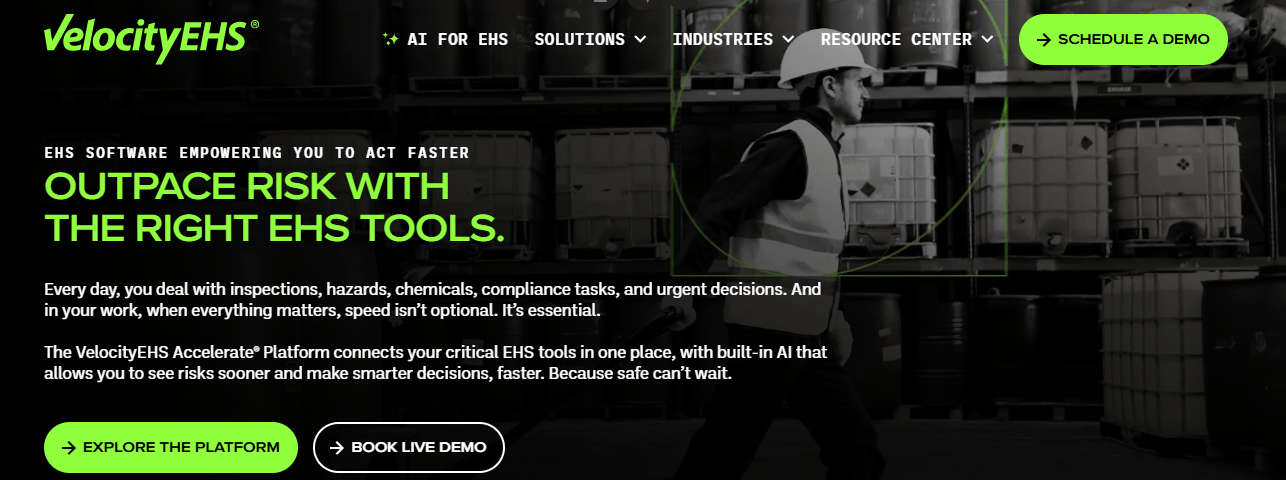
VelocityEHS is an all-in-one EHS platform that brings compliance, risk, and sustainability into a single system. It also supports EHG and GHG reporting.
Velocity AI monitors for hazards in real time and analyzes incident data for root causes. The platform covers chemical tracking, ergonomics, contractor safety, and permit workflows across 24+ tools under one login, with automated action tracking and mobile-friendly access built in.
Businesses looking for a plug-and-play EHS solution with ISO support.
Custom enterprise pricing is available upon request.
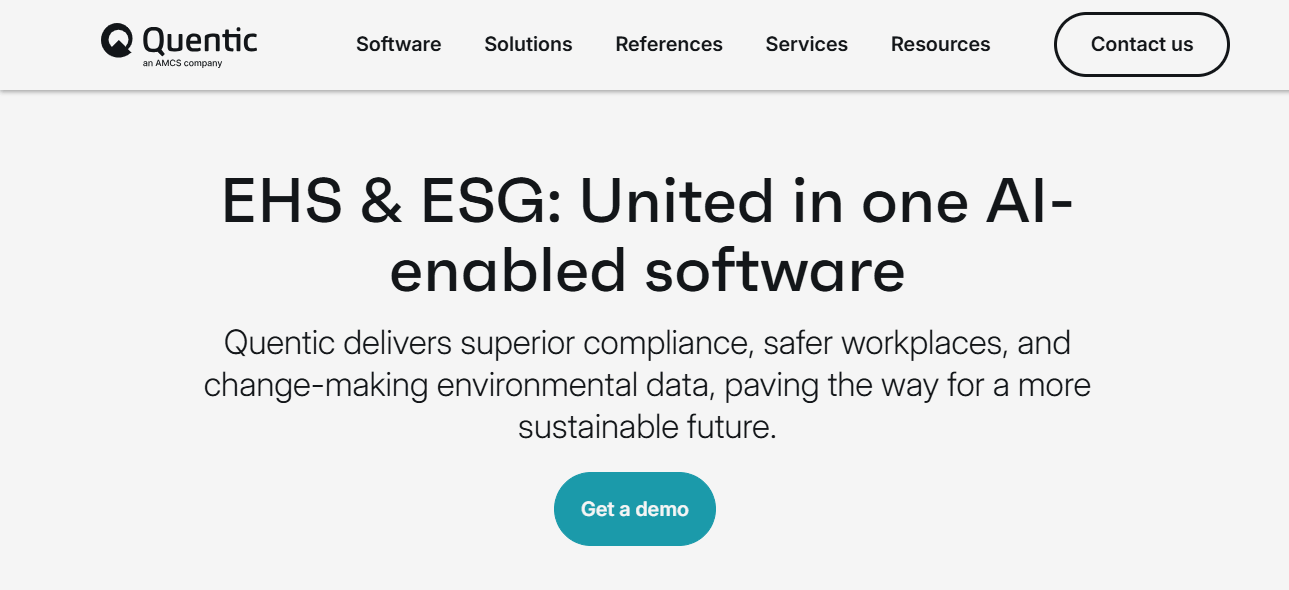
Quentic is a modular EHS and sustainability platform built for organizations that want to control exactly what they are paying for and using. It was founded in 2007.
The modular setup lets teams add only what they need, whether that is risk, audits, incidents, or chemical management. Some of the compliance management features, like the mobile app supports offline reporting with later sync, and AI tools assist with root cause analysis and report summaries. Chemical registers, auto-generated training certificates, and legal requirement tracking are also part of the platform.
Companies looking for a flexible EHS modular system with ISO alignment.
Custom enterprise pricing is available upon request.
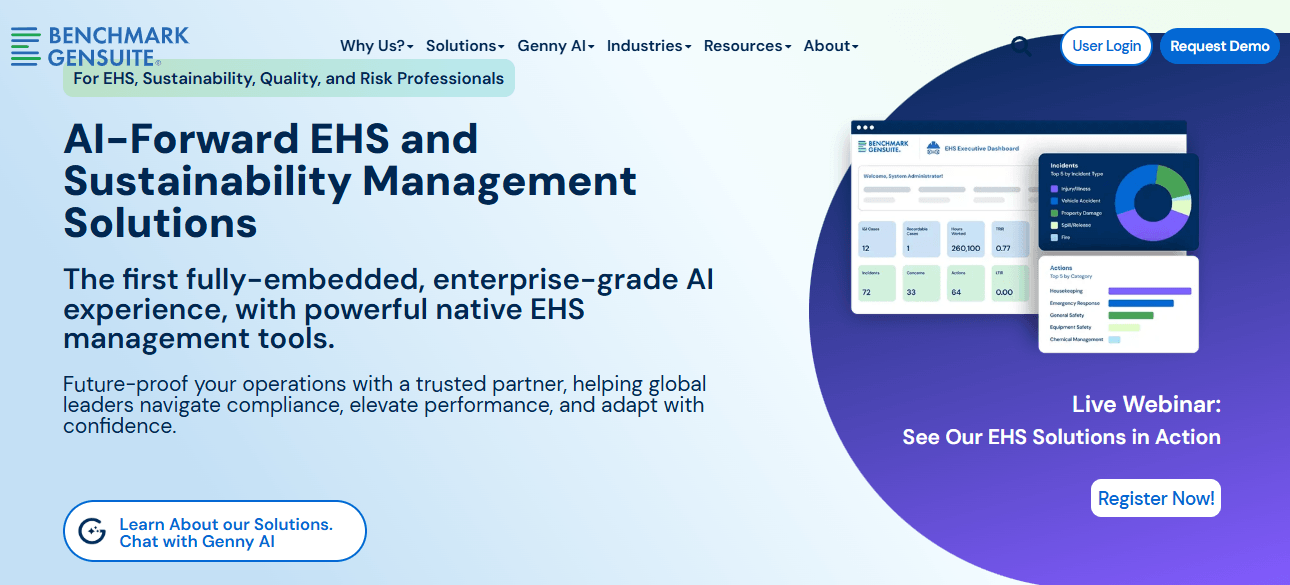
Benchmark Gensuite is an AI-powered cloud platform built for large organizations running EHS and ESG programs across multiple locations and regulatory environments. It has been operating since 1997.
It covers incident logging, audit tracking, corrective actions, and sustainability metrics like energy, water, and carbon emissions. Genny AI analyzes data and reports through real-time dashboards, and the mobile app supports offline field reporting that syncs once back online.
Large businesses with global EHS and ISO requirements.
Custom enterprise pricing is available upon request.
By now you know that ISO 14001 compliance is not difficult because of the standard; it becomes difficult because of how you manage it. Basically, it is not meant to be taken lightly or for granted.
I believe that choosing the right ISO 14001 compliance software makes a huge difference in how well your company performs as per the ISO standards. It just takes away your headache and does all your management in one systematic platform.
But there are so many options to choose from that have different uses based on your company’s needs.
Some tools give you broad EHS capabilities. Others focus on sustainability analytics. And while those are useful, they don’t always solve your core ISO workflow problem, which is staying consistently audit-ready without chaos.
If your goal is simply to “manage” compliance, many tools can help.
However, if your goal is to build a structured, scalable ISO system where audits, documentation, and compliance run seamlessly while aligning to the environmental standards. 👇
P3 LogiQ is where it is at.
This isn’t just another platform; it gives you a structured system designed specifically for ISO standards as well as EHS capabilities and insights, which are backed by real-world expertise.
👉 Are you ready to turn ISO 14001 compliance into a system that actually works? Book a free demo call with us and we’ll help you step-by-step on how structured compliance software changes everything for you.
Not really, no. ISO 14001 doesn't require you to use any specific tool. Plenty of businesses start with spreadsheets and folders and get certified just fine. But the moment your operations get a bit more complex, manual systems start to crack. Things slip through, documents go out of date, and audit prep becomes this frantic scramble. Software just makes it easier to keep everything in one place and actually stay on top of it.
It varies a lot, honestly. Smaller tools have entry-level pricing that's pretty accessible. Bigger platforms tend to quote custom pricing once you get into larger teams or more complex operations. Generally speaking, what you're paying for is how much of the heavy lifting the software does for you. More automation, better reporting, easier scaling... that's where the cost goes up.
Absolutely. And honestly, starting early is probably the smarter move. When you're small, it's the right time to build good habits around documentation and compliance. Trying to set all of that up later, when you're already stretched, is a lot harder. Software gives you a proper structure from the beginning so things don't get messy as you grow.


Businesses need document management systems (DMS) to ensure ISO and R2 compliance, improve efficiency, and stay audit-ready. The article highlights key features like version control, security, and automation while reviewing the top 5 DMS solutions. P3 LogiQ stands out for its compliance-focused automation and secure document tracking
Read More
Recycling businesses gain efficiency, compliance, and sustainability with RIOS certification. It streamlines quality management, environmental responsibility, and worker safety, helping companies avoid legal risks and boost credibility. P3 LogiQ simplifies the certification process with automation, document control, and compliance tracking, making operations smarter and safer.
Read More
Audit Management Software (AMS) automates compliance tracking, streamlines workflows, and reduces audit risks. Key features include automated scheduling, compliance checklists, CAPA tracking, vendor risk management, and integrations.
Read More
Learn how audit management systems simplify ISO and R2 compliance by automating audits, managing documentation, and minimizing compliance risks efficiently.
Read More
In 2025, many businesses still face challenges in compliance management due to outdated methods like spreadsheets and fragmented software. This inefficiency leads to missed deadlines, increased risk, and regulatory penalties. The blog emphasizes the importance of modern compliance tools that automate workflows, enhance risk management, and streamline regulatory processes to meet ISO and R2 standards.
Read More
The rise in e-waste and environmental concerns makes responsible electronics recycling essential. The R2 Certification sets a global standard for safe, sustainable, and data-secure recycling practices. Developed by Sustainable Electronics Recycling International (SERI), R2 helps businesses manage environmental risks, data security, worker safety, and legal compliance.
Read More
Businesses face increasing challenges in managing complex regulatory compliance. Manual methods such as spreadsheets and paperwork can lead to missed deadlines, inefficiencies, and costly penalties. Compliance management software offers a streamlined solution to reduce risks, automate processes, and improve operational efficiency.
Read More
Maintaining R2 Certification is crucial for businesses in the e-waste recycling industry, ensuring regulatory compliance, sustainability, and strong stakeholder trust. This guide outlines 10 best practices to help businesses simplify operations, reduce risks, and stay compliant.
Read More
Unlock the value of ISO risk management certification. Explore its impact on compliance, risk mitigation, and business expansion.
Read More
Explore the top 5 ISO risk management software tools for 2025, including document management solutions for streamlined compliance and increased efficiency.
Read More
Find the ideal document management software (DMS) for your business. Learn how to choose with expert tips, key features, and insightful guidance
Read More
Unlock the power of a Document Management System (DMS). Learn how it can revolutionize your business operations.
Read More




.png)
.png)



.jpg)


.jpg)
.jpg)




.jpg)

.png)
.png)
.png)


.png)

