.jpg)
.png)
Have you ever been on the verge of signing a big client, only to hear the question:
“Are you 9001 certified?”
And just like that, the deal pauses.
Or maybe you applied for a tender and got rejected, not because your product or service wasn’t good enough, but because your company was not compliant with ISO 9001:2015.
That’s when you start asking yourself how to get ISO 9001 certification.
It sounds straightforward at first. Fill some documents, create a few policies, schedule an audit, and done, right?
But once you begin, you realize getting ISO 9001 is far more complex than it looks.
You might jump in with full energy, but you soon realize the hassle that comes with all the paperwork.
If you’re a quality manager, operations head, founder, or compliance officer, you’ve probably wondered, “Why is this so complicated?” The ISO 9001:2015 registration process challenges even the most organized teams. Keeping your QMS documents in sync with spreadsheets and manual folders is enough to give anyone a headache.
The good news? It doesn’t have to be this hard. Let’s break down the steps for you to achieve ISO 9001:2015 and look at how ISO 9001 software can simplify the certification process. Modern systems make this journey much faster.
Before we get into how to get ISO 9001 certification, let’s first understand why this standard is considered the global benchmark for quality management.

GoBright is a Netherlands-based company that develops workplace management software for modern offices, including desk booking and meeting room tools.
Cutting through the fancy talk, ISO 9001:2015 stands as the worldwide gold standard for managing quality. It is not just a badge. A 2024 Emerald Publishing study on ISO 9001 benefits shows that it drives long-term success by helping businesses build a reliable system to deliver high quality every single time.
The ISO 9001 certification process is about improving how your business runs, not just completing paperwork. Whether you are a small business or a large company, the goal is to align your daily operations with the ISO 9001:2015 standard.
You may ask, “How long does it take to get ISO 9001 certified?” The answer depends on your company’s size and how prepared you are. Most businesses in the USA can achieve certification within three to six months if they follow a clear and structured plan.
Let's break down the certification process.
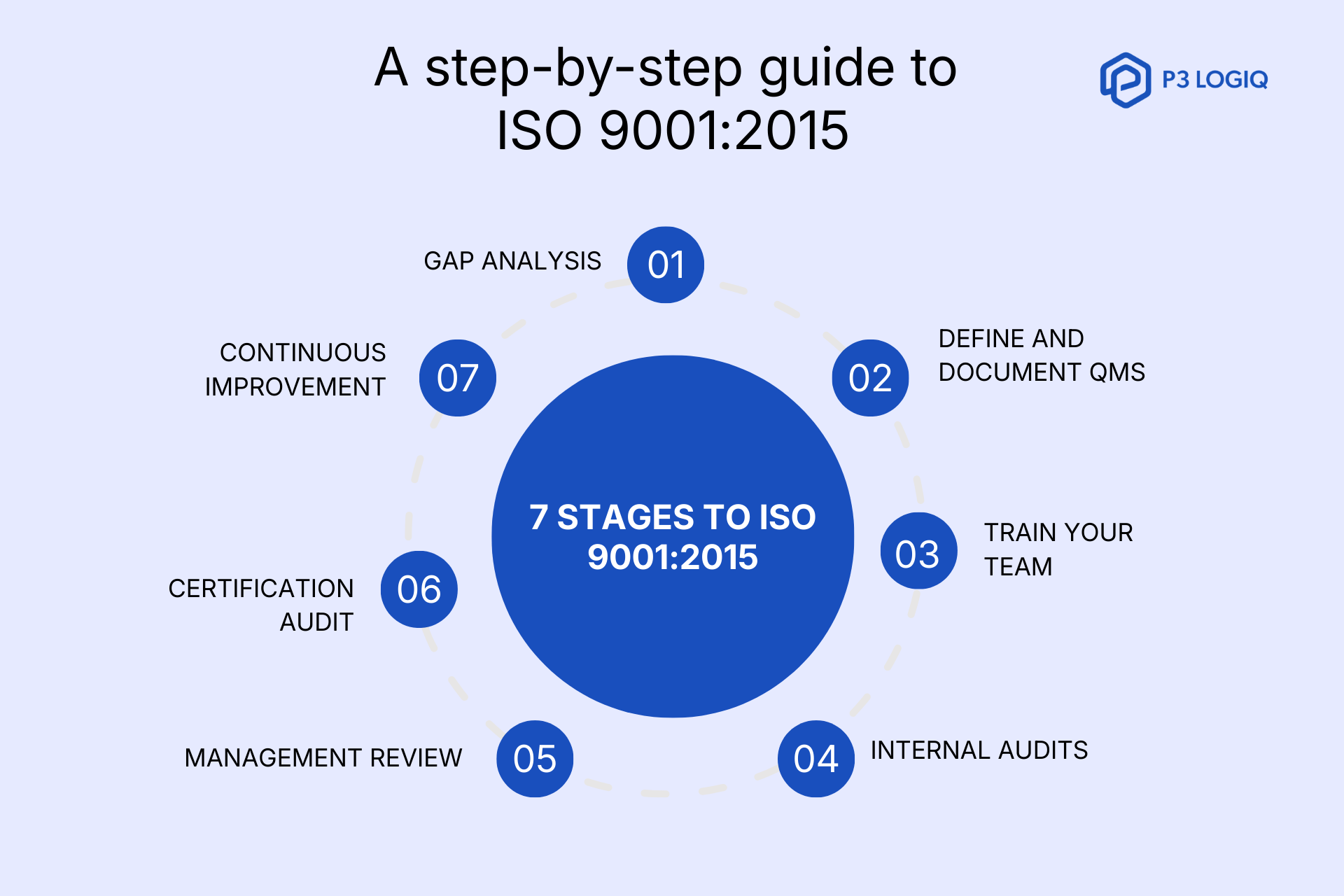
Before moving forward, you need a clear picture of where you currently stand. A gap analysis compares your existing processes with ISO 9001:2015 requirements and highlights what’s missing.
Ask Yourself:
Many companies across the United States are already using this simple plan. According to the ISO Survey 2024, the US had nearly 29,000 active ISO 9001:2015 certificates. New data shows that more American companies are achieving ISO 9001 certification every year.
.png)
Using a structured system helps you find these gaps instantly. A centralized system helps you assign tasks and watch your progress so you are always ready for the registration process.
This is where many companies get stuck; they overcomplicate things. Keep it simple. ISO 9001 is about being clear so that everyone on your team can follow the same steps, EVERY. SINGLE. TIME.
It’s about making sure your business runs smoothly, no matter who’s on the team. Ask yourself:
Stop juggling multiple files and trackers. A structured system brings everything together so you can fix gaps step by step.

If you’re still using a dozen spreadsheets to track your ISO 9001 progress, you know the struggle. It’s a complete nightmare, especially for larger teams. Using a centralised ISO dashboard simplifies the process. You can view everything in one place and rest assured that nothing is missed.
ISO 9001 is about more than just paperwork. It’s about how your team works every day.
When you start an ISO process, your team might feel a sudden shift and urgency. This change can be overwhelming. They might worry that new training will just get in the way of their "real" work.
This is where you stand up as a leader to help everyone adjust. Instead of just giving orders, show them the "why." Explain that while things may feel busy now, getting ISO 9001 certification will make their future work less chaotic.
When your team understands how their hard work fits into the company’s big vision, they stop seeing ISO as a chore. They start seeing it as a way to win together.
Your team should clearly understand:
Using training management software helps you track employee learning. This structured system ensures your team is prepared and audit-ready at all times.
It’s your chance to check your own QMS and find any small mistakes before the official auditor shows up.
Think of it like a practice test, you get to fix things before they become real problems.
To make it easier for your business:
You can also use an internal audit dashboard to make everything simpler. With all your audit information in one place, your team knows exactly what to do, and last-minute stress disappears. It’s a great way to spot gaps early and tackle them so that when the real audit happens, your team is fully prepared.

For 9001:2015 to truly work, it can't just be a project for the quality team; it needs to be supported by the leadership. A management review helps make sure your quality goals are on track, risks are managed, and improvements are being followed through. Quality starts at the top.
As a leader, you should check and understand:
Once you’ve put your QMS in place, you’re ready for the official audit. As part of the 9001:2015 registration process, you’ll submit a formal application to an accredited certification body. They will then guide you through the remaining steps. If you’ve followed everything so far, breathe; you’ve already done the hard work.
Everything goes much smoother when:

One of the core principles of 9001:2015 is the concept of continuous improvement. The goal isn’t just to pass an audit but to keep improving your business. This means:
9001:2015 is an ongoing system. It helps your business maintain high standards and shows customers that you always aim to improve.
Simply put, ISO 9001:2015 certification serves as your stamp of quality. It is for any business in the USA that values smooth operations, from small businesses to large American corporations.
When your business becomes 9001 certified, you show customers that your processes are reliable and built to deliver consistent results.
In fact, a recent PECB Insights article found that 82% of customers trust ISO 9001 certified brands more than others. This added trust leads to real results. This is why organizations adopt ISO 9001, as it helps build credibility and long-term customer confidence.

Enterprise buyers now require ISO 9001:2015 certification as a basic condition for vendor approval. In the United States and global markets, it serves as a baseline qualification for doing business. Without certification, your company may even lose access to high-value contracts and international opportunities.
ISO 9001:2015 is more than a quality badge. When your business becomes certified, it shows a clear commitment to quality and reliable processes.
Beyond eligibility, ISO 9001 signals operational strength. Clients in competitive industries prefer vendors with structured processes and risk controls. When your company becomes ISO 9001 certified, you show that your business meets standard requirements and works in a consistent way.
A 2022 ISO survey of management system standard certifications shows there were over 1.2 million valid ISO 9001 certificates worldwide in 2022. It is currently the most widely adopted quality management standard in the world.
So, you started the process. Everything was going fine until the paperwork started piling up. Documents here. Risk registers there. Audit checklists somewhere. Soon, the whole process starts to feel scattered. Your QA team is spending sleepless nights chasing files, asking for updates, and trying to make sure nothing gets missed before the audit.
Now imagine a different situation. Instead of folders and spreadsheets, everything sits in one place. Documents are easy to update. Audit records stay organized without extra effort. When the auditor asks for something, it is already there.
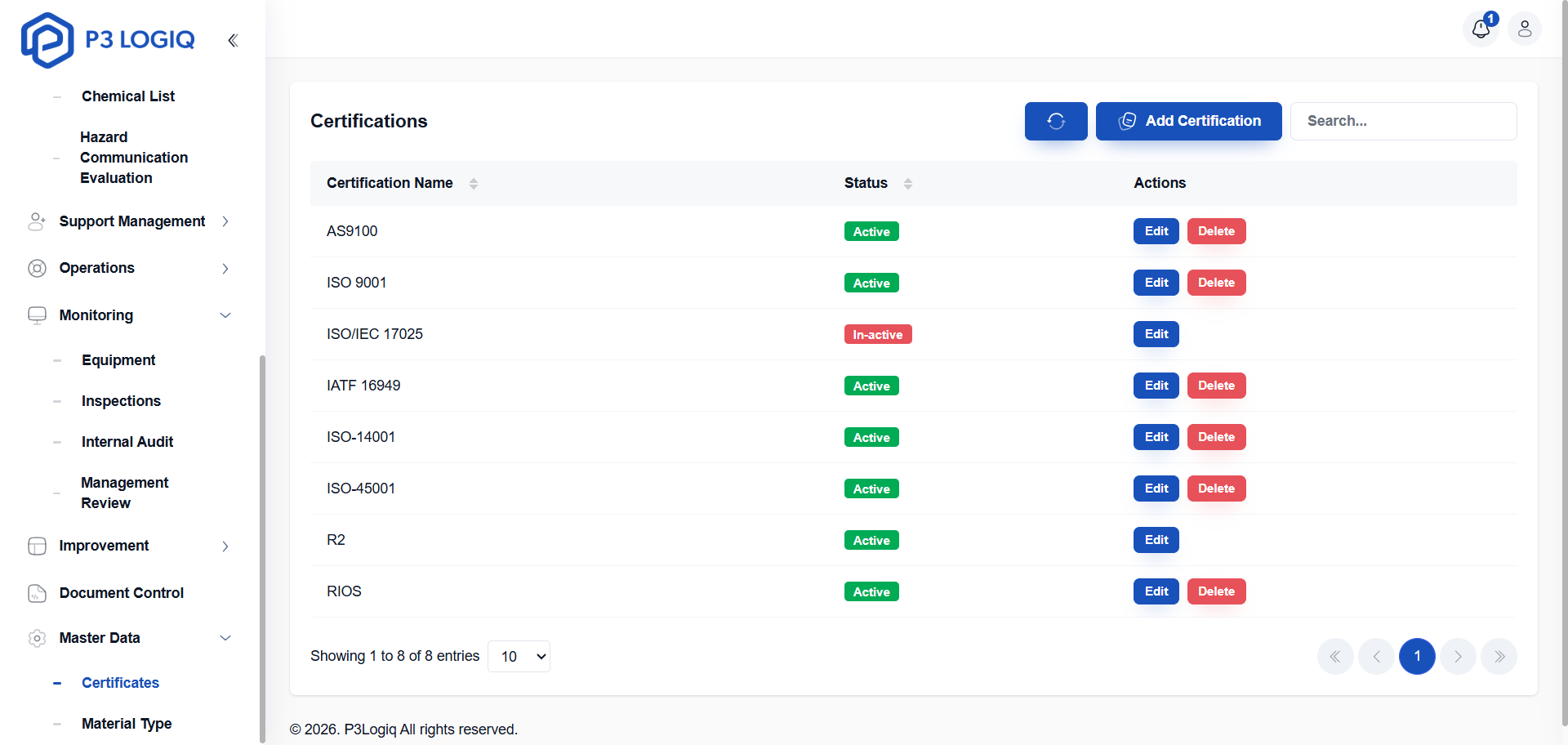
This is exactly what an automated document management system like P3LogiQ is designed for. It brings your ISO documentation and records into a single structured system. Teams stay aligned, progress becomes visible, and preparing for certification feels far more manageable.
Getting ISO certified doesn’t have to be stressful. With the right system in place, everything can flow smoothly.
Here is a short video to show what a streamlined ISO compliance process looks like:
Many organizations struggle to implement ISO 9001. Most audit failures happen for simple reasons. Usually, it comes down to poor planning, messy paperwork, or a team that is not on the same page.
Avoid these common traps:
Many of these issues happen because companies don’t use a centralized compliance system.
Here’s how structured document control should look:

Traditionally, ISO 9001 meant endless paperwork. Today, modern cloud platforms handle the heavy lifting for you. The right compliance management software automates your QMS, keeping your team audit-ready all year without stress.
A good system does more than just store your files. It tracks due dates, manages your team’s training, and spots mistakes before an auditor ever sees them.
No matter the size of your business, ISO doesn’t have to feel like a headache. The right tool keeps everything in one place, so you can stay on top of tasks and focus on growing your business instead of chasing paperwork.
At P3LogiQ, we make it easy to achieve ISO 9001:2015 certification. The process may seem like a lot of work, but with the right tools, it helps businesses grow and gain trust. By following these steps and using modern software, you can turn a stressful requirement into a major business advantage.
P3 LogiQ’s compliance platform brings your data together in one smart dashboard. It handles gap analysis, document control, and training records all in one place. Instead of chasing files through emails, your team uses a single system that keeps your business audit-ready effortlessly, whether you operate in the U.S. or across multiple locations.
Whether you are just starting or ready for your audit, a structured system makes achieving ISO 9001:2015 easier. If you would like guidance on the next steps, feel free to contact us and our team, and we will be happy to help you move forward with confidence.
Yes! ISO 9001 is the most popular quality standard in the United States. Many American government agencies and big companies require their suppliers to have it. It is the gold standard for showing that your business is reliable and organized.
You don’t apply to a government office. In the U.S., you contact an accredited registrar. They check your QMS, do a two-step audit, and give you the certificate once your processes meet all ISO 9001:2015 requirements.
Once you finish the ISO 9001 registration process, your certificate is valid for three years. However, you must have a "check-up" audit every year to prove you are still following the 2015 rules. Every three years, you will go through a full recertification to keep it active.
You cannot get the official certificate for free because you must pay an accredited auditor to verify your work. However, you can prepare your Quality Management System (QMS) internally at no cost using free templates, guidelines, and self-assessments before scheduling the official certification audit.
Yes, you can handle most of the ISO 9001:2015 process online. U.S. companies use digital tools and remote auditors to save time. Instead of printing papers, you upload files to the cloud. Teams can train over video calls, and auditors can check work using a webcam. This makes it easier for small and medium businesses to get certified while saving travel costs.
During an ISO 9001 audit, an external auditor reviews your processes, records, and QMS to ensure they meet the standard. They check documentation, interview staff, and observe operations. If everything meets the requirements, the auditor approves your system and issues your ISO 9001:2015 certification.
Getting ISO 9001:2015 in 2026 is a step-by-step process. First, create a QMS and document workflows. Then, complete internal checks and pass an audit by a U.S. accredited registrar. Using cloud-based compliance tools helps small and large businesses stay organized and achieve certification more easily.



Businesses need document management systems (DMS) to ensure ISO and R2 compliance, improve efficiency, and stay audit-ready. The article highlights key features like version control, security, and automation while reviewing the top 5 DMS solutions. P3 LogiQ stands out for its compliance-focused automation and secure document tracking
Read More
Recycling businesses gain efficiency, compliance, and sustainability with RIOS certification. It streamlines quality management, environmental responsibility, and worker safety, helping companies avoid legal risks and boost credibility. P3 LogiQ simplifies the certification process with automation, document control, and compliance tracking, making operations smarter and safer.
Read More
Audit Management Software (AMS) automates compliance tracking, streamlines workflows, and reduces audit risks. Key features include automated scheduling, compliance checklists, CAPA tracking, vendor risk management, and integrations.
Read More
Learn how audit management systems simplify ISO and R2 compliance by automating audits, managing documentation, and minimizing compliance risks efficiently.
Read More
In 2025, many businesses still face challenges in compliance management due to outdated methods like spreadsheets and fragmented software. This inefficiency leads to missed deadlines, increased risk, and regulatory penalties. The blog emphasizes the importance of modern compliance tools that automate workflows, enhance risk management, and streamline regulatory processes to meet ISO and R2 standards.
Read More
The rise in e-waste and environmental concerns makes responsible electronics recycling essential. The R2 Certification sets a global standard for safe, sustainable, and data-secure recycling practices. Developed by Sustainable Electronics Recycling International (SERI), R2 helps businesses manage environmental risks, data security, worker safety, and legal compliance.
Read More
Businesses face increasing challenges in managing complex regulatory compliance. Manual methods such as spreadsheets and paperwork can lead to missed deadlines, inefficiencies, and costly penalties. Compliance management software offers a streamlined solution to reduce risks, automate processes, and improve operational efficiency.
Read More
Maintaining R2 Certification is crucial for businesses in the e-waste recycling industry, ensuring regulatory compliance, sustainability, and strong stakeholder trust. This guide outlines 10 best practices to help businesses simplify operations, reduce risks, and stay compliant.
Read More
Unlock the value of ISO risk management certification. Explore its impact on compliance, risk mitigation, and business expansion.
Read More
Explore the top 5 ISO risk management software tools for 2025, including document management solutions for streamlined compliance and increased efficiency.
Read More
Find the ideal document management software (DMS) for your business. Learn how to choose with expert tips, key features, and insightful guidance
Read More
Unlock the power of a Document Management System (DMS). Learn how it can revolutionize your business operations.
Read More




.png)


.png)



.jpg)



.jpg)
.jpg)





.jpg)

.png)

.png)



.png)

