
Many U.S. businesses are familiar with ISO standards, yet they underestimate how much a single certification can transform their competitive position.
Consider this.
A small U.S.-based IT services company was stuck competing for low-value government contracts, typically $15,000 to $20,000 projects with thin margins and little long-term stability.
After implementing ISO 9001 certification, their positioning changed.
Within a few years, they were qualifying for contracts ranging from $100,000 to over $1 million. Over a five-year period, their total government contract revenue nearly doubled.
And this isn’t an isolated case.
A meta-analysis of 92 scientific studies found that ISO 9001 certification is positively associated with improved financial performance. Another international study reported average sales increases of 48.3% among ISO 9001 certified firms.
So are the ISO 9001 benefits real and do the advantages of ISO 9001 certification truly justify the investment?
If you're evaluating whether ISO 9001 certification makes strategic and financial sense for your business, you’re in the right place.
Let’s break down the 11 key ISO 9001 benefits that matter most for growing companies in today’s competitive market.
ISO 9001 is the world’s most widely recognized quality management standard. More than 1 million organizations across 178 countries hold a valid ISO 9001 certification.
It is published by the International Organization for Standardization and provides a structured framework known as a Quality Management System, or QMS. This framework helps businesses:
• Standardize their processes
• Consistently deliver quality products and services
• Meet customer and regulatory requirements
• Drive continuous operational improvement
A common misconception is that ISO 9001 is simply documentation or paperwork.
That perception is outdated.
The current version, ISO 9001:2015, is built around practical principles such as risk-based thinking and proactive risk management, customer focus, leadership accountability, and evidence-based decision-making.
In practical terms, ISO 9001 does not tell you what decisions to make. It provides a structure for how to manage your operations consistently, efficiently, and with fewer costly errors.
For many U.S. businesses, particularly in manufacturing, IT services, construction, and government contracting, ISO 9001 certification has shifted from a competitive advantage to a competitive necessity.
Now, let’s see the key benefits of ISO 9001 certification and why they matter for growing businesses.
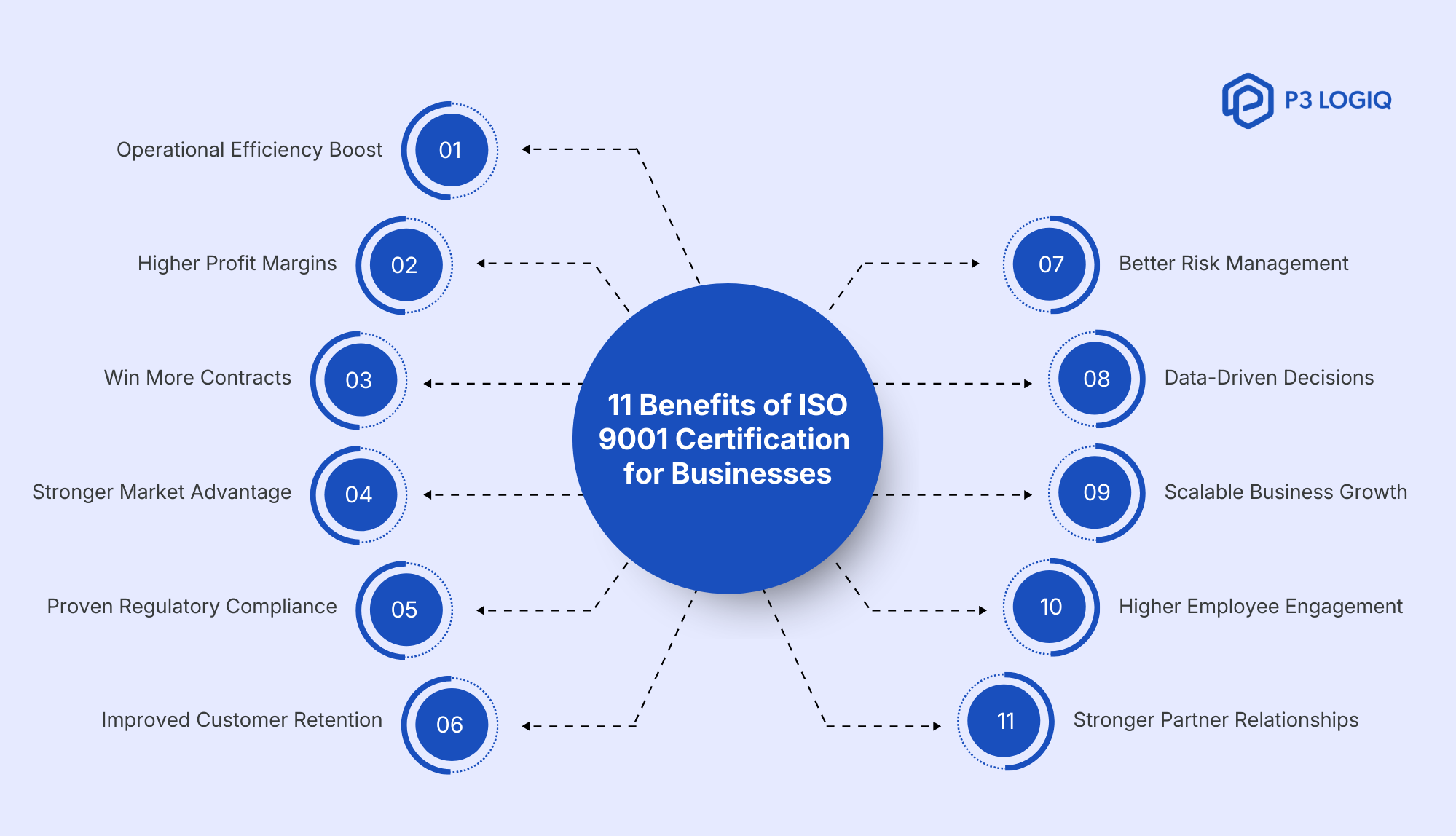
The benefits of ISO 9001 certification are not limited to compliance or checklists. Many ISO 9001 advantages directly impact profitability, risk control, and growth.
Here are 11 key ISO 9001 benefits that matter most for modern, growth-focused organizations and clearly show the advantages of ISO 9001 certification.
Let’s start with a scenario you've probably lived through.
Your team does the same task five different ways. One person uses a spreadsheet. Another uses email. Someone else just... remembers stuff.
And when something goes wrong? Nobody knows where the breakdown happened.
That's exactly what ISO 9001 fixes.
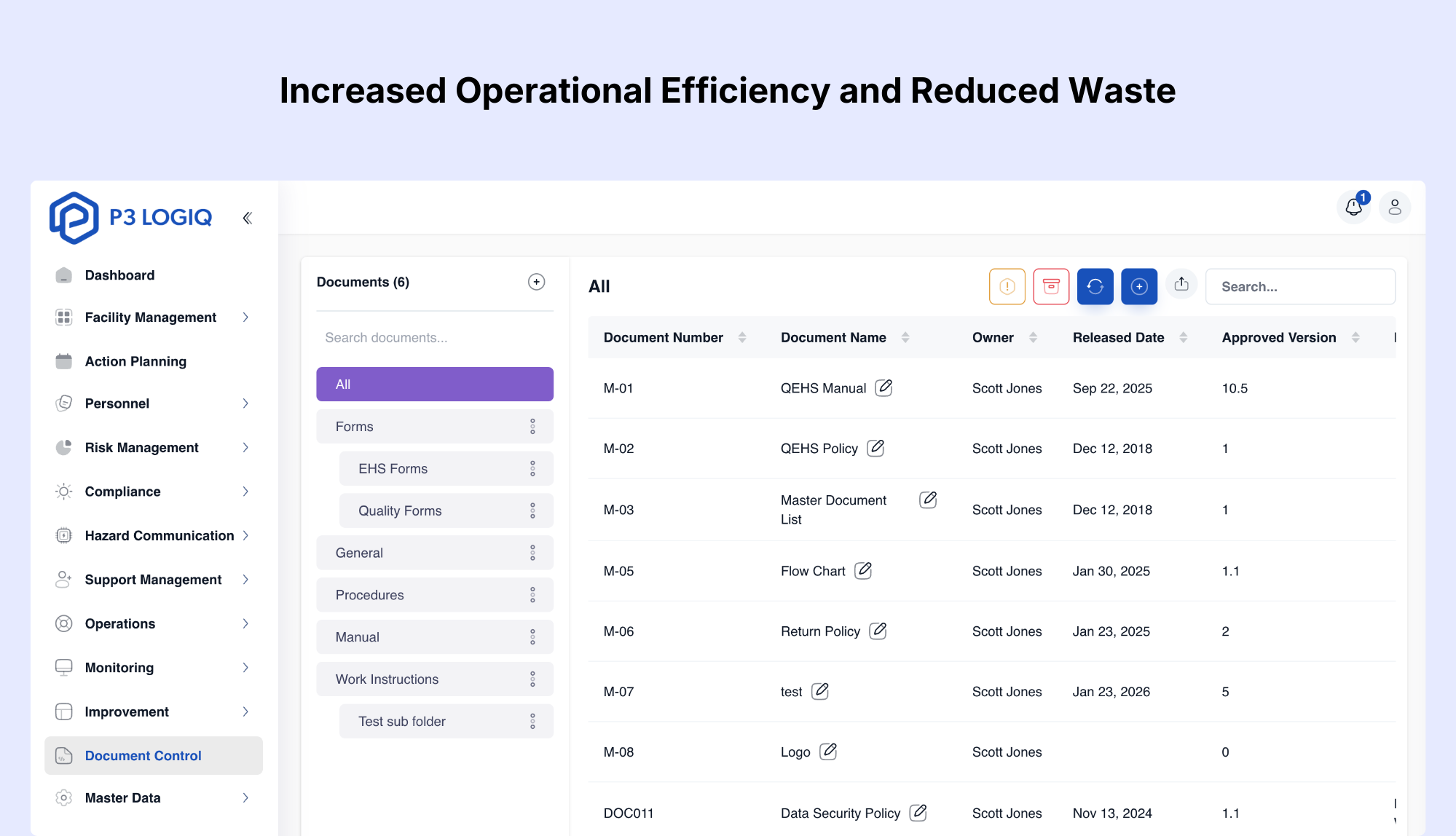
It requires you to map out your key processes, document them, and control them using a structured document management system. So there will be no more guessing and no more "we've always done it this way."
And the result is fewer errors, less rework, and way less waste.
Many U.S. manufacturers report cost savings in the range of 5 to 15 percent after implementing structured quality management systems. These efficiency gains directly improve profit margins.
"But we're a small company. Do we really need all that?"
If you’ve been thinking the same, you’re not alone.
In reality, smaller companies often benefit even more. Because when you operate lean, every wasted hour and every reworked order impacts your bottom line more directly.
ISO 9001 helps you eliminate those hidden efficiency killers, the ones you've been too busy to notice.
This one's simple math.
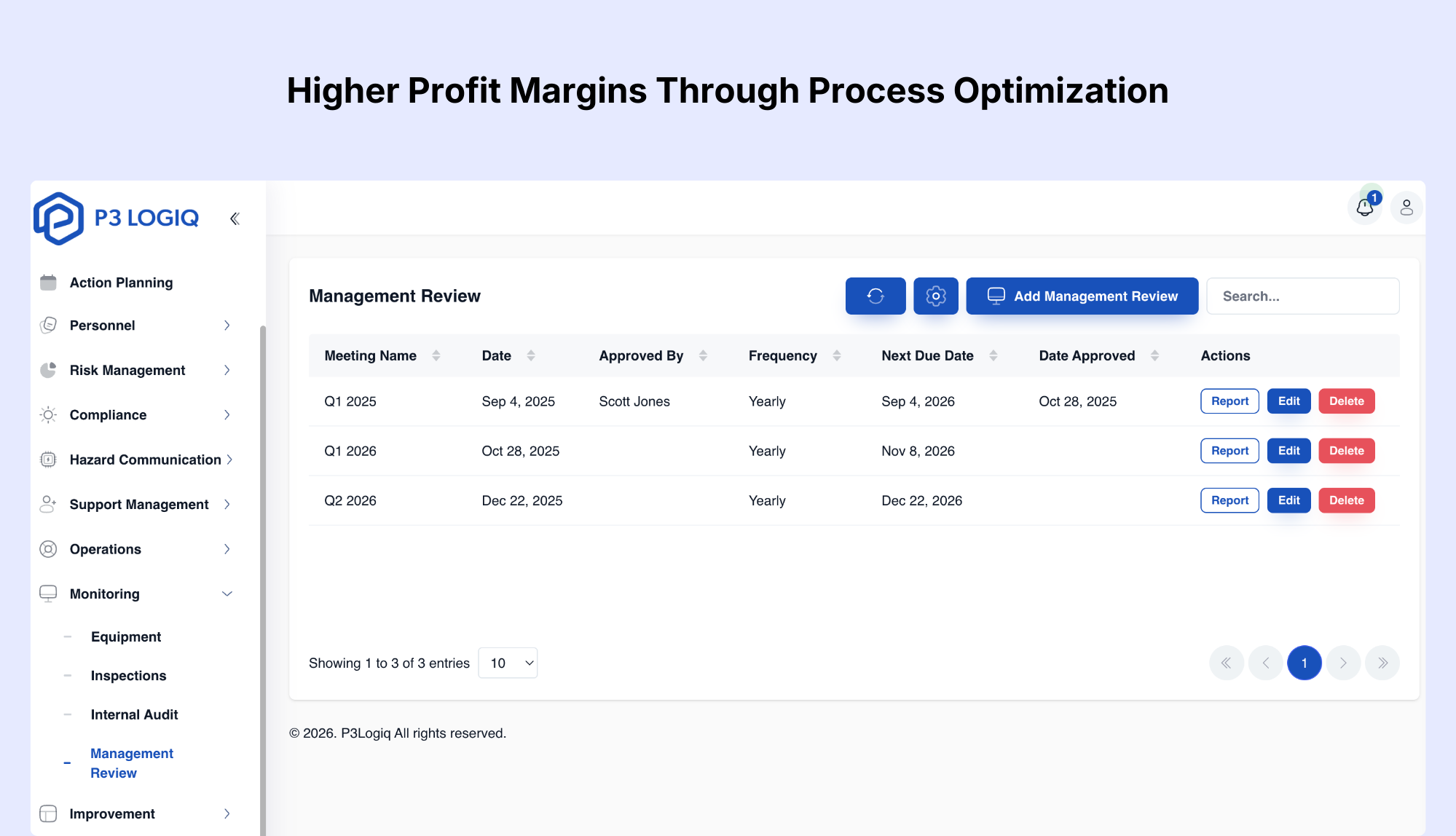
When your processes are tighter, you spend less on rework. You waste fewer materials. You deliver faster.
And all of that goes straight to your margins.
Let me give you a real-world picture. If a manufacturer invests $50,000 on ISO 9001 certification but reduces rework costs by $70,000 annually while securing an additional $220,000 in contract revenue, the return on investment becomes difficult to ignore.
This measurable financial impact is often discussed in the context of ISO risk management certification ROI, where structured systems translate into sustained performance gains.
In practice, that often looks like:
• Fewer defects leading to lower production costs
• Better resource allocation improving workforce productivity
• Faster and more reliable delivery strengthening customer retention
• Reduced warranty claims and product returns
"Okay, but what about the cost of getting certified?"
For many small businesses in the United States, implementation expenses may range between approximately $5,000 and $15,000 depending on size and complexity, with additional certification audit fees.
Viewed strategically, this is not simply a compliance expense. It is an operational investment designed to generate recurring financial returns over time.
Many companies further amplify these returns by digitizing their quality documentation and workflow controls through structured document automation systems that reduce manual errors and administrative overhead.
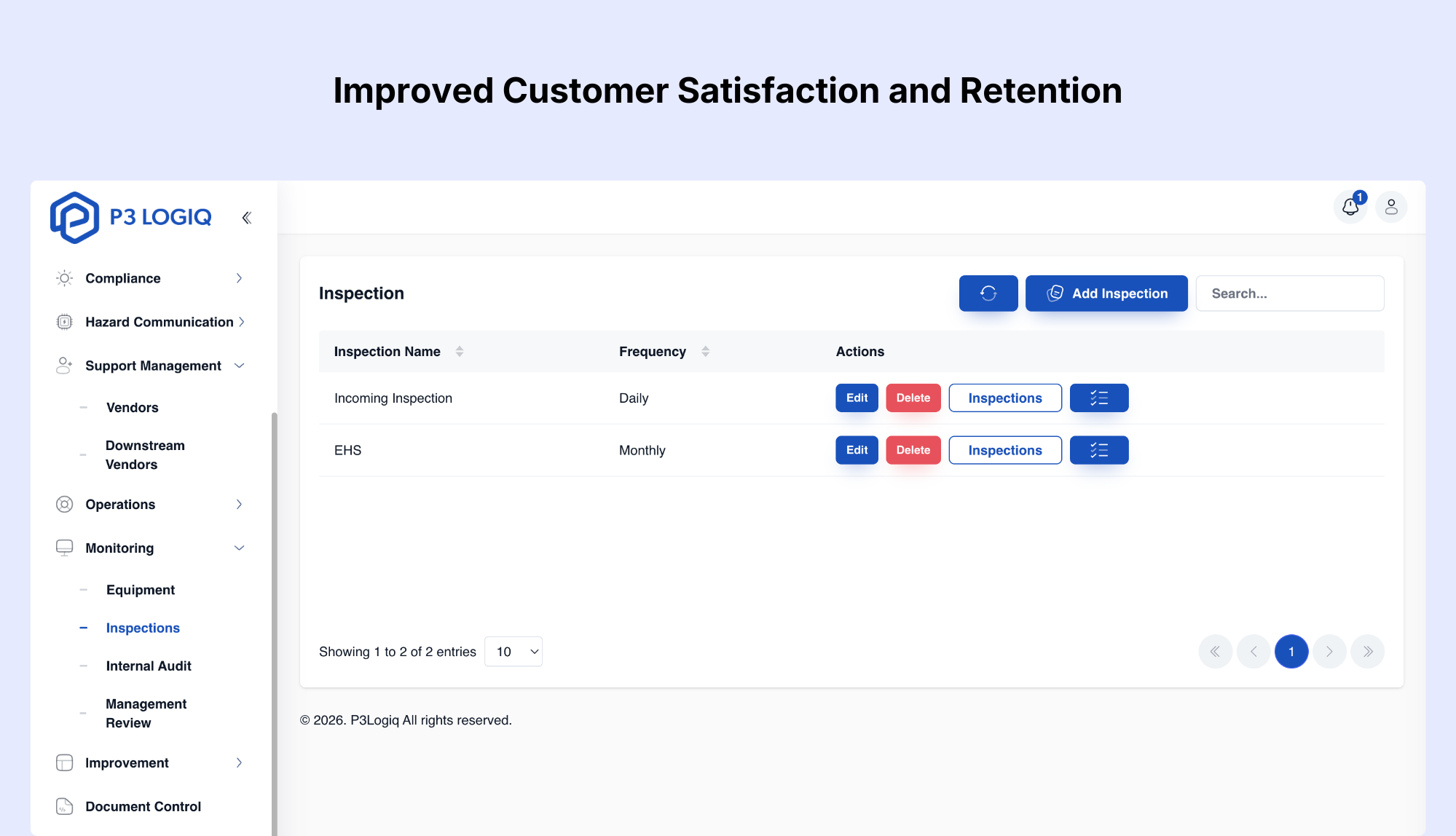
Let me ask you something.
When was the last time you switched from a brand or vendor that consistently delivered great quality and service?
Probably never. Right?
That's the power of customer satisfaction. And that's exactly what ISO 9001 is built around.
Customer focus is a core principle of ISO 9001. The standard requires organizations to define customer requirements, monitor satisfaction levels, and use feedback data to drive improvement.
This structured approach changes how businesses manage customer relationships.
Independent surveys indicate that a large majority of buyers associate ISO certification with higher quality and greater credibility. Certification signals that a company operates under defined controls and documented processes.
When ISO 9001 is implemented effectively:
• Quality issues are identified and corrected before reaching the customer
• Complaints are handled through a structured resolution process
• Service and product delivery become consistent across teams
• Customer retention rates improve over time
There is also a financial reality to consider. Retaining an existing customer typically costs significantly less than acquiring a new one.
ISO 9001 does more than support short-term satisfaction. It builds operational consistency that strengthens long-term trust and customer loyalty.
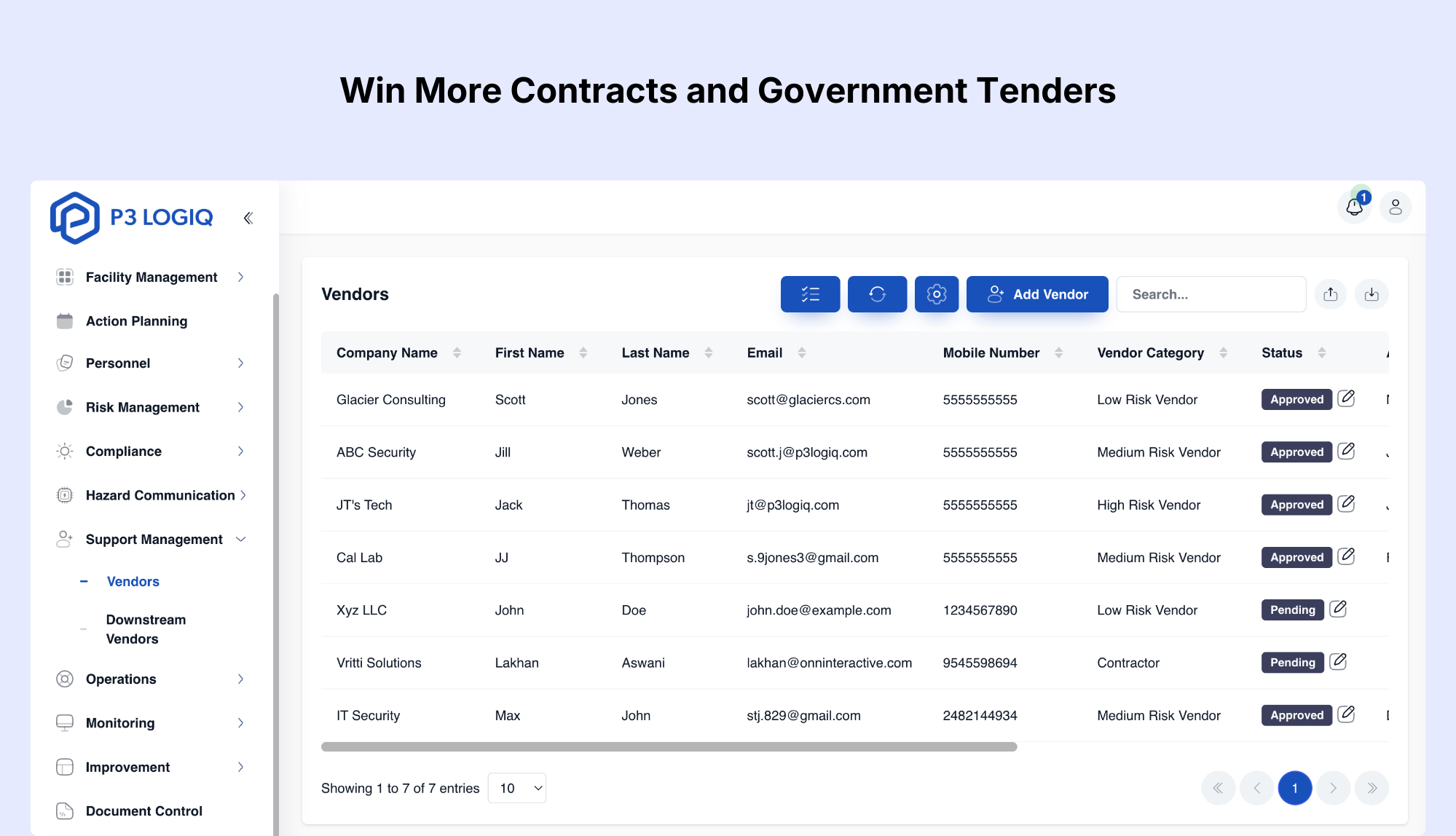
For many U.S. businesses, this is where the advantages of ISO 9001 certification become especially clear.
The U.S. federal government is the largest purchaser of goods and services in the world, spending hundreds of billions of dollars annually through contracts with private companies.
And here's what most small business owners don't realize:
Many government contracts require ISO 9001 certification just to qualify for bidding.
In some Government-Wide Acquisition Contracts (GWACs) and large contracting vehicles, ISO 9001:2015 certification is either a qualifying requirement or carries significant evaluation weight.
In a competitive bidding process, those points can be the difference between winning and watching from the sidelines.
But certification alone is not what government buyers evaluate. They assess how well your audit processes, documentation controls, and internal oversight systems function in practice. Organizations that build structured internal controls based on modern audit management software features are often better prepared for rigorous vendor evaluations.
Many business owners who pursue certification report the same shift: before certification, they struggled to meet eligibility criteria or compete effectively. After certification, they were able to pursue larger and more complex contract opportunities.
If you're a U.S. business without ISO 9001 certification, certain contract opportunities may remain out of reach.
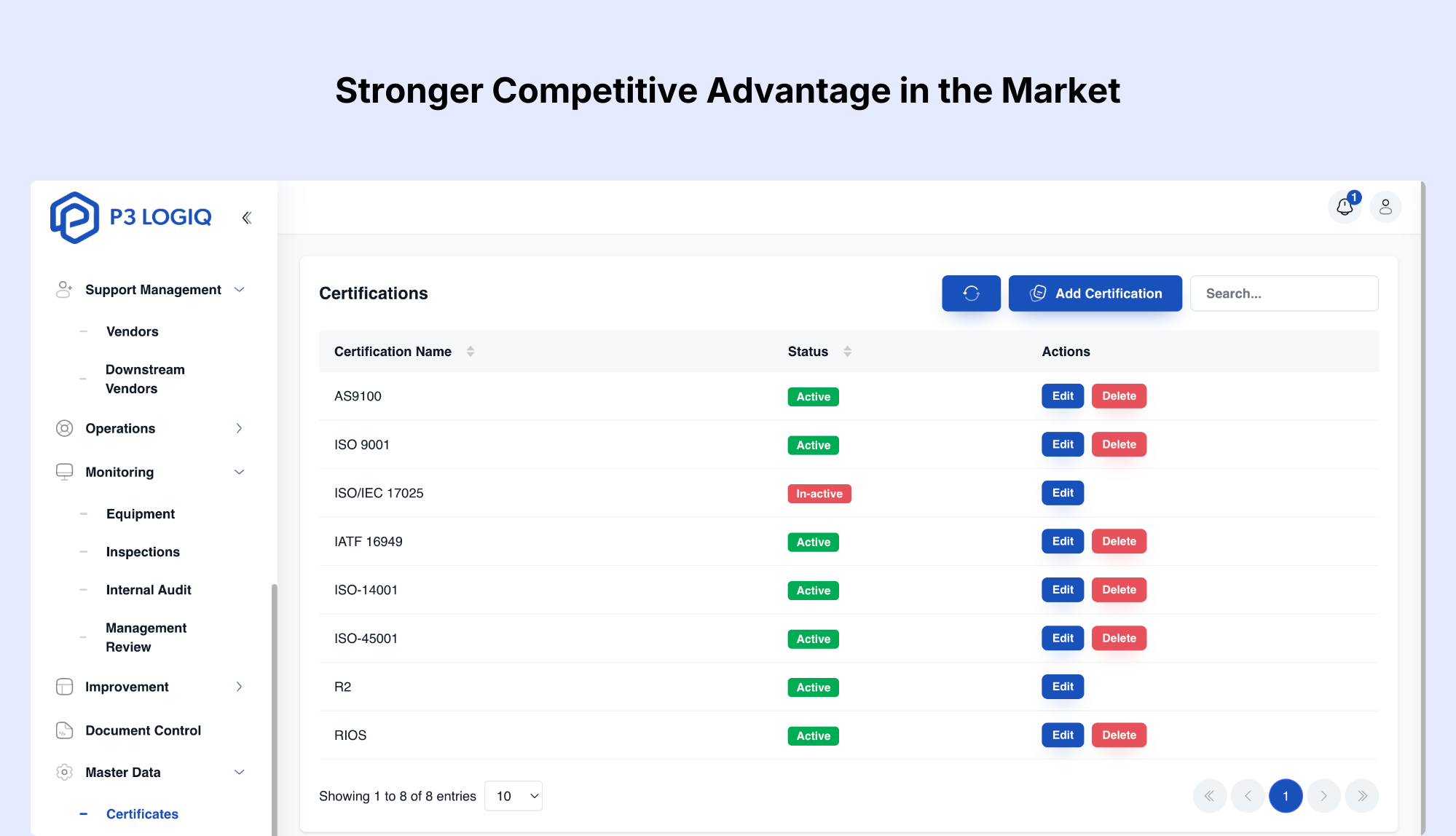
Let’s be honest for a second.
You and your competitor offer similar products. Similar pricing. Similar delivery timelines.
So how does the buyer decide?
More often than not, they choose the company that demonstrates a stronger commitment to quality. The one that can point to ISO 9001 certification in its proposals and on its website.
That certification does more than decorate a homepage. It signals structure, accountability, and consistency. It tells buyers: we have defined processes, we measure performance, and we continuously improve.
In competitive sectors like manufacturing, IT services, and government contracting, vendor evaluation is serious. Buyers assess risk. They look for operational maturity. In that environment, ISO 9001 can become a meaningful differentiator.
One advantage that often gets overlooked is global recognition. ISO 9001 is recognized in more than 170 countries. So if you plan to expand beyond U.S. borders, the credibility travels with you.
Now, you might say, “A certificate can’t replace good work.”
You’re right.
But when strong performance is backed by internationally recognized certification, you reduce buyer hesitation. And when buyers feel less risk, you increase your chances of being selected.
That’s what real competitive advantage looks like.
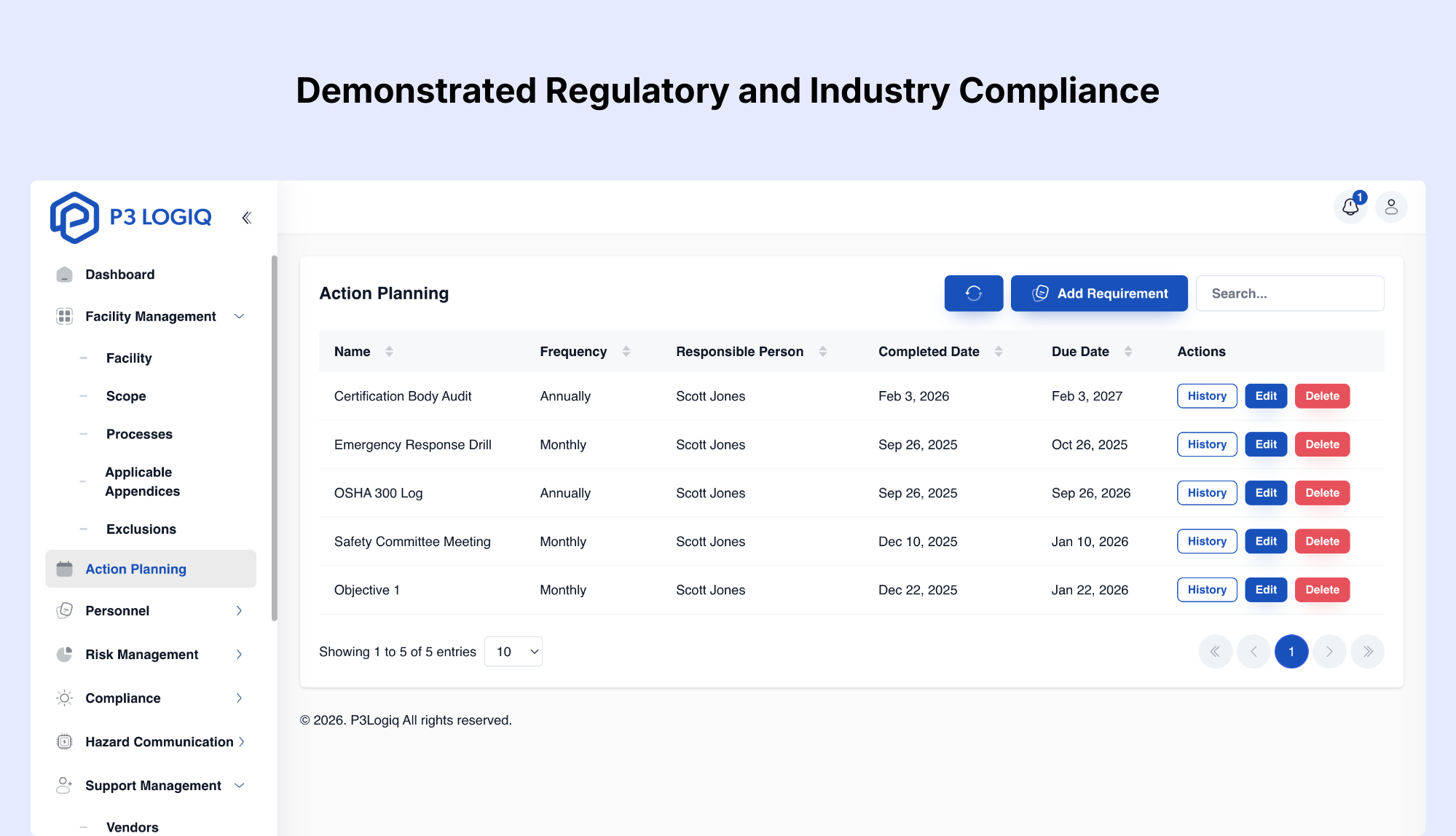
Let’s talk about something nobody finds exciting but everyone depends on.
Compliance.
Whether you're in manufacturing, healthcare supply, IT services, or construction, you've got regulations to follow. Industry standards to meet. Customer requirements to satisfy.
ISO 9001 gives you a structured framework for all of it.
For many organizations, maintaining this structure becomes significantly easier when documentation, monitoring, and reporting are centralized through modern compliance management software.
The US Federal Acquisition Regulation (FAR) requires contractors to demonstrate their capability to meet strict quality standards. ISO 9001 aligns directly with these requirements, covering documentation, traceability, supplier management, and process control.
And it's not just about government compliance.
Many large enterprise buyers require their suppliers to be ISO 9001 certified. It's a baseline expectation in the supply chain, especially in manufacturing, defense, and IT.
So when you get certified, you're not just checking a box. You're building a compliance infrastructure that protects you from risk and opens doors to bigger clients.
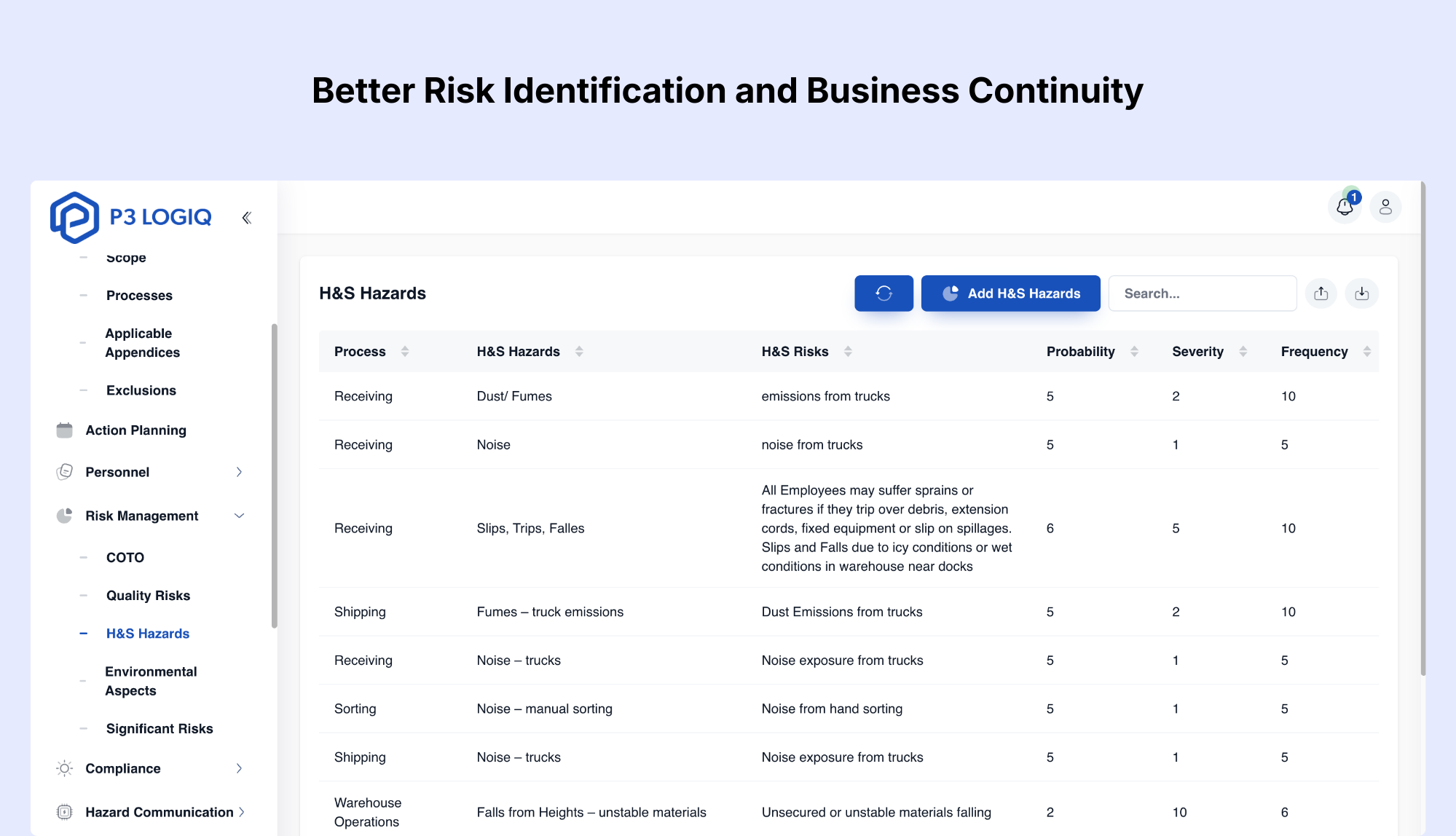
This is where ISO 9001:2015 significantly strengthened the standard.
The 2015 revision introduced risk-based thinking as a core principle of the management system. It is not treated as a side process. It is integrated into planning, operations, leadership decisions, and performance evaluation.
So what does that mean for you in practice?
• You identify potential risks before they turn into costly disruptions
• You define mitigation strategies in advance
• You build a proactive culture instead of constantly reacting to problems
You might think, “We already handle risks when they arise.”
Most businesses do. But reacting after a problem occurs is typically the most expensive approach. It leads to rushed decisions, lost time, customer dissatisfaction, and preventable financial impact.
ISO 9001 requires you to systematically ask: What could go wrong? Where are we vulnerable? How do we reduce that exposure?
Many organizations strengthen this structured approach by implementing tools such as structured ISO risk management systems to monitor risks consistently across departments and maintain real-time visibility.
And just as importantly, ISO 9001 requires you to document and monitor those controls.
This is especially important for US businesses in supply chain-heavy industries, where a single disruption can cascade into lost revenue, missed deadlines, and broken customer relationships.
Risk-based thinking doesn't just protect your business. It creates opportunities. Because when you remove risks, you clear the path for growth.
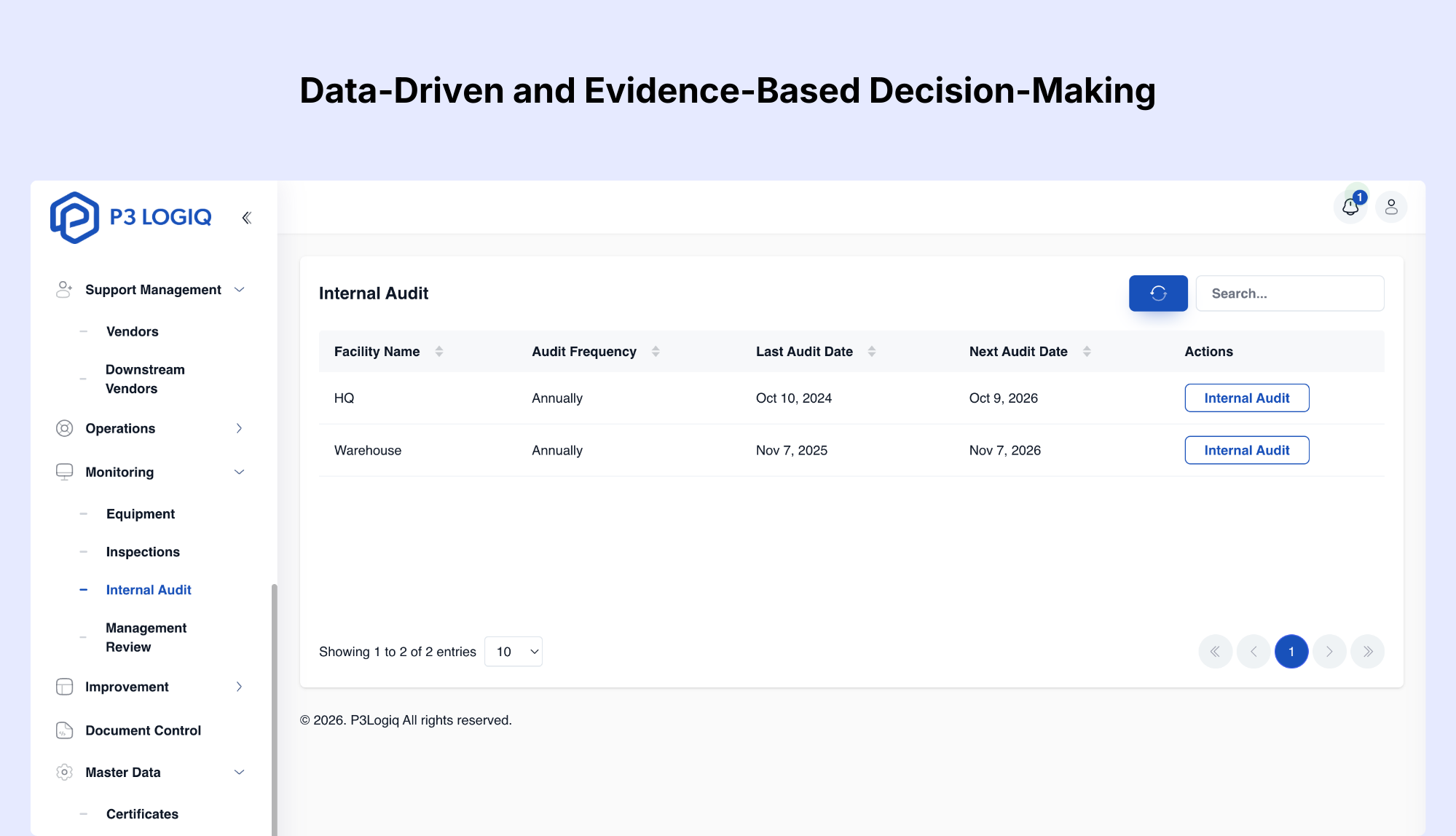
When your leadership team makes a major decision like launching a new product, entering a new market, or changing suppliers, what is it based on?
Gut feeling? A hunch? "We've always done it this way"?
Or actual data?
ISO 9001 requires organizations to use evidence-based decision-making. That means:
• Tracking performance through defined metrics and KPIs
• Monitoring process effectiveness using measurable data
• Reviewing audit findings and customer feedback systematically
• Making decisions grounded in analysis rather than assumption
Surveys of certified organizations consistently report improved process management and stronger continuous improvement performance as key outcomes of ISO 9001 implementation.
You might think, “That sounds like a lot of tracking.”
It is. But the thing is with ISO 9001, you're probably already sitting on most of this data. And ISO 9001 provides the structure to organize it, interpret it, and apply it consistently.
And when your decisions are backed by numbers instead of opinions? Your organization reduces costly missteps, corrects issues faster, and achieves more predictable results.
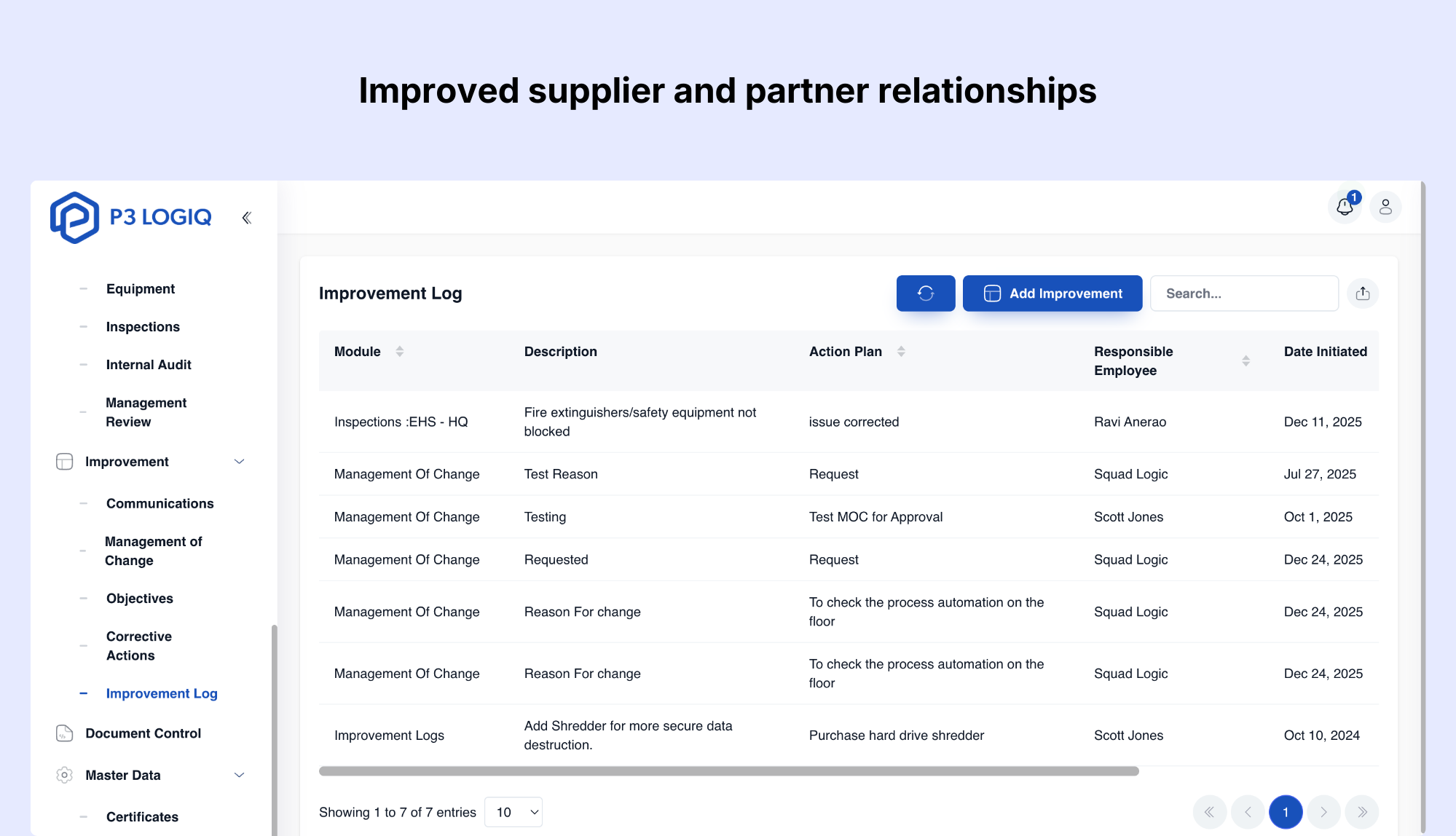
Your business is only as strong as the partners it depends on.
Think about it. If your raw material vendor delivers inconsistent quality, your product quality suffers. If a logistics partner misses deadlines, your customer gets angry.
ISO 9001 addresses this risk directly.
The standard requires you to evaluate, monitor, and manage external providers on an ongoing basis. Supplier performance is not left to assumption. It is measured and reviewed, often supported by centralized compliance software features that improve visibility and accountability.
That typically includes:
• Assessing suppliers based on quality, delivery reliability, and performance history
• Defining clear specifications and contractual requirements
• Monitoring ongoing performance using measurable indicators
• Taking corrective action when standards are not met
This isn't about being a difficult customer. It's about creating a supply chain where everyone performs better.
And here's the flip side: when your company is ISO 9001 certified, larger organizations are more likely to partner with you. Because you represent lower risk and higher reliability.
In other words, ISO 9001 strengthens both sides of the relationship.
You hold your suppliers to higher standards. And larger buyers gain greater confidence in working with you.
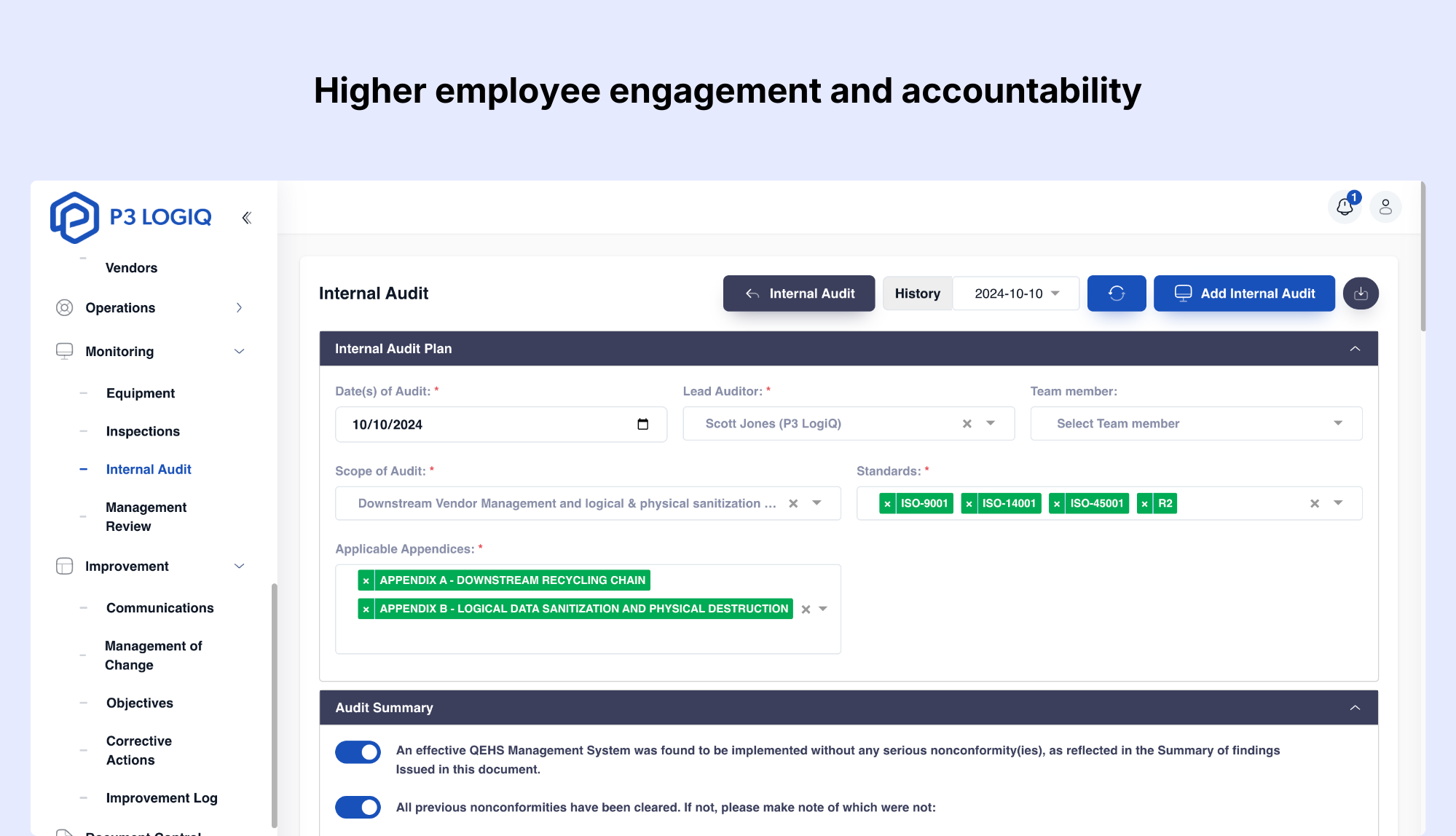
“What exactly is my role?”
“Who is responsible for this process?”
“Why are we doing it this way?”
When employees ask these questions repeatedly, it usually points to a lack of clarity. And a lack of clarity directly affects engagement and performance.
ISO 9001 solves this by requiring clearly defined roles, responsibilities, and structured corrective action management processes.
Here's what research shows: employees in ISO-certified organizations are 38% more likely to have above-average productivity. Companies with high engagement report 22% higher productivity, according to Gallup data.
When ISO 9001 is implemented effectively, it often includes:
• Clearly defined job roles and process ownership
• Competency-based training and skill development
• Regular performance monitoring and internal audits
• Employee involvement in continuous improvement initiatives
And it makes sense. When people know exactly what's expected of them, and they see a clear system for training, feedback, and improvement, they take more ownership.
And when ownership increases, performance follows.
Quality improves. Processes stabilize. Customer satisfaction strengthens. Profitability becomes more predictable.
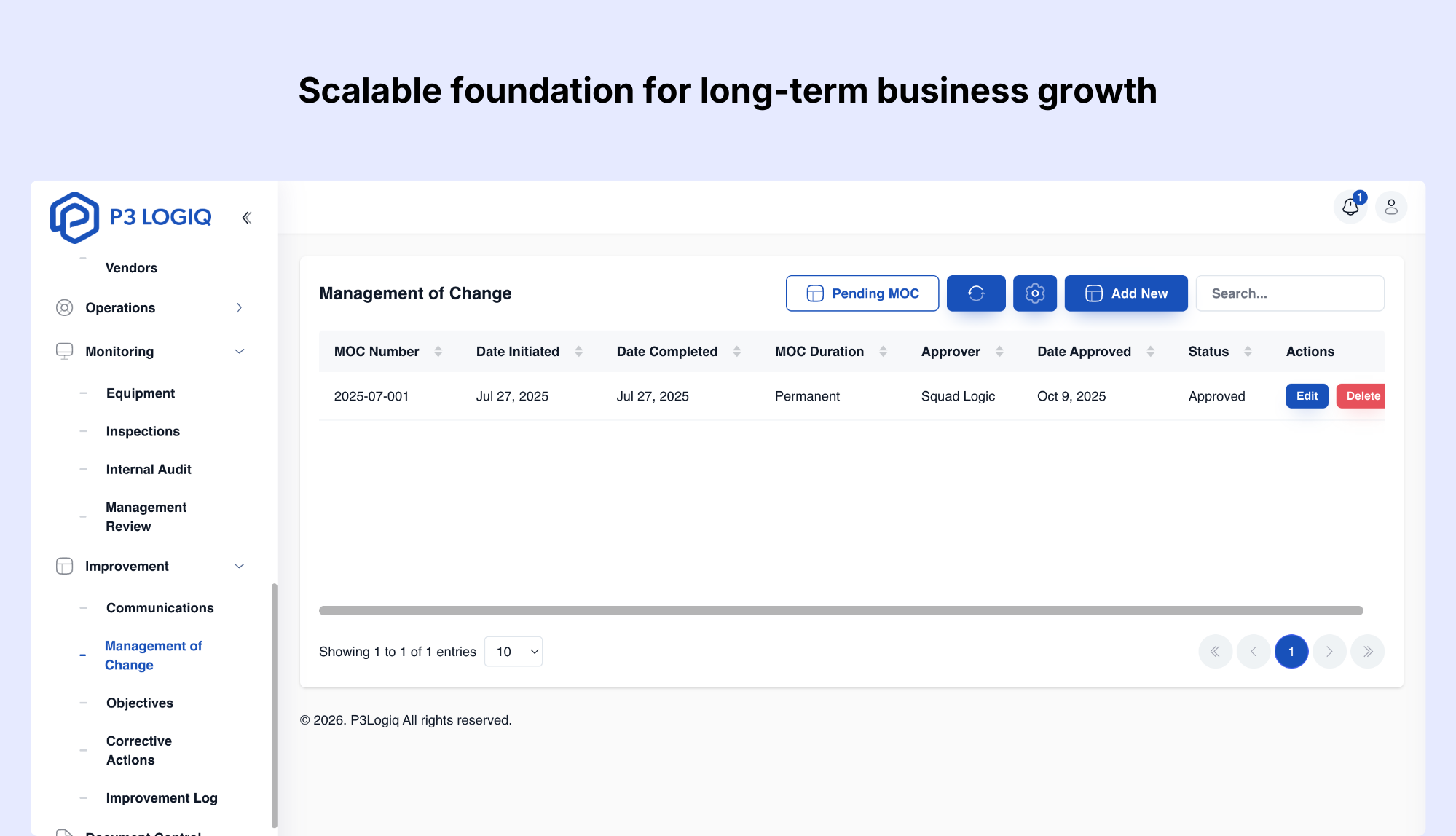
And finally, the benefit that ties everything together.
ISO 9001 doesn't just fix today's problems. It builds a foundation for where you're headed.
Think about what happens when a company grows fast without systems:
• Processes become inconsistent
• Quality varies across teams
• New hires lack standardized guidance
• Customer complaints increase
• Leadership loses operational visibility
Sound familiar?
ISO 9001 prevents this. It creates a documented, repeatable, continuously improving system that scales with your business.
Whether you're expanding into new markets, adding a new product line, onboarding more employees, or pursuing bigger contracts, the QMS grows with you.
And the data supports this. ISO 9001 certified firms don't just perform better today, they show sustained sales growth compared to non-certified competitors over multiple years.
The advantages of ISO 9001 certification compound over time. Every process you improve today makes tomorrow's growth smoother, cheaper, and less risky.
Because scalable growth is rarely accidental. It is built on systems.

I know what you're thinking.
"All of this sounds great for large companies. But I'm running a 30-person operation. Is it really worth it for me?"
Short answer: yes. And the research says you might benefit even more than large enterprises.
A study published in International Economics, covering firms across 33 countries, found that the benefits of ISO 9001 certification were even higher for SMEs. Certification helped smaller firms:
And let's be real about the costs. For a small business in the US, you're looking at roughly $5,700 to $15,000 for preparation and $3,500 to $5,000 for the actual certification.
Compare that against:
Suddenly, the certification fee looks like the best investment you'll make all year.
"But we don't have the in-house expertise."
If internal expertise is limited, many businesses choose to work with experienced consultants such as P3 LogiQ to guide implementation and prepare for certification efficiently.
The ISO 9001 benefits aren't theoretical. They're practical, measurable, and compounding.
Is it effort? Yes.
Is it worth it? The math speaks for itself.
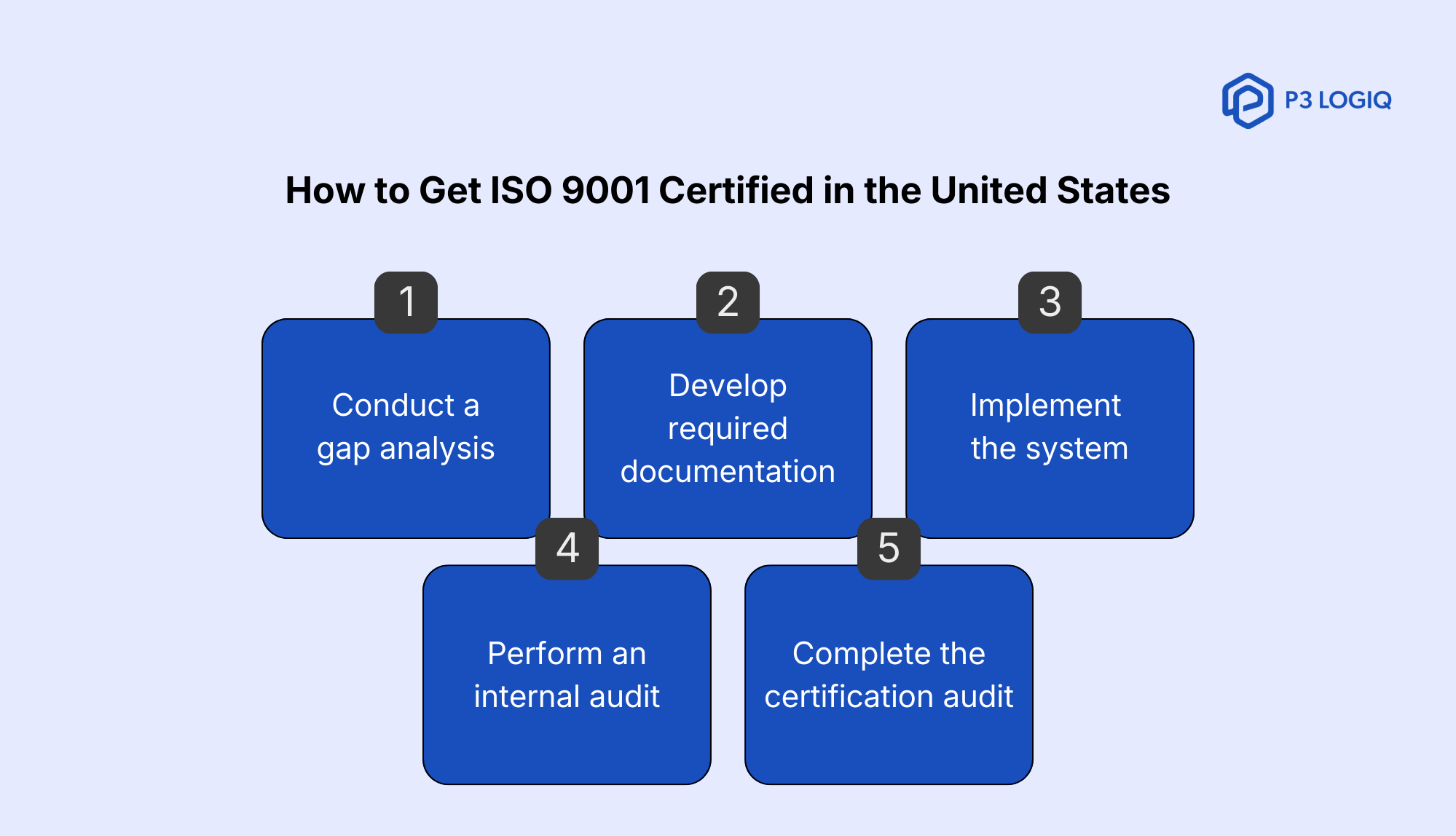
If you’re wondering how to get ISO 9001 certified, the process is more structured than complicated. At a high level, it follows five core stages:
Figure out where you stand today. Compare your current processes against ISO 9001 requirements. Identify the gaps. You can do this in-house or hire a consultant.
Create your quality manual, standard operating procedures, and work instructions. This is the most time-intensive step, but it's also where the real process improvements happen.
Roll out the new processes. Train your team. Start living the system day-to-day, not just writing about it.
Audit your own system before the external auditor shows up by leveraging purpose-built structured internal audit management systems. Find problems. Fix them. This is your dress rehearsal.
An accredited third-party certification body conducts a two-stage audit. Stage 1 reviews your documentation. Stage 2 audits your actual work processes. Pass both, and you receive your ISO 9001 certificate, valid for 3 years.
For most small to mid-sized businesses, the timeline ranges from 2 to 6 months depending on readiness, internal resources, and operational complexity.
ISO 9001 certification isn’t just a badge. It’s a business system that protects your margins, reduces risk, strengthens customer trust, and makes your growth sustainable.
If you’re serious about winning better contracts, tightening your operations, and proving you run a truly reliable organization, now is the right time to move from “researching” to “implementing.”
And you don’t have to figure it out alone.
P3 LogiQ helps you streamline ISO 9001 implementation with a structured, audit-ready platform that cuts out the guesswork and manual chaos.
If you’d like to see how this could work for your business, book a free discovery call with P3 LogiQ and explore what ISO 9001 can do for your next stage of growth.


Businesses need document management systems (DMS) to ensure ISO and R2 compliance, improve efficiency, and stay audit-ready. The article highlights key features like version control, security, and automation while reviewing the top 5 DMS solutions. P3 LogiQ stands out for its compliance-focused automation and secure document tracking
Read More
Recycling businesses gain efficiency, compliance, and sustainability with RIOS certification. It streamlines quality management, environmental responsibility, and worker safety, helping companies avoid legal risks and boost credibility. P3 LogiQ simplifies the certification process with automation, document control, and compliance tracking, making operations smarter and safer.
Read More
Audit Management Software (AMS) automates compliance tracking, streamlines workflows, and reduces audit risks. Key features include automated scheduling, compliance checklists, CAPA tracking, vendor risk management, and integrations.
Read More
Learn how audit management systems simplify ISO and R2 compliance by automating audits, managing documentation, and minimizing compliance risks efficiently.
Read More
In 2025, many businesses still face challenges in compliance management due to outdated methods like spreadsheets and fragmented software. This inefficiency leads to missed deadlines, increased risk, and regulatory penalties. The blog emphasizes the importance of modern compliance tools that automate workflows, enhance risk management, and streamline regulatory processes to meet ISO and R2 standards.
Read More
The rise in e-waste and environmental concerns makes responsible electronics recycling essential. The R2 Certification sets a global standard for safe, sustainable, and data-secure recycling practices. Developed by Sustainable Electronics Recycling International (SERI), R2 helps businesses manage environmental risks, data security, worker safety, and legal compliance.
Read More
Businesses face increasing challenges in managing complex regulatory compliance. Manual methods such as spreadsheets and paperwork can lead to missed deadlines, inefficiencies, and costly penalties. Compliance management software offers a streamlined solution to reduce risks, automate processes, and improve operational efficiency.
Read More
Maintaining R2 Certification is crucial for businesses in the e-waste recycling industry, ensuring regulatory compliance, sustainability, and strong stakeholder trust. This guide outlines 10 best practices to help businesses simplify operations, reduce risks, and stay compliant.
Read More
Unlock the value of ISO risk management certification. Explore its impact on compliance, risk mitigation, and business expansion.
Read More
Explore the top 5 ISO risk management software tools for 2025, including document management solutions for streamlined compliance and increased efficiency.
Read More
Find the ideal document management software (DMS) for your business. Learn how to choose with expert tips, key features, and insightful guidance
Read More
Unlock the power of a Document Management System (DMS). Learn how it can revolutionize your business operations.
Read More




.png)
.png)



.jpg)



.jpg)
.jpg)




.jpg)

.png)
.png)
.png)


.png)

