

Running a small business often means wearing multiple hats at the same time.
One day you're focused on fulfilling customer orders. The next day you're responding to a compliance request, preparing documents for a client audit, or trying to understand what environmental regulations apply to your operations.
At first, most businesses manage these responsibilities as they come. A spreadsheet here, a few documents there, and a process that lives mostly in someone's head. It works for a while.
But as the business grows, things become harder to track. Customers start asking questions about environmental practices. Larger contracts may require proof of compliance. Audits become more frequent. And suddenly, what once felt manageable starts taking more time and creating more risk.
This is where ISO 14001 comes in.
Is ISO 14001 only meant for large enterprises with big budgets? That’s the common assumption, but it doesn’t really hold up. ISO standards are designed to be flexible, which means a growing teams can implement them in a much lighter, practical way.
The real shift happens when you stop seeing it as a big compliance burden and start looking at it like optimizing your day-to-day business habits. Once you get that mindset right, even things like choosing the best ISO 14001 software solutions become much simpler. You’re not chasing tools to “look compliant,” you’re just picking what genuinely helps you manage your processes more easily.
According to the International Organization for Standardization (ISO), ISO 14001:2015 specifies the requirements for an environmental management system (EMS). It helps organizations improve environmental performance, fulfill compliance obligations, and achieve their environmental objectives.
What’s important here is that ISO allows businesses to define their system based on their own size and context, which is why ISO 14001 software for small business is not just achievable, but actually practical
This guide is built to show you how to approach it the smart way. You’ll learn a clear, step-by-step path to implementation, understand how ISO 14001 can benefit small businesses in real, measurable ways, and see how certification fits into the bigger picture.

ISO 14001 is a structured way to manage how your business interacts with the environment. It’s not just about reducing waste or following a few sustainability practices.
It’s about building a system where your day-to-day operations, whether it’s using energy, handling materials, or managing suppliers, are monitored, improved, and aligned with environmental goals. That’s why ISO 14001 for small businesses is less about “going green” and more about running a cleaner, more controlled operation.
Now, why is this becoming such a big deal globally?
Regulations around environmental impact are tightening across multiple regions, and it’s not limited to large corporations anymore. For example, the European Union has expanded sustainability reporting expectations under frameworks like the Corporate Sustainability Reporting Directive (CSRD), which increases pressure across supply chains.
Why are even small businesses being asked for ISO 14001 certificates today?
The answer usually comes down to supply chains and client expectations. Larger companies, especially global ones, increasingly prefer or require vendors and partners to follow recognized environmental standards.
So instead of thinking of ISO 14001 as a heavy certification meant for big companies, it helps to see it as a system that allows small businesses to stay competitive, compliant, and operationally efficient in a market that’s steadily moving toward more accountability. When you start looking at the benefits of ISO 14001 for your business from this lens, it becomes less about certification and more about how your operations evolve over time.
There’s also a clarity factor that comes with structured systems like this. When processes are defined and tracked, decision-making becomes less guesswork and more data-driven. Whether it’s identifying where resources are being overused or spotting inefficiencies early, ISO 14001 for small businesses often ends up improving internal visibility in ways teams don’t initially expect.
And this is where the shift really happens. What starts as an environmental framework gradually becomes part of how the business operates day to day. Not as an extra layer of work, but as a system that brings consistency, accountability, and a clearer direction as the business grows.
If you approach it the right way, implementing ISO 14001 does not have to feel heavy or overwhelming. The idea is to build a system that fits your operations, not copy something designed for a large enterprise. Each step builds on the previous one, and when done properly, it starts reflecting in your day-to-day work, not just in documentation.
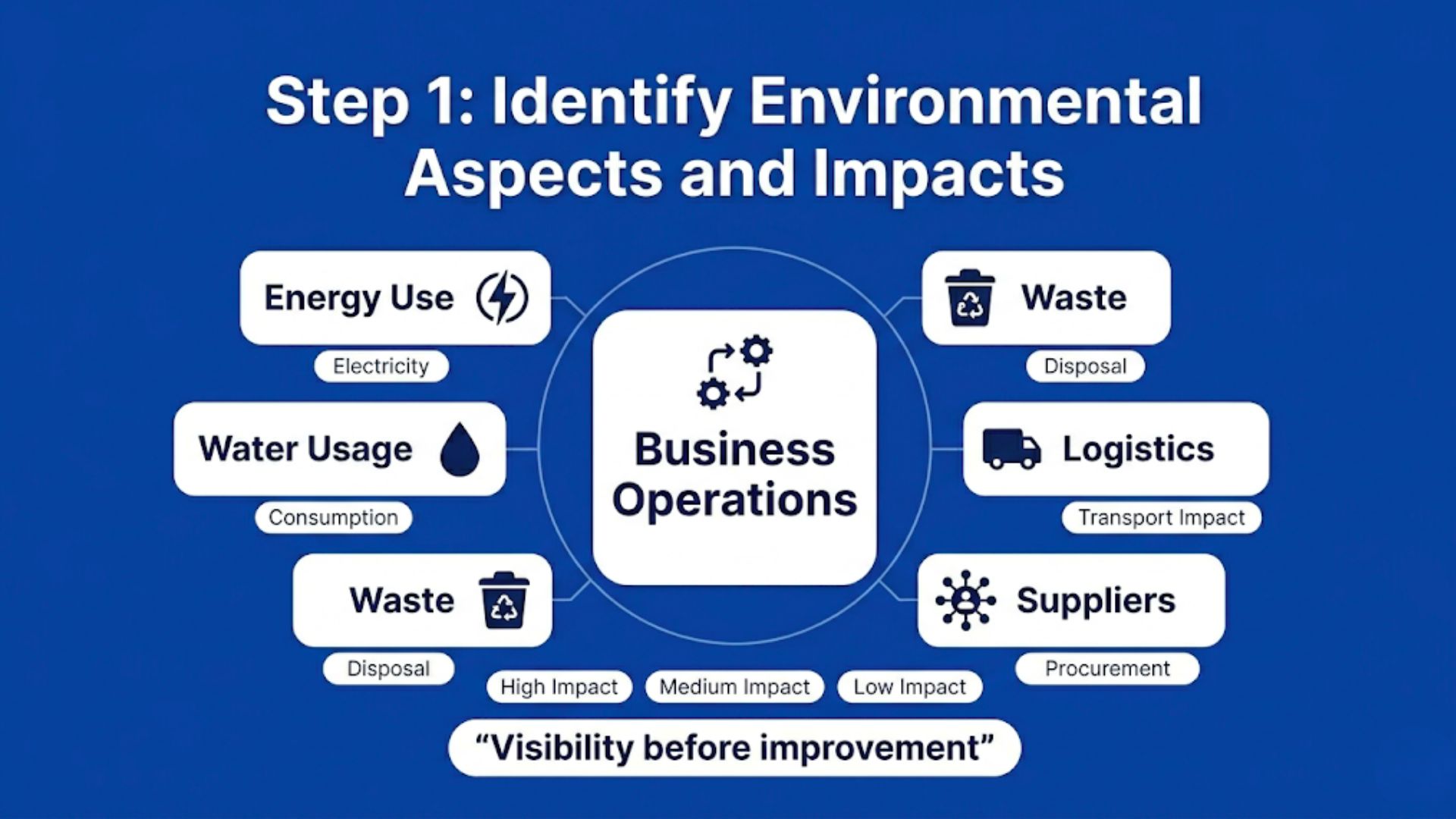
Start by mapping out where your business interacts with the environment. This is not limited to obvious areas like waste. It includes electricity usage, water consumption, raw materials, packaging, logistics, and even how suppliers operate. This is also where the importance of ISO 14001 certification for your business starts becoming clear, because certification is built on how accurately you understand and manage these real impacts.
At this stage, you are not trying to fix everything. The focus is on visibility. Many small businesses skip this depth and end up building systems that don’t reflect their real operations.
Break activities into simple categories. For example, office operations, production, transportation, and procurement. Then identify what environmental impact comes from each of these.
Once identified, evaluate which impacts are significant. This can be based on volume, risk, cost, or regulatory relevance. You don’t need complex scoring models. A simple prioritization approach works well for small teams.
This step forms the base of your entire ISO 14001 system. If this is done clearly, everything that follows becomes easier and more relevant.
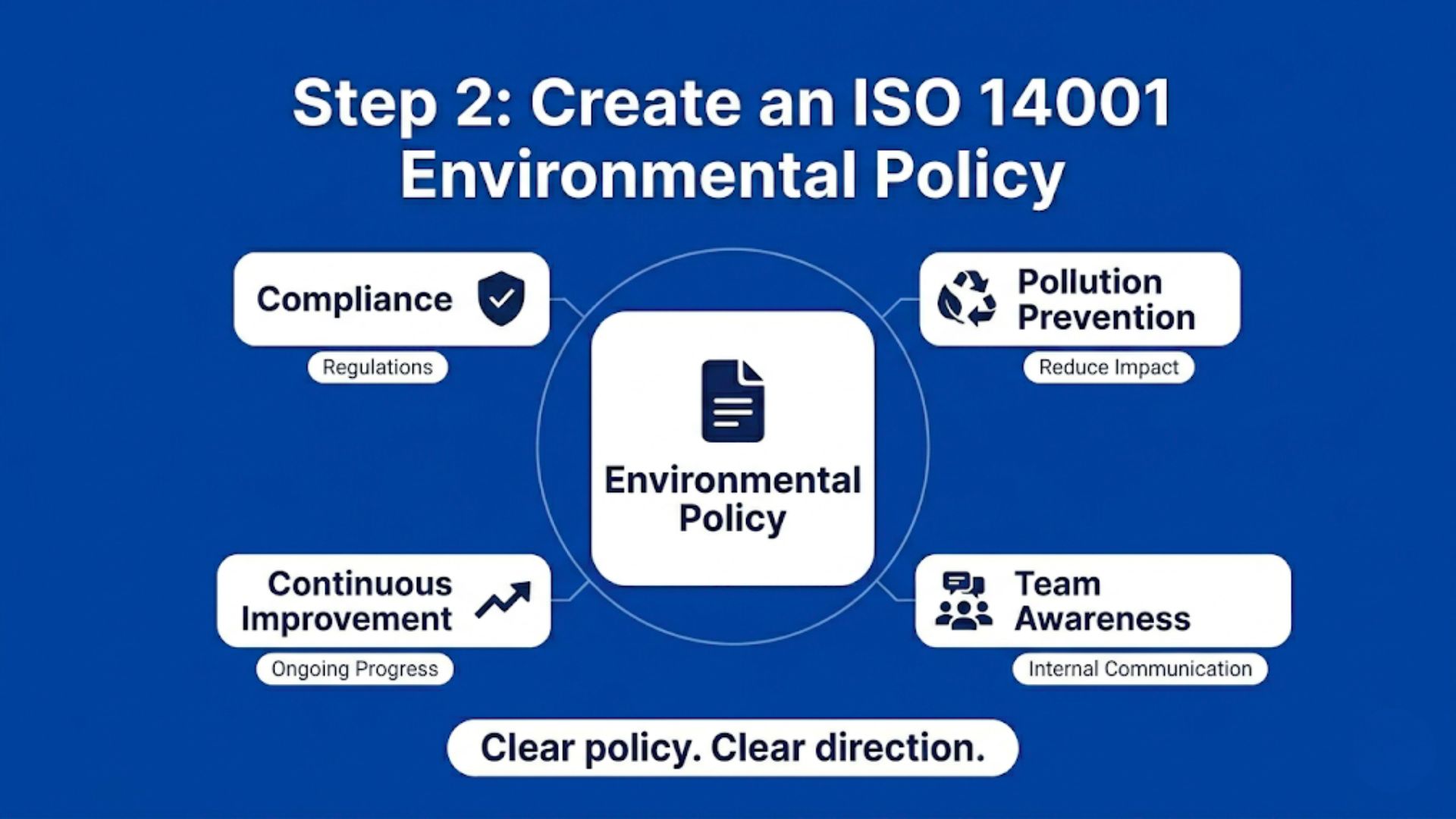
Your environmental policy is not just a document for audits. It sets the direction for your entire system. It should reflect what your business actually does and what it intends to improve.
Avoid copying generic policies. Auditors can easily identify that, and more importantly, your team won’t connect with it. Keep it specific to your operations.
Include commitments like compliance with regulations, prevention of pollution, and continuous improvement. These are core expectations within ISO 14001.
Keep the language simple and direct. This is not a legal document. It should be understandable to everyone in your team, not just management.
Once created, communicate it internally. A policy that sits in a file does nothing. It should be visible, shared, and referred to when decisions are made.
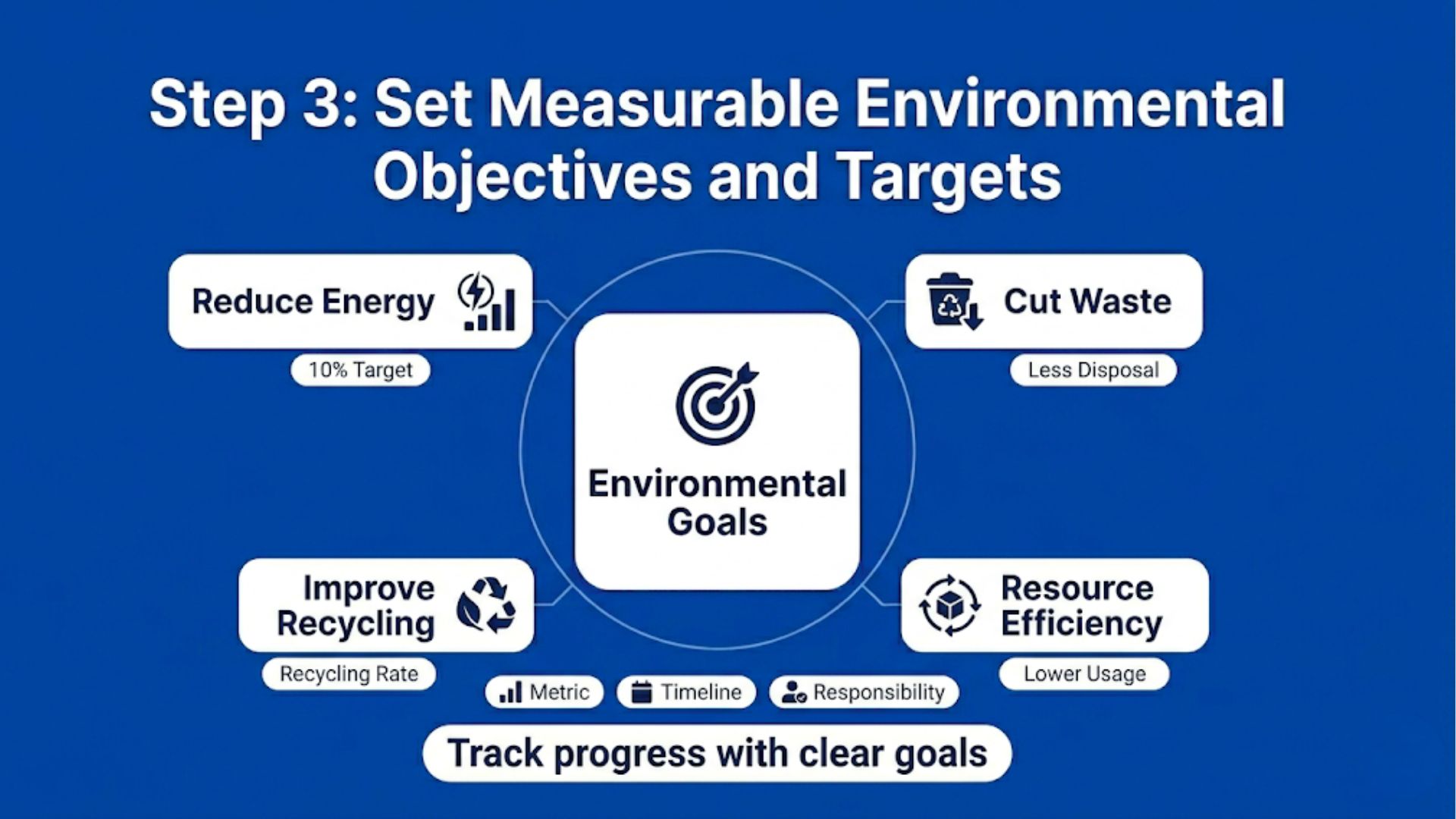
This is where your policy turns into action. Define what you actually want to improve and how you will measure it. Without this, the system remains theoretical.
Set objectives that are realistic for your size and operations. For example, reducing electricity usage by 10%, cutting down paper waste, or improving recycling rates.
Each objective should have a clear metric, a timeline, and someone responsible for it. This creates accountability and makes tracking easier.
Avoid setting too many goals at once. Small businesses benefit more from focusing on a few key improvements and executing them properly.
Review these objectives periodically. If something is not working, adjust it. ISO 14001 allows flexibility as long as improvements are being tracked and managed.
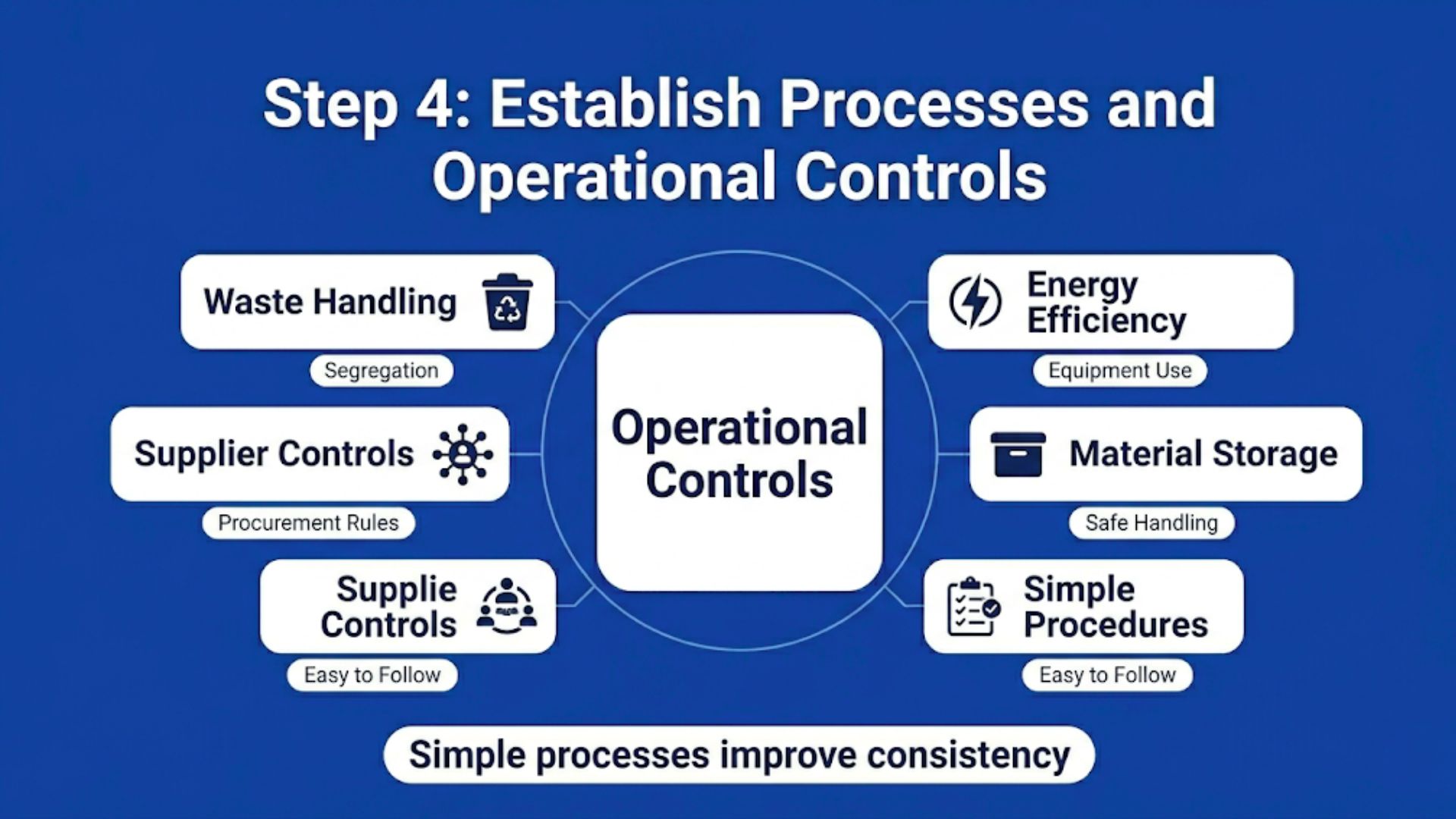
Once goals are defined, you need to bring structure into daily activities. This is where processes come in. Define how tasks will be performed to reduce environmental impact.
For example, how waste is segregated, how equipment is maintained for energy efficiency, or how materials are handled and stored. These do not need to be overly detailed.
The biggest mistake here is over-documentation. Small businesses often try to create complex manuals that are never used. Focus only on what is necessary and practical.
Make sure these processes are easy to follow. If a process is too complicated, it will be ignored in real operations. Simplicity improves consistency.
Also, extend this thinking to suppliers where relevant. Basic guidelines for procurement or vendor selection can help control indirect environmental impact.

A system is only as strong as the people using it. If your team does not understand what is changing and why, implementation will not hold.
Training does not have to be formal or time-consuming. Short, focused sessions work better for small teams. Explain what the system is, what has changed, and what is expected from each role.
Link training directly to daily tasks. For example, how to handle waste, how to reduce energy usage, or how to follow new procedures. Practical relevance improves adoption.
Create a habit of reinforcing awareness. This can be through team meetings, reminders, or simple visual cues in the workplace.
When employees understand their role in the system, compliance becomes natural rather than forced.

Once processes are running, you need to track whether they are actually working. This is where monitoring comes in. Measure performance against the objectives you set earlier.
Use simple tracking methods. Spreadsheets, logs, or basic tools are enough for most small businesses. The focus should be on consistency, not complexity.
Alongside monitoring, conduct internal audits. These are structured checks to see whether processes are being followed and whether the system is effective.
Internal audits should be planned at regular intervals. They don’t have to be lengthy, but they should cover key areas and identify gaps.
The purpose is not to find faults, but to identify improvement areas. This step ensures your ISO 14001 system stays active and relevant.
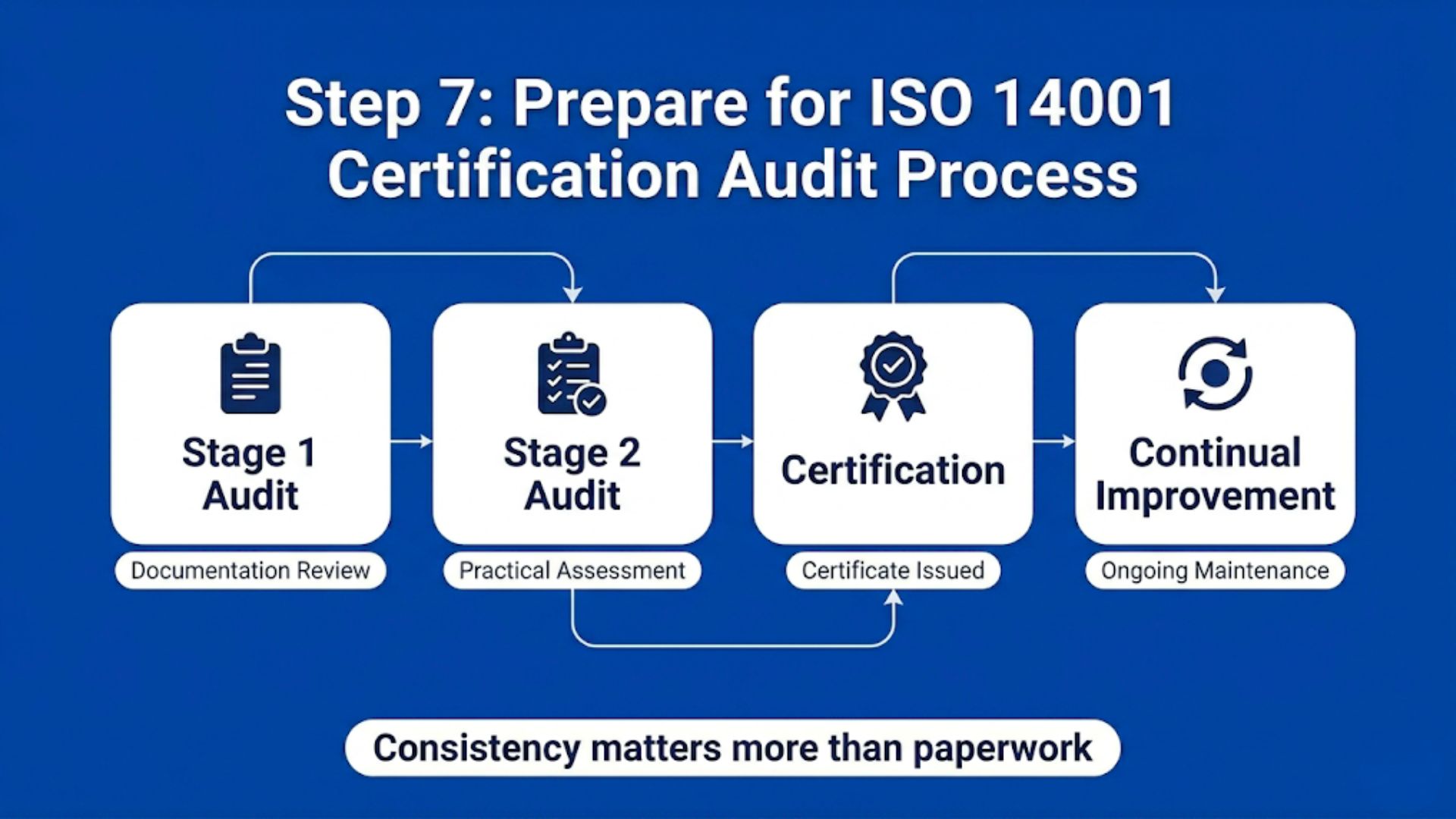
Once your system is implemented and running, the next step is certification. This is carried out by an external certification body.
The process typically starts with a Stage 1 audit. This focuses on reviewing your documentation and checking whether your system is ready for full assessment.
Stage 2 is the main audit. Here, auditors evaluate how your system works in practice. They will check records, processes, and how well your team follows the system.
Preparation at this stage is about consistency. Make sure your documentation matches your actual operations. Gaps between the two are one of the most common issues.
After successful completion, certification is issued. From there, the focus shifts to maintaining and improving the system over time, not just keeping the certificate.
Right when you’re trying to connect all these steps into a working system, things can start feeling scattered.
That’s exactly where P3 LogiQ fits in. Instead of managing ISO 14001 implementation through multiple sheets, documents, and manual tracking, you can bring everything into one structured platform that actually guides you step by step.

From identifying environmental aspects to tracking audits and performance, it keeps the entire process organized and easy to manage.
If you want to see how this works in a real setup, you can book a free demo or sign up and explore how your entire ISO system can be streamlined without overcomplicating it.
Once your system is in place, the certification process is what formally validates it. For small businesses, this is often where things feel unclear, not because it’s complicated, but because the steps are not always explained in a practical way. In reality, the process follows a clear sequence, and once you understand it, it becomes much easier to prepare.
How does the ISO 14001 certification process actually work in practice?
It’s less about passing a one-time test and more about showing that your system is consistently implemented and aligned with the standard.
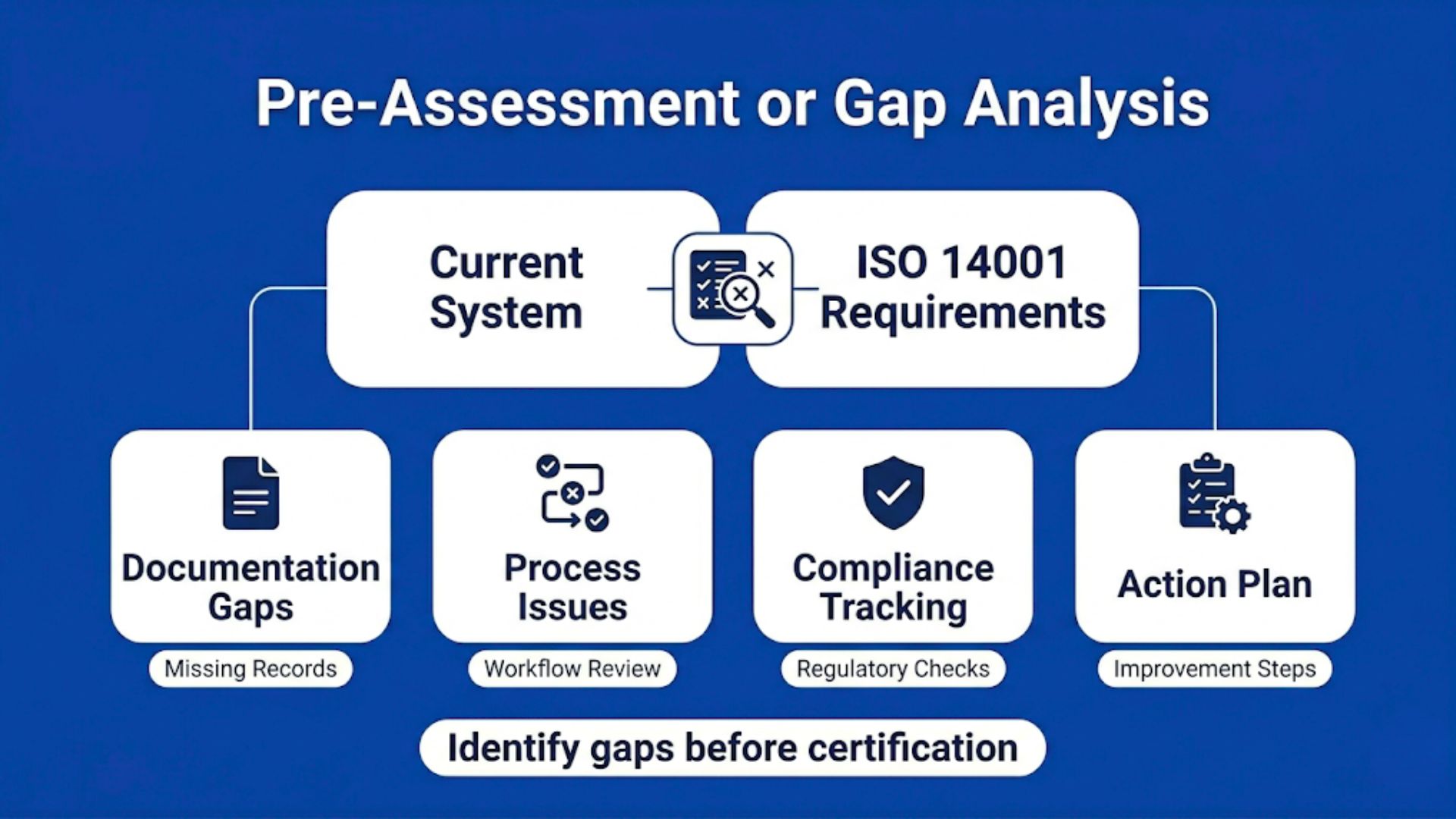
This is usually the starting point before you engage with a certification body. A gap analysis helps you compare your current system against ISO 14001 requirements and identify what’s missing.
For small businesses, this step is critical because it prevents surprises later in the audit. It gives you a clear list of areas that need improvement, whether it’s documentation, processes, or compliance tracking.
This can be done internally if you understand the standard well, or with external support for a more structured review.
The outcome of this step should be a clear action plan, not just observations. It sets the direction for everything that follows.
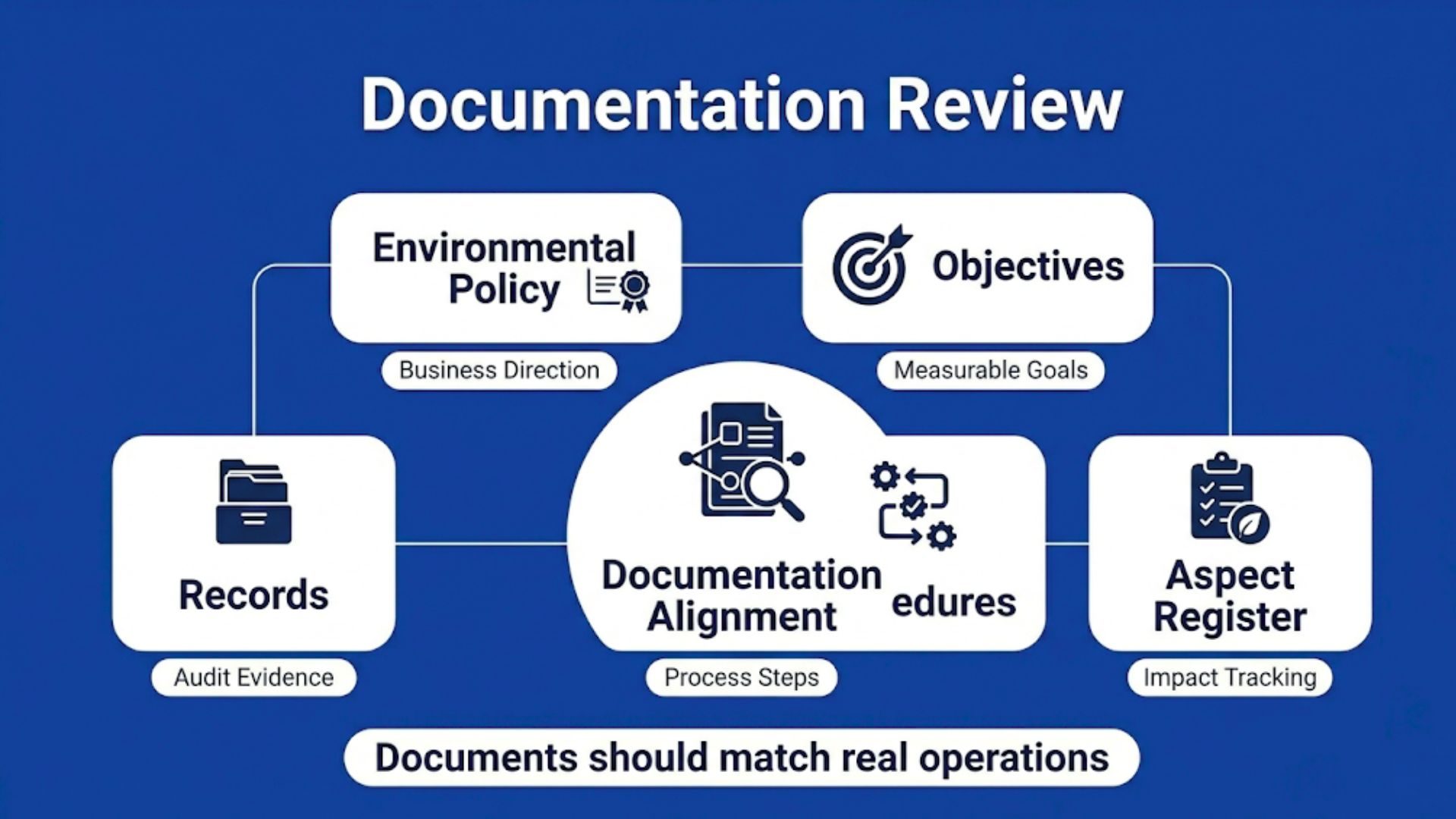
Before the actual audit begins, your documentation needs to be in place and aligned with your operations. This includes your environmental policy, objectives, aspect-impact register, procedures, and records.
The key here is consistency. What is written should reflect what is actually happening in your business. Misalignment between documentation and real practices is one of the most common issues during audits.
Keep documentation simple and relevant. Overly complex documents often create confusion rather than clarity.
At this stage, it also helps to organize records properly so they can be accessed easily during audits.
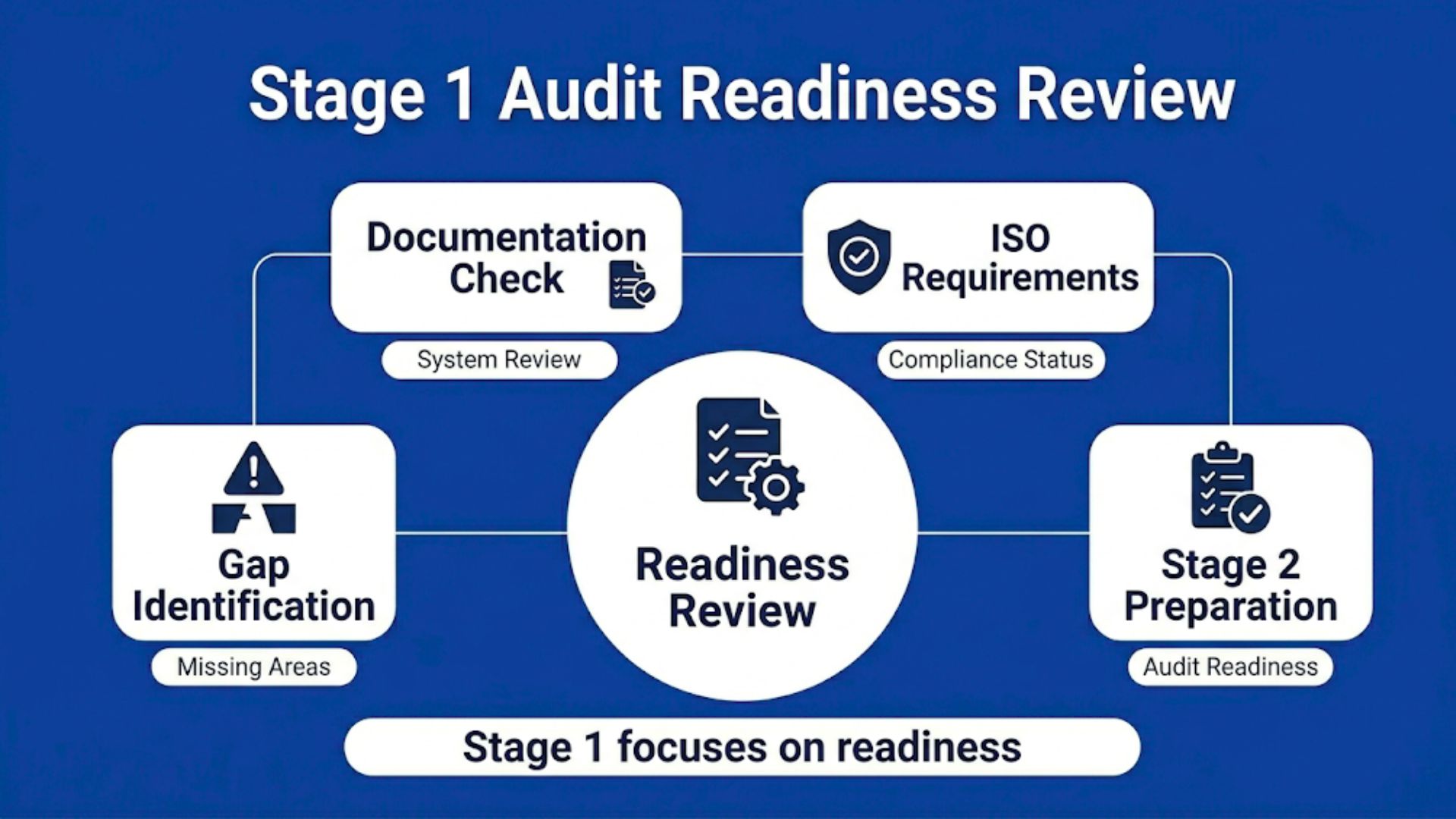
The Stage 1 audit is an initial assessment conducted by the certification body. It focuses on reviewing your documentation and evaluating whether your organization is ready for the full audit.
Auditors will check whether key elements of the system are in place and whether you have addressed major ISO 14001 requirements.
This stage is not about passing or failing. It’s more of a checkpoint. If gaps are identified, you are expected to address them before moving to Stage 2.
For small businesses, treating this as a learning step rather than a formal evaluation helps reduce pressure and improve preparation.
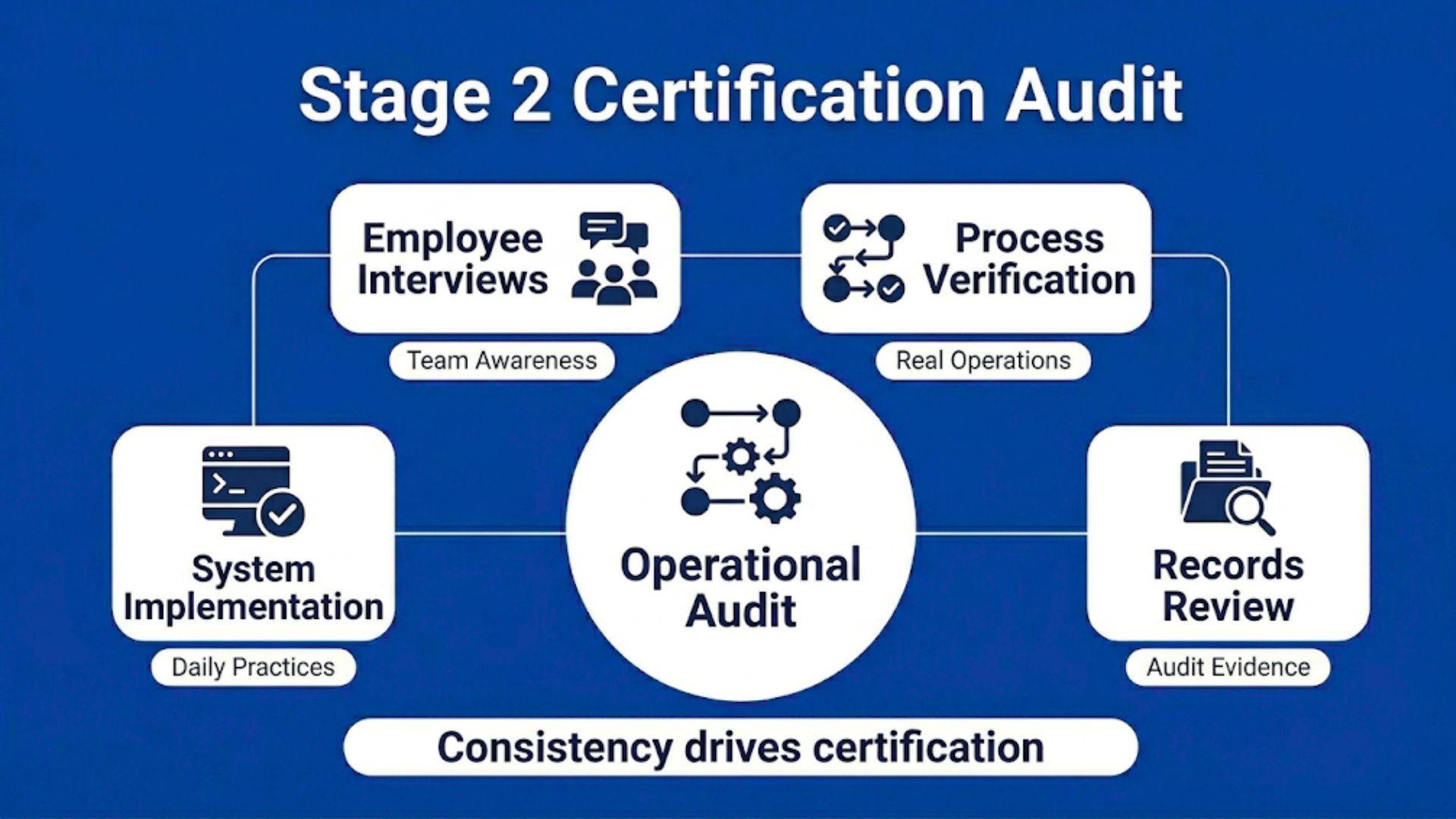
This is the main audit where your system is evaluated in practice. Auditors will go beyond documents and look at how your processes are actually implemented. This stage often has a direct influence on your overall ISO 14001 certification cost, because any gaps identified here may require additional time, corrections, or follow-up audits.
They may interview employees, review records, and observe operations to verify that your environmental management system is functioning as intended.
Consistency is what matters most here. Your team should understand their roles, and processes should be followed as defined.
If non-conformities are identified, you will be required to take corrective actions. Minor issues are common and usually do not stop certification if addressed properly.
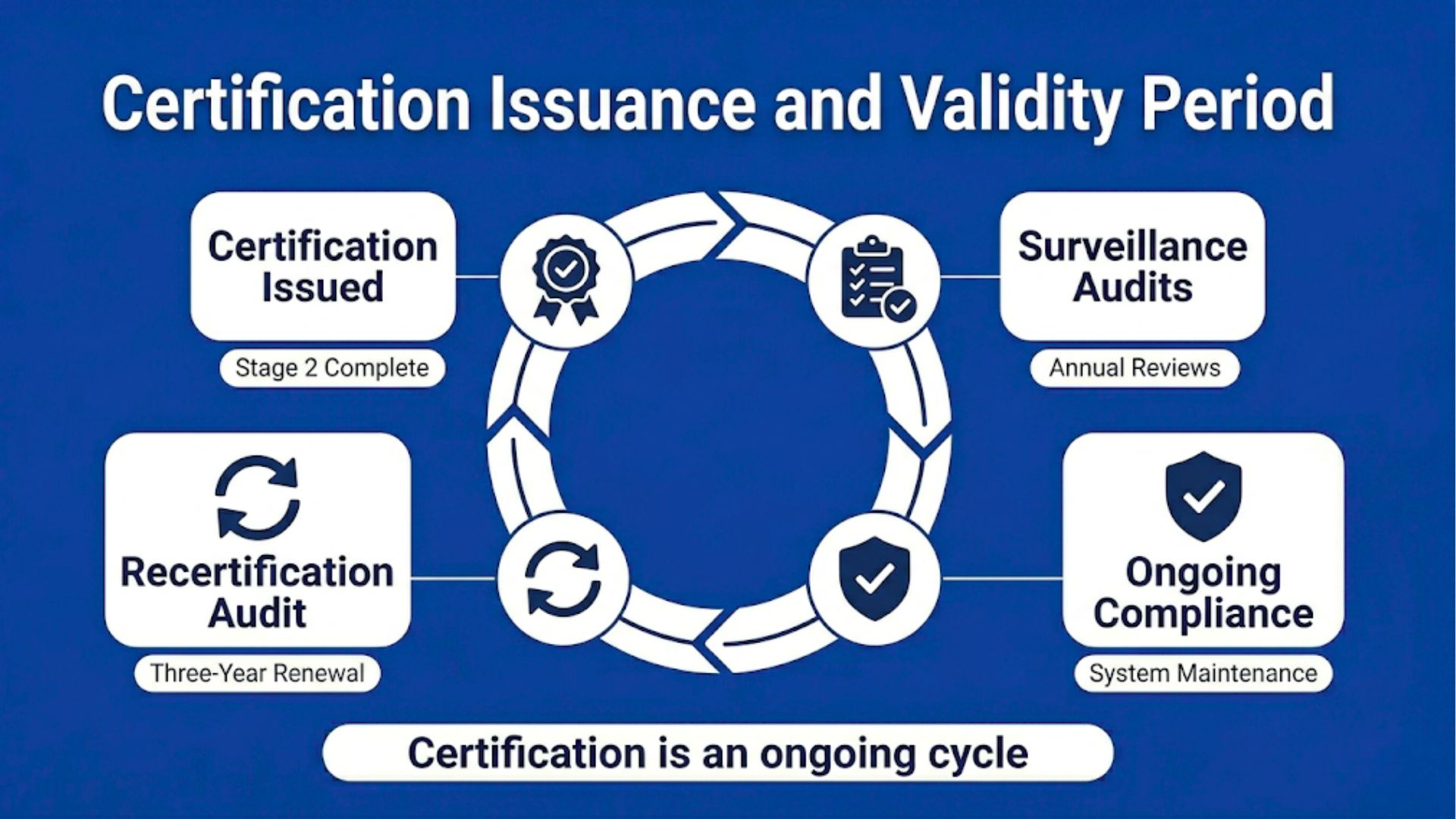
Once the Stage 2 audit is successfully completed and any required corrections are made, the certification body issues your ISO 14001 certificate.
The certification is typically valid for three years. However, it is not a one-time process. During this period, surveillance audits are conducted, usually once a year, to ensure that your system continues to meet requirements.
At the end of the three-year cycle, a recertification audit is required to renew the certificate.
This ongoing cycle is what keeps the system active and ensures continuous improvement rather than one-time compliance.
For small businesses, understanding this cycle early helps in planning resources and maintaining consistency over time.
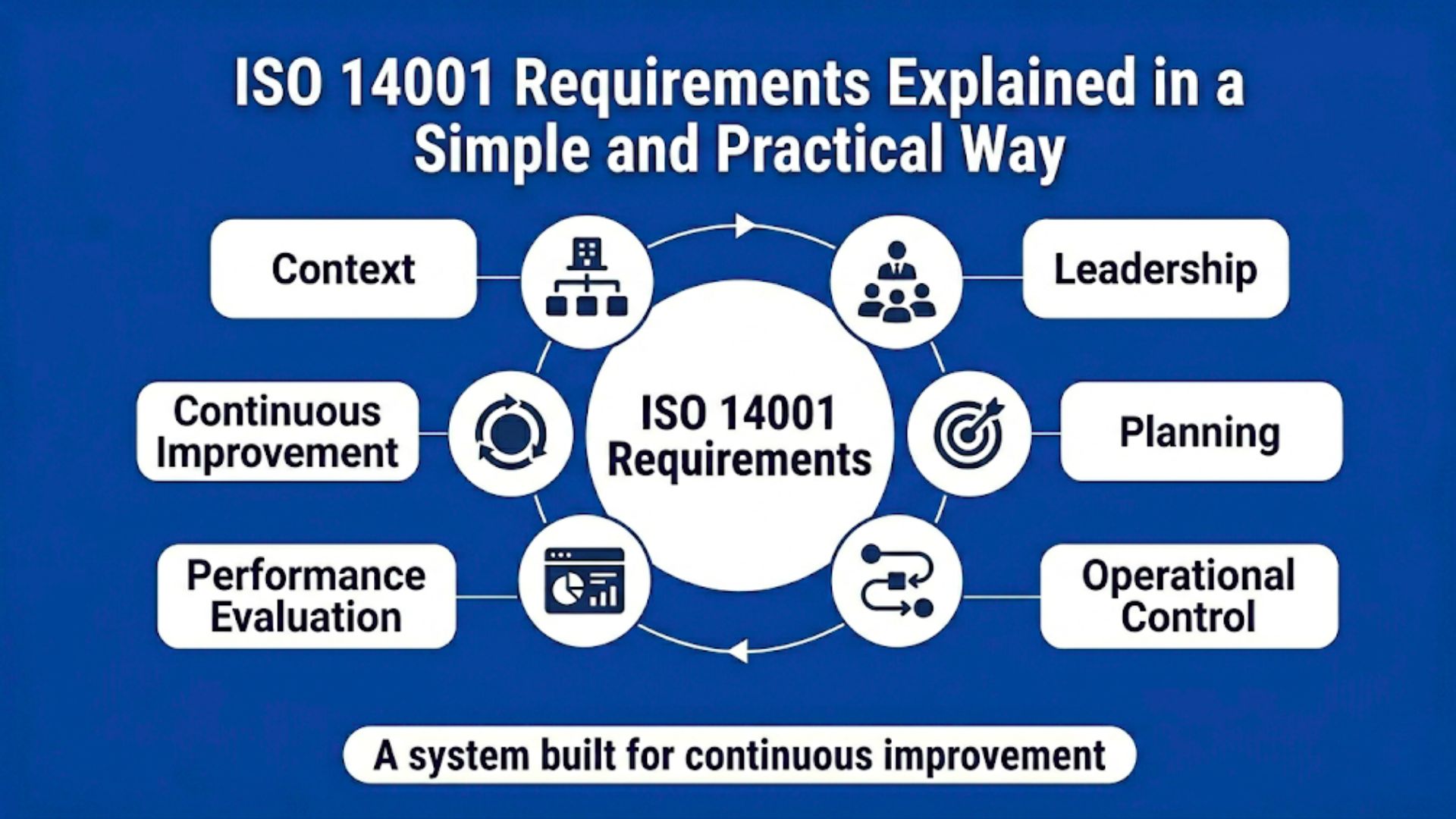
Once you get past the implementation steps, the next thing that usually comes up is the structure behind it. ISO 14001 follows a standard framework used across multiple ISO standards, built around a 10-clause structure. This is often called the “high-level structure,” and it exists to keep things consistent and easier to integrate with other systems like quality or safety.
For a small business, not every clause needs the same level of depth. What actually matters is understanding how the core requirements translate into your day-to-day operations. When you look at it this way, the standard feels a lot more practical and less like a formal checklist.
This is where everything starts. You need to understand your business in relation to environmental impact. That includes internal factors like your operations, resources, and processes, as well as external factors like regulations, market expectations, and stakeholder requirements.
You also identify who your interested parties are. These could be customers, regulators, suppliers, or even local communities. Each of them may have expectations that influence how your system is designed.
ISO 14001 puts strong emphasis on leadership, even in small teams. This does not mean creating hierarchy, it means ensuring that decision-makers are actively involved.
Top management is expected to define the environmental policy, allocate resources, and support the system. Without this, implementation usually becomes inconsistent or loses momentum over time.
Leadership also sets the tone for accountability. When the team sees that environmental practices are taken seriously at the top, adoption becomes much smoother across the organization.
This is where you move from understanding your business to actively planning improvements. You identify risks that could negatively impact the environment and opportunities where performance can be improved.
These risks and opportunities are often linked to the environmental aspects you identified earlier. For example, high energy usage could be both a cost risk and an environmental concern.
You also need to consider compliance obligations here. This means identifying applicable environmental laws and ensuring your processes align with them.
Once planning is done, you need to ensure that daily operations follow the defined approach. This is where operational control comes in.
You establish procedures or guidelines for activities that have a significant environmental impact. This could include waste management, handling of materials, equipment usage, or supplier controls.
The key is consistency. Processes should be clear enough that they can be followed without confusion, even during busy operations.
A system only works if you know whether it is actually delivering results. Performance evaluation focuses on monitoring, measuring, and reviewing your environmental performance.
This includes tracking key metrics linked to your objectives, such as energy usage, waste reduction, or compliance status.
Internal audits are also part of this clause. These audits help you check whether processes are being followed and whether the system is functioning as intended.
This is what ties everything together. ISO 14001 is not about achieving a fixed state. It is about improving over time.
Whenever issues are identified, whether through audits, monitoring, or daily operations, corrective actions need to be taken. This ensures that problems are addressed at their root.
Improvement does not always mean large changes. Small, consistent updates often have a bigger long-term impact, especially for small businesses.

When small businesses look at ISO 14001, it often starts as a compliance requirement. But once the system is in place, the impact shows up in everyday operations.
It changes how resources are used, how decisions are made, and how the business is perceived externally.
One of the most visible outcomes is better control over resources. When you start tracking electricity, water, raw materials, and waste, inefficiencies become easier to spot.
Organizations that implement structured environmental management systems consistently report improvements in resource efficiency and waste reduction. The reason is simple, once usage is measured, it becomes easier to control and optimize.
For a small business, even a 5 to 10 percent reduction in energy or material usage can directly affect operating costs. These savings are ongoing because they come from improved processes, not one-time changes. In many cases, businesses begin to recover a part of their ISO 14001 certification cost through lower energy consumption, reduced material wastage, and better operational control over time.
This is also why many companies stop looking at ISO 14001 only as a compliance expense. When implemented properly, the certification often supports long-term cost efficiency alongside environmental performance. Over time, this builds a more cost-aware and efficient way of running operations.
Environmental regulations are becoming stricter across industries, and non-compliance can lead to penalties or disruptions.
A structured system ensures that legal requirements are identified, tracked, and reviewed regularly. This reduces the chances of missing updates or falling behind on compliance obligations.
For small teams without dedicated compliance roles, this creates a more stable and predictable way to manage regulatory expectations.
Many businesses, especially in global supply chains, now evaluate environmental practices when selecting vendors or partners.
This means having ISO 14001 in place can open doors to new opportunities and help retain existing clients who prioritize sustainability.
For small businesses, this often becomes a competitive advantage, especially when competing with similar service providers.
Environmental responsibility is no longer just a marketing message. It is something clients, partners, and even employees evaluate more closely.
Having a recognized standard in place signals that your business is following a structured and verified approach, not just making claims.
This builds trust over time, especially when entering new markets or working with larger organizations that require proof of environmental practices.
When processes are clearly defined and monitored, inefficiencies become easier to identify. This often leads to smoother workflows and better use of resources.
For small teams, this can reduce rework, improve coordination, and create more consistency in daily operations.
Over time, these efficiency gains support scalability without adding unnecessary complexity.
What real business impact does ISO 14001 create for small teams?
It usually starts with better control over resources and compliance, but the effect goes deeper. As the system becomes part of daily operations, it influences how efficiently the business runs, how risks are managed, and how opportunities are captured.
Instead of being a separate compliance activity, it becomes part of how the business grows, with clearer processes, lower uncertainty, and more consistent performance.
If you’re starting to see how ISO 14001 connects with cost savings, efficiency, and overall business performance, the next challenge is actually managing all of it without things slipping through the cracks.
That’s where P3 LogiQ comes in. Instead of handling resource tracking, compliance checks, and performance monitoring across scattered tools, you can bring everything into one place that’s built around how ISO systems actually work.
It helps you stay consistent, track improvements, and keep your entire system audit-ready without adding complexity. You can book a free demo or sign up to see how it fits into your operations and simplifies the process end-to-end

Even with the right intent, many small businesses struggle with ISO 14001 because of how they approach it. Most issues are not about complexity, but about execution. Avoiding these common mistakes can save time, cost, and a lot of rework later.
One of the most common mistakes is reducing ISO 14001 to paperwork. Teams focus heavily on creating documents but don’t connect them to actual operations.
When this happens, the system may look complete on paper but fails during audits or daily use. Processes are either not followed or not understood by the team.
ISO 14001 is built around how your business operates, not just what is written. Documentation should support processes, not replace them.
A better approach is to build processes first and then document what is actually being followed. This keeps everything aligned and practical.
Using generic templates might seem like a quick solution, but it usually creates more problems. Policies and procedures that don’t reflect your operations are easy to identify during audits.
More importantly, your team won’t relate to them. If a policy feels disconnected from daily work, it gets ignored.
Every business has different environmental aspects, risks, and priorities. Your system should reflect that uniqueness.
Instead of copying, use templates only as a reference and build content around your actual processes.
Some businesses focus only on what is easy to document rather than what actually matters. This leads to systems that overlook key environmental impacts.
For example, a company might document office paper usage but ignore high energy consumption in operations or supply chain impact.
ISO 14001 expects you to identify and manage significant environmental aspects, not just convenient ones.
Taking time to properly assess impact areas makes the system more meaningful and effective.
Without active involvement from leadership, the system often loses direction. It becomes a side project instead of a business priority.
Leadership is responsible for setting the tone, allocating resources, and ensuring accountability. If this support is missing, implementation becomes inconsistent.
Even in small teams, visible commitment from decision-makers makes a big difference in adoption.
When leadership is involved, the system becomes part of business strategy rather than just compliance.
Another common issue is setting goals without defining how they will be measured. Without clear metrics, it becomes difficult to track progress or prove improvement.
For example, saying “reduce waste” is not enough. It needs to be linked to a measurable target, such as a percentage reduction or volume decrease.
KPIs bring clarity and accountability. They also make audits smoother because performance can be demonstrated with data.
Small businesses should keep KPIs simple but consistent to maintain focus and visibility.
Many businesses treat audits as a one-time event instead of an ongoing process. This often leads to last-minute preparation and unnecessary stress.
If your system is properly implemented, audit preparation should not feel rushed. Records, processes, and team awareness should already be in place.
Common gaps include missing records, unclear responsibilities, or misalignment between documentation and actual practices.
Regular internal audits and reviews help avoid these issues and keep the system ready at all times.
You've made it this far, which probably means ISO 14001 is no longer just something you're researching.
You're likely trying to figure out how to turn all these requirements into a system that actually works for your business without adding more spreadsheets, more manual tracking, or more administrative work.
That's often where small businesses get stuck.
The standard itself is usually not the hardest part. Building a process that your team can consistently follow is.
P3 LogiQ helps you move from planning to execution by bringing your environmental management activities into one structured platform.

So instead of managing compliance across multiple tools and documents, you can focus on improving performance and preparing for certification with more confidence.
If you're ready to see what that looks like in practice, Book a free demo or sign up with P3 LogiQ to see how your entire ISO 14001 journey can be streamlined, structured, and built for long-term growth.
ISO 14001 is an international standard for environmental management systems (EMS) that helps businesses manage their environmental responsibilities in a structured way. For small businesses, it provides a framework to identify environmental impacts, improve compliance, and reduce waste or resource consumption.
The standard is flexible and can be adapted to smaller operations without requiring complex systems. Many small businesses use ISO 14001 to improve sustainability practices while creating more organized environmental processes.
Yes, ISO 14001 is designed for organizations of all sizes, including startups and small businesses. The requirements can be scaled based on operational complexity, industry type, and environmental risks.
Small businesses often implement ISO 14001 to improve operational control, strengthen compliance, and demonstrate environmental responsibility to clients, partners, and regulators.
ISO 14001 can help small businesses reduce waste, improve resource efficiency, and strengthen environmental compliance. It may also help organizations identify operational inefficiencies that increase costs unnecessarily.
Many businesses also use certification to improve credibility, support sustainability goals, and strengthen relationships with environmentally conscious customers or corporate clients.
The cost depends on factors such as business size, operational risks, number of employees, consultant involvement, and certification body fees. Costs may include training, documentation development, audits, and implementation support.
Smaller businesses often have lower certification costs because their operations and management systems are usually less complex than larger enterprises.
The timeline varies depending on the business’s readiness, existing environmental practices, and available resources. Some small businesses complete implementation within a few months, while others may require longer preparation.
Implementation generally becomes faster when businesses already maintain organized operational procedures and actively involve employees in environmental management activities.
ISO 14001 usually requires environmental policies, environmental aspect assessments, compliance records, operational controls, objectives, monitoring records, audit reports, and corrective action documentation.
The documentation requirements are often simpler for small businesses because the system is expected to match the organization’s size and operational complexity rather than follow unnecessary bureaucracy.
Yes, many businesses use ISO 14001 to identify opportunities for reducing energy usage, material waste, water consumption, and inefficient operational practices. These improvements can sometimes reduce long-term operational costs.
The standard also encourages better process monitoring, which may help businesses detect environmental risks or compliance issues before they become expensive problems.
No, ISO 14001 certification is generally voluntary. However, some industries, clients, government contracts, or supply chain requirements may strongly encourage businesses to implement environmental management systems.
Small businesses often pursue certification to improve competitiveness, meet customer expectations, and strengthen their reputation in environmentally focused markets.
Common challenges include limited budgets, lack of environmental management expertise, time constraints, and balancing implementation with daily operations. Smaller teams may also struggle with documentation and compliance monitoring initially.
However, many small businesses overcome these challenges by keeping the system practical, focusing on major environmental risks first, and implementing improvements gradually over time.
Yes, many small businesses integrate ISO 14001 with ISO 9001 because both standards follow a similar management system structure. This allows businesses to combine processes for audits, documentation, corrective actions, and continual improvement.
An integrated system can reduce duplication, improve operational efficiency, and make ongoing management easier compared to maintaining separate systems for quality and environmental management.



Businesses need document management systems (DMS) to ensure ISO and R2 compliance, improve efficiency, and stay audit-ready. The article highlights key features like version control, security, and automation while reviewing the top 5 DMS solutions. P3 LogiQ stands out for its compliance-focused automation and secure document tracking
Read More
Recycling businesses gain efficiency, compliance, and sustainability with RIOS certification. It streamlines quality management, environmental responsibility, and worker safety, helping companies avoid legal risks and boost credibility. P3 LogiQ simplifies the certification process with automation, document control, and compliance tracking, making operations smarter and safer.
Read More
Audit Management Software (AMS) automates compliance tracking, streamlines workflows, and reduces audit risks. Key features include automated scheduling, compliance checklists, CAPA tracking, vendor risk management, and integrations.
Read More
Learn how audit management systems simplify ISO and R2 compliance by automating audits, managing documentation, and minimizing compliance risks efficiently.
Read More
In 2025, many businesses still face challenges in compliance management due to outdated methods like spreadsheets and fragmented software. This inefficiency leads to missed deadlines, increased risk, and regulatory penalties. The blog emphasizes the importance of modern compliance tools that automate workflows, enhance risk management, and streamline regulatory processes to meet ISO and R2 standards.
Read More
The rise in e-waste and environmental concerns makes responsible electronics recycling essential. The R2 Certification sets a global standard for safe, sustainable, and data-secure recycling practices. Developed by Sustainable Electronics Recycling International (SERI), R2 helps businesses manage environmental risks, data security, worker safety, and legal compliance.
Read More
Businesses face increasing challenges in managing complex regulatory compliance. Manual methods such as spreadsheets and paperwork can lead to missed deadlines, inefficiencies, and costly penalties. Compliance management software offers a streamlined solution to reduce risks, automate processes, and improve operational efficiency.
Read More
Maintaining R2 Certification is crucial for businesses in the e-waste recycling industry, ensuring regulatory compliance, sustainability, and strong stakeholder trust. This guide outlines 10 best practices to help businesses simplify operations, reduce risks, and stay compliant.
Read More
Unlock the value of ISO risk management certification. Explore its impact on compliance, risk mitigation, and business expansion.
Read More
Explore the top 5 ISO risk management software tools for 2025, including document management solutions for streamlined compliance and increased efficiency.
Read More
Find the ideal document management software (DMS) for your business. Learn how to choose with expert tips, key features, and insightful guidance
Read More
Unlock the power of a Document Management System (DMS). Learn how it can revolutionize your business operations.
Read More







.png)


.png)




.jpg)



.jpg)
.jpg)







.jpg)



.png)

.png)
.png)



.png)

