.jpg)
.jpg)
When you are evaluating compliance automation software, comparing multiple platforms is part of the process.
The compliance software market is growing fast. According to Mordor Intelligence, it is worth $40.82 billion USD in 2026 and growing at 12.67% annually. That growth has brought more vendors, more features, and more pricing models into the mix. What worked for your team two years ago may no longer be the best fit today.
Vanta is one of the most recognized names in this space. It helped thousands of startups complete their first SOC 2 and ISO 27001 audits without hiring a full-time compliance team. Many companies start with Vanta, but as their compliance programs grow, frameworks expand, or renewal costs increase, they begin exploring Vanta alternatives.
Comparing the right platforms side by side helps teams understand how different tools perform in real-world scenarios. This includes automation capabilities, framework coverage, audit support, integrations, and total cost of ownership. Understanding ways to choose the right compliance management software can help organizations evaluate platforms based on their specific requirements rather than just feature lists.
Most platforms look similar on paper. They all support continuous monitoring, evidence collection, and policy management. However, the differences often appear in areas such as pricing transparency, multi-framework support, customer support quality, and whether the platform can scale alongside your business. Reviewing the best compliance management tools and understanding their strengths can make the evaluation process easier.
This guide covers seven of the best Vanta alternatives in 2026, breaking down each platform’s key features, strengths, limitations, pricing, and ideal use cases.
Vanta is one of the most recognized names in the compliance automation space. It helped thousands of startups get through their first SOC 2 and ISO 27001 audits without hiring a full-time compliance team. Many companies start with Vanta. Many also start looking at Vanta alternatives as their programs grow, their frameworks expand, or their renewal quotes come in higher than expected.
Comparing the best ISO compliance software side by side helps teams understand how different tools perform in real-world use. This includes automation depth, framework coverage, audit support, integrations, and total cost of ownership.
Most platforms look similar on paper. They all support continuous monitoring, evidence collection, and policy management.
The real differences show up in pricing transparency, how well the platform handles multiple frameworks, the quality of support, and whether the tool grows with your business or starts working against it.
This guide covers seven of the best Vanta alternatives in 2026. Each one is broken down by key features, strengths, limitations, pricing, and who it actually makes sense for.
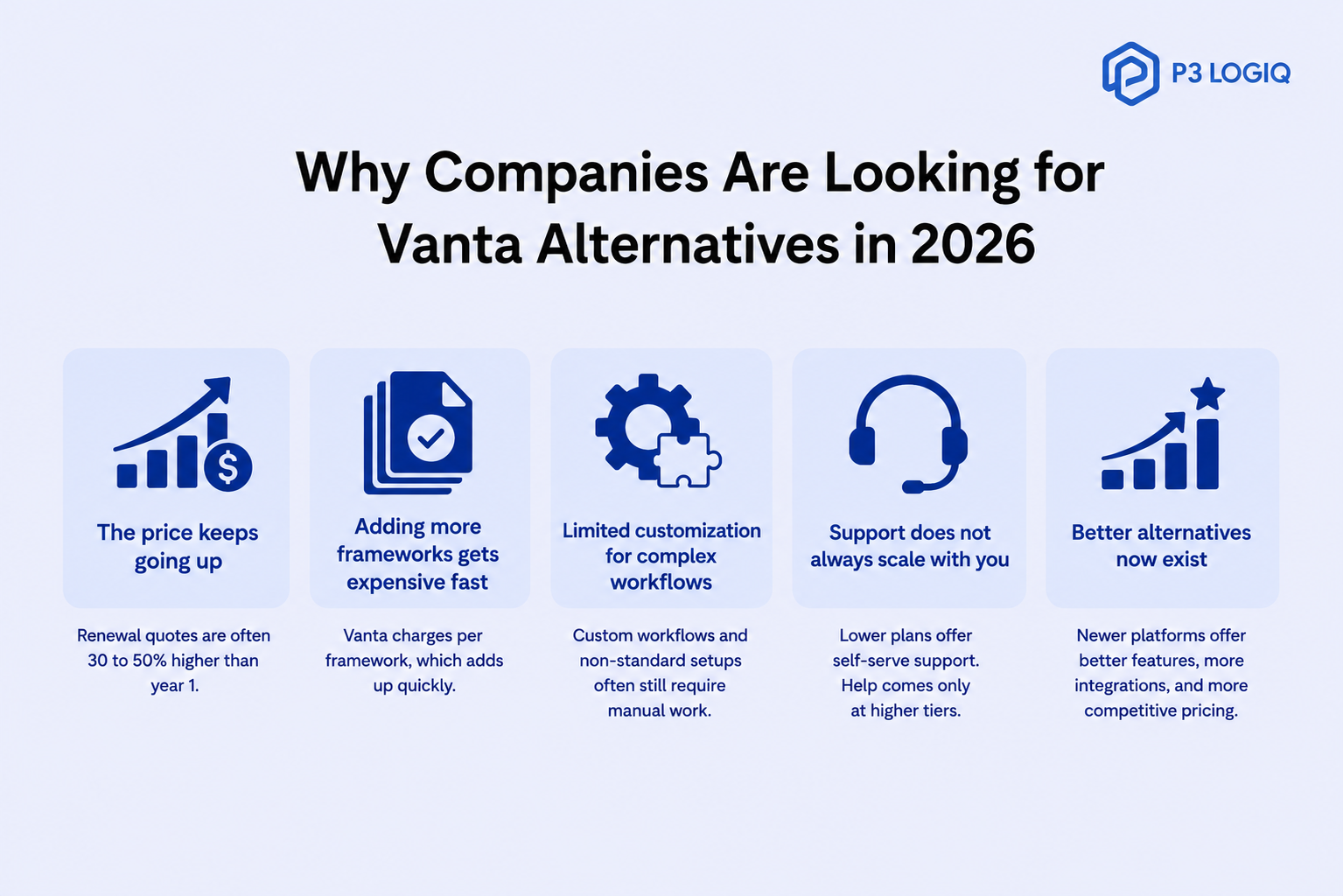
Vanta works well for small teams chasing their first SOC 2 audit. The problems start when your team grows, your framework needs expand, or your renewal quote lands in your inbox.
Here are the five most common reasons companies start looking elsewhere.
Vanta does not publish its pricing. You only find out the real number after a sales call. Based on buyer reports, plans start around $10,000 USD per year for a single framework and can climb past $80,000 USD for larger teams with multiple frameworks.
The bigger issue is what happens at renewal. According to SOC 2 Auditors, buyers routinely receive renewal quotes 30 to 50 percent higher than their Year 1 rate. This is the most common pricing complaint across G2 and community forums.
Vanta charges separately for each compliance framework. SOC 2 is one cost. Adding ISO 27001 or HIPAA adds another fee on top. For companies that need to cover multiple frameworks, that per-framework pricing model adds up fast.
According to Bright Defense, close to 7 in 10 service providers must now comply with six or more distinct frameworks. If your business is in that group, paying per framework is a serious budget problem.
Vanta is built to be plug-and-play. That is great for a first audit. But once you need custom control mappings, cross-team workflows, or support for non-standard infrastructure, you hit walls quickly. Teams with on-premise setups or heavily customized stacks often find that a large chunk of their controls still require manual work despite paying for automation.
Entry-level Vanta plans come with self-serve support. Dedicated help is reserved for higher tiers. As your compliance program grows in complexity, that gap becomes a real problem. Many teams report that onboarding takes longer than expected and that getting answers requires upgrading to a more expensive plan.
Two years ago, Vanta had few serious competitors. That has changed. A new generation of platforms, including Drata, Sprinto, and Secureframe, has matured significantly.
For teams evaluating whether to continue with Vanta or switch platforms, it becomes important to prepare for an ISO or R2 audit with a clear understanding of how different compliance tools support automation, evidence collection, and audit readiness across frameworks.
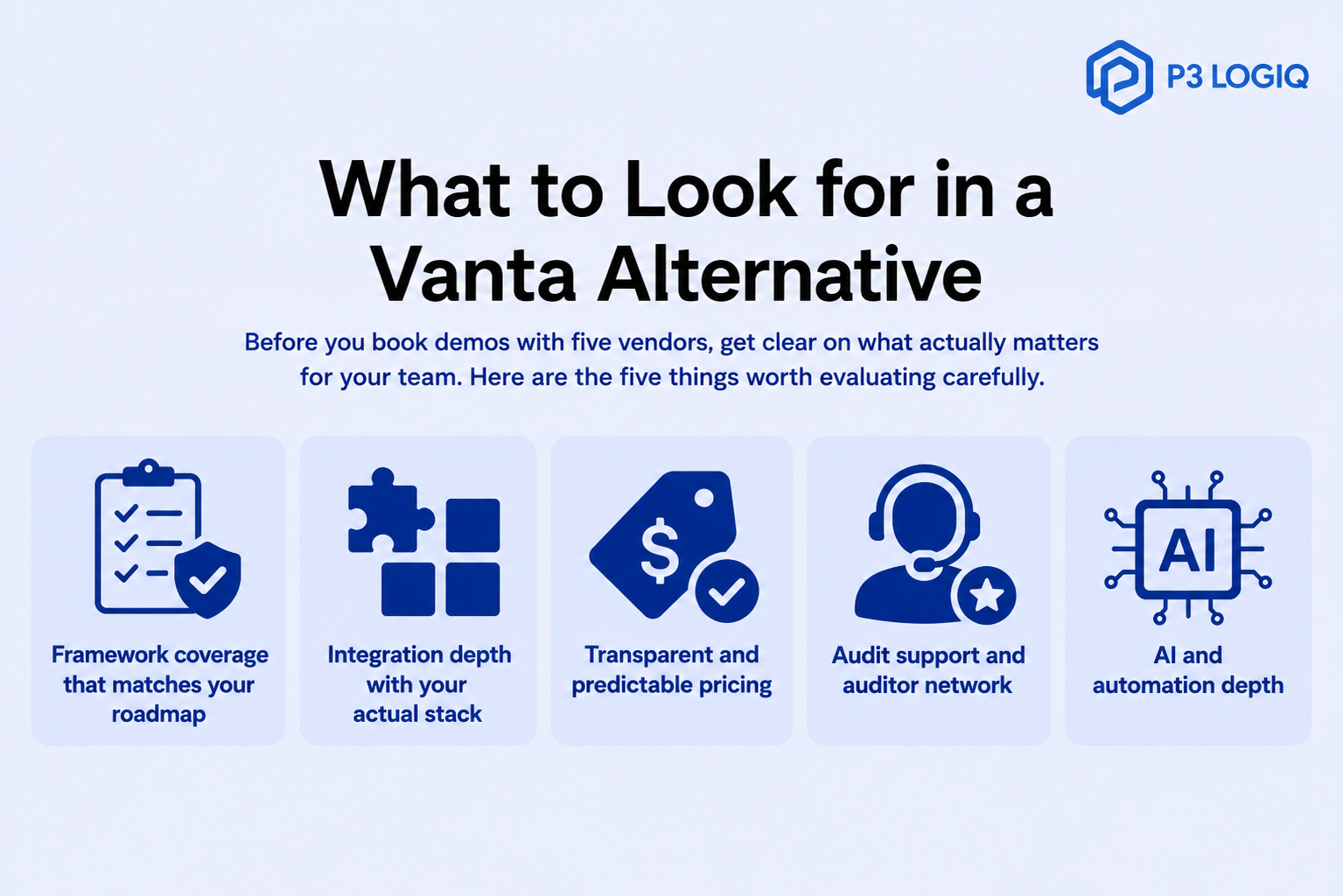
Before evaluating Vanta alternatives, consider the factors that will impact your compliance program, including framework support, automation capabilities, pricing, scalability, and ease of use.
Think about what you need today and what you will likely need in the next 12 to 24 months. According to the A-LIGN 2025 Compliance Benchmark Report, 81% of organizations reported a current or planned ISO 27001 certification in 2025, up from 67% in 2024. If ISO 27001, HIPAA, or PCI DSS is on your horizon, make sure the platform covers it without surprise add-on fees.
A clear understanding of ISO Standards helps you evaluate whether a platform is truly aligned with your compliance roadmap.
Most platforms advertise "100+ integrations." What matters is whether those integrations go deep into the specific tools your team actually uses. A shallow connector that pulls surface-level data will still leave your team doing manual evidence collection. Check whether the platform has native support for your cloud provider, HR system, and identity management tool before signing anything.
Look for a vendor that either publishes pricing or gives you a written price-lock guarantee for Year 2. The renewal surprise is Vanta's biggest recurring complaint on G2 and Reddit. There is no reason to walk into the same situation with a different vendor.
Some platforms are software only. Others bundle in-house compliance experts, dedicated customer success managers, or a pre-vetted auditor network. If your team is going through a first audit, having a human in your corner makes a bigger difference than most people expect.
The best platforms in 2026 do more than flag issues. They tell you exactly how to fix them. Look for AI-powered questionnaire automation, automated remediation guidance, and smart cross-framework control mapping. These features save dozens of hours per audit cycle and are now standard in the better alternatives.
The seven platforms below are the ones that come up most often when compliance teams start looking for a switch. Some are closer to Vanta in price and features. Some are built for a completely different type of buyer.
We have broken each one down by what it does well, what it costs, and who it actually makes sense for, so you can shortlist the right two or three without wasting a week on demos.
Before looking at each platform in detail, here is a quick comparison of the top Vanta alternatives based on their core strengths, pricing approach, and ideal use cases.
While Vanta is primarily built for SaaS security frameworks like SOC 2 and ISO 27001, P3 LogiQ is designed for organizations managing operational compliance standards such as ISO 9001, ISO 14001, ISO 45001, RIOS, and R2.
Most compliance software forces businesses to choose between two difficult options. They either invest in an enterprise platform that takes months to configure or rely on spreadsheets, shared drives, and email threads to manage compliance. Neither approach works well for growing organizations.
P3 LogiQ was built for organizations caught in the middle. It is a cloud-based compliance management platform that brings everything into one centralized system, from initial gap analysis through certification and ongoing surveillance audits. Nothing gets lost across disconnected tools.

While Vanta focuses on automating security compliance workflows, P3 LogiQ provides a broader operational compliance system with connected modules for managing audits, corrective actions, documents, risks, and continuous improvement. This makes it a strong choice for organizations that need more than audit readiness and want a centralized platform to manage their complete compliance lifecycle.
P3 LogiQ is built around ten integrated modules that work together as one connected compliance system.
P3 LogiQ is built around ten integrated modules that work together as one connected compliance system.
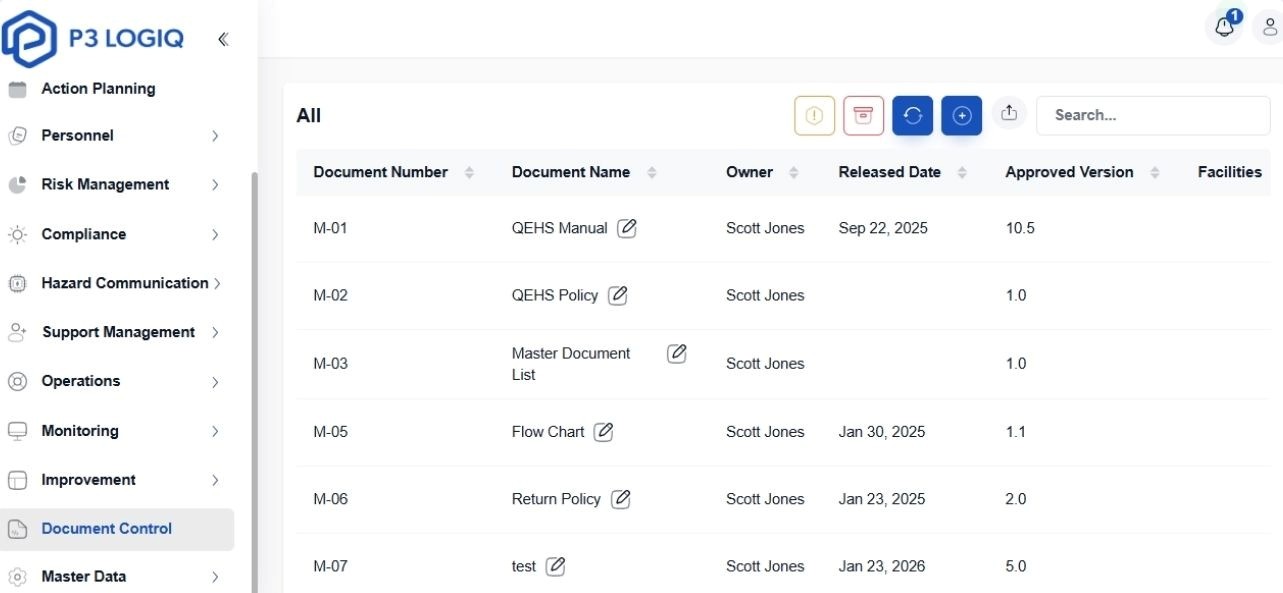
Document management helps you control policies, procedures, and quality records in one place. It includes version control, approval workflows, revision tracking, and secure document storage.
The platform automatically tracks document revisions, approval dates, and changes. This helps your team always work from the latest approved version and stay audit-ready.
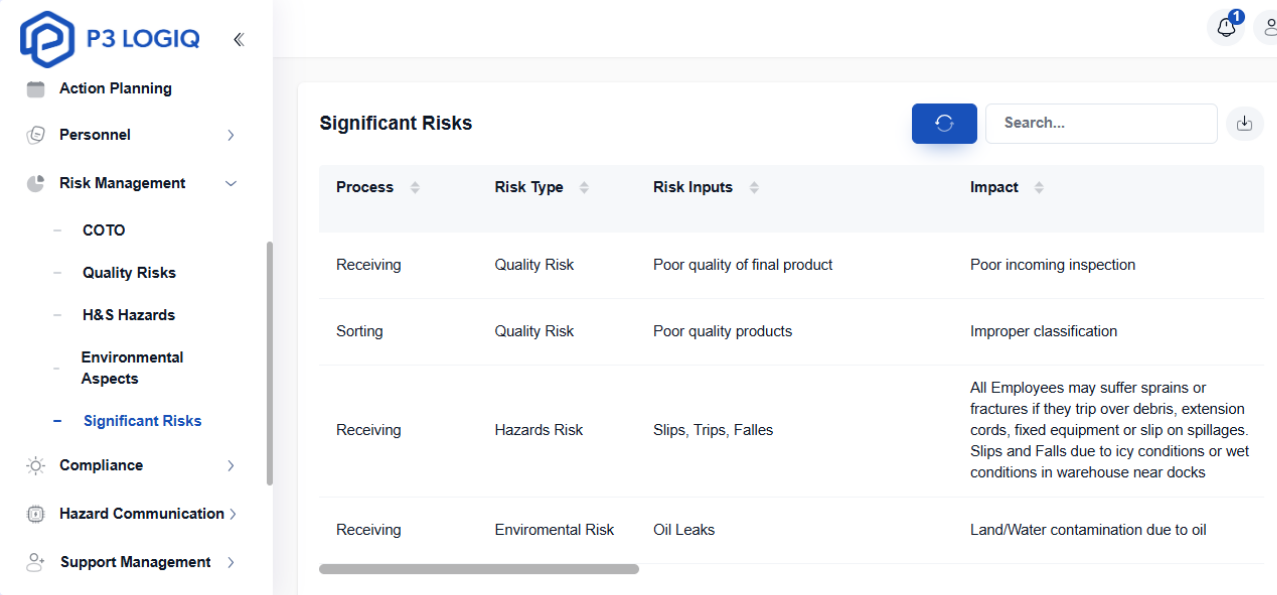
Risk Management does more than store a risk register. It helps you identify, prioritize, and track risks based on their severity and potential business impact.
The platform monitors, controls, flags additional actions when needed, and sends real-time notifications as risks change. This makes it easier to focus on the areas that need attention most.

Audit management is designed for continuous audit readiness. Instead of preparing only when an audit approaches, your team can manage audits throughout the year.
The platform schedules audits, assigns auditors, tracks findings, and connects audit results directly to corrective actions. It also supports vendor self-audits, which are especially useful for organizations managing supplier compliance under ISO 14001 and R2 requirements.
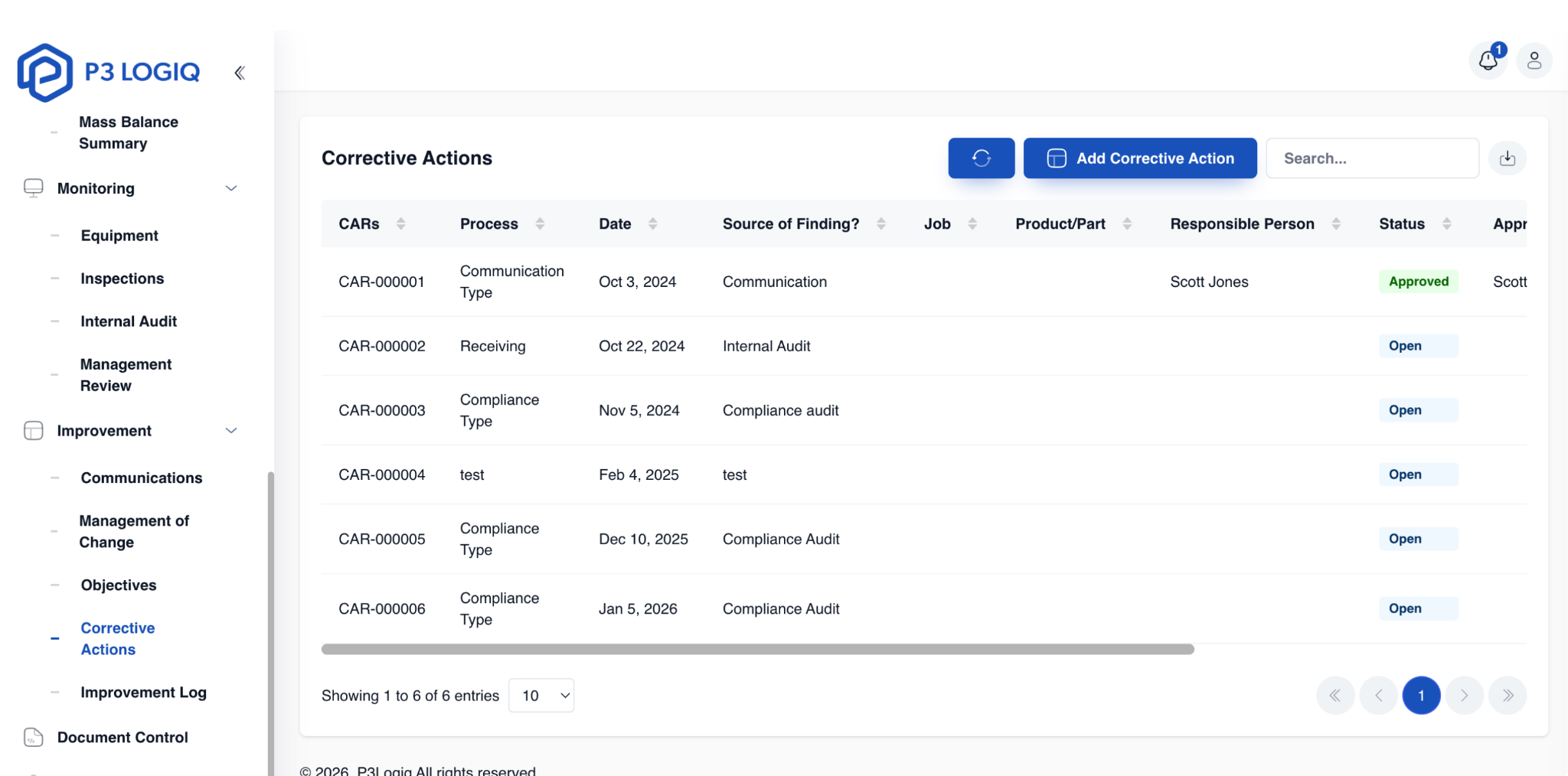
Corrective action management connects directly to audit findings and nonconformances. When an issue is identified, the system creates and tracks corrective actions from start to finish.
Teams can manage root cause analysis, containment activities, responsibilities, and closure in one place. This helps ensure important actions don't get lost or delayed.
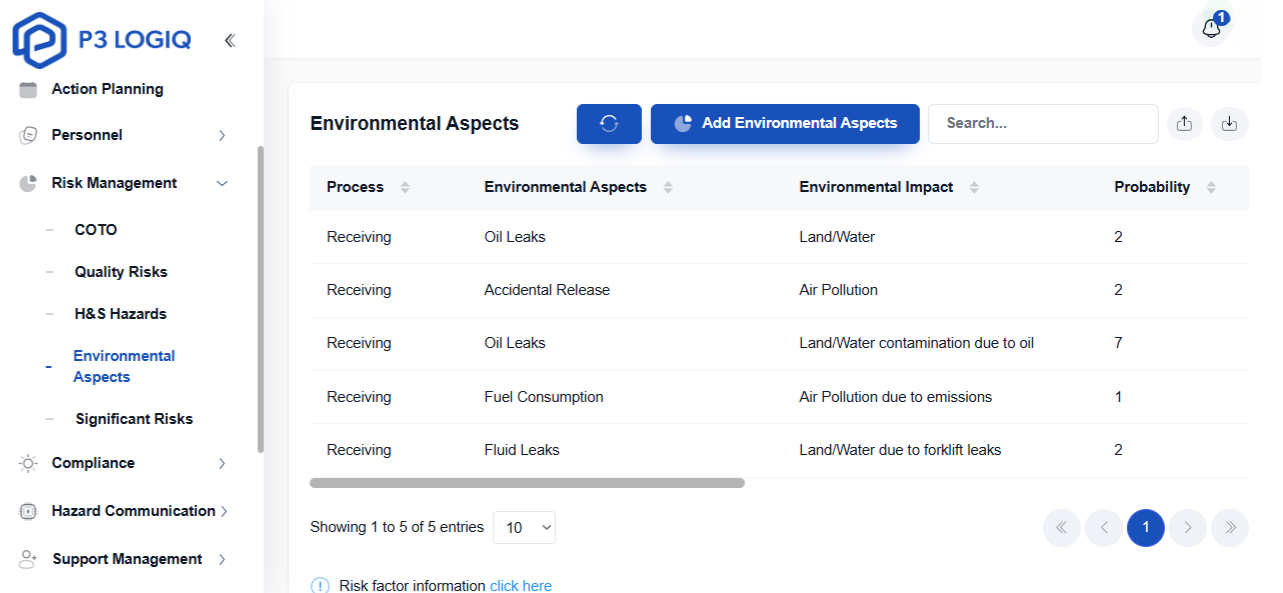
QEHS monitoring brings quality, environmental, health, and safety requirements into a single system.
If your organization manages multiple standards, you can monitor all four areas together instead of maintaining separate tools and processes for each one.
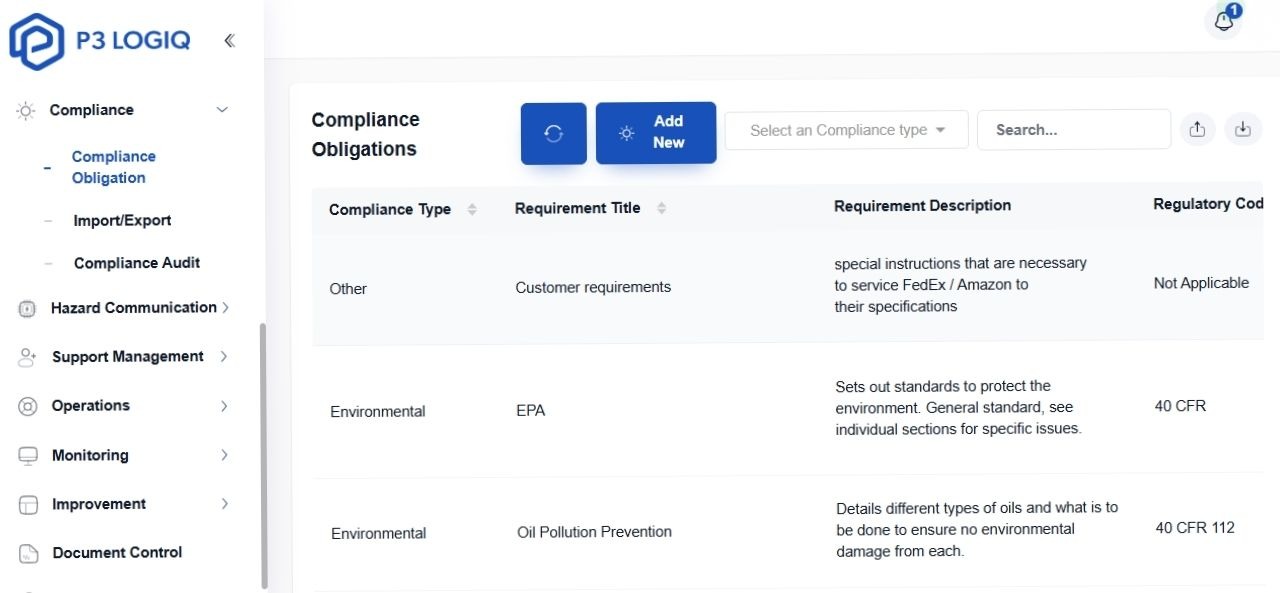
Compliance management provides a real-time view of your ISO and R2 obligations. It helps you track compliance status, identify gaps, and monitor progress across the organization.
Features such as compliance evaluations, corrective action tracking, real-time alerts, and customizable reporting give leadership clear visibility into compliance performance. This allows teams to address issues early instead of reacting when audits are already underway.
For example, if you're preparing for a surveillance audit or annual review, having a centralized view of corrective actions, compliance gaps, and supporting records can make it much easier to maintain ISO 9001 compliance throughout the year rather than scrambling to gather evidence at the last minute.
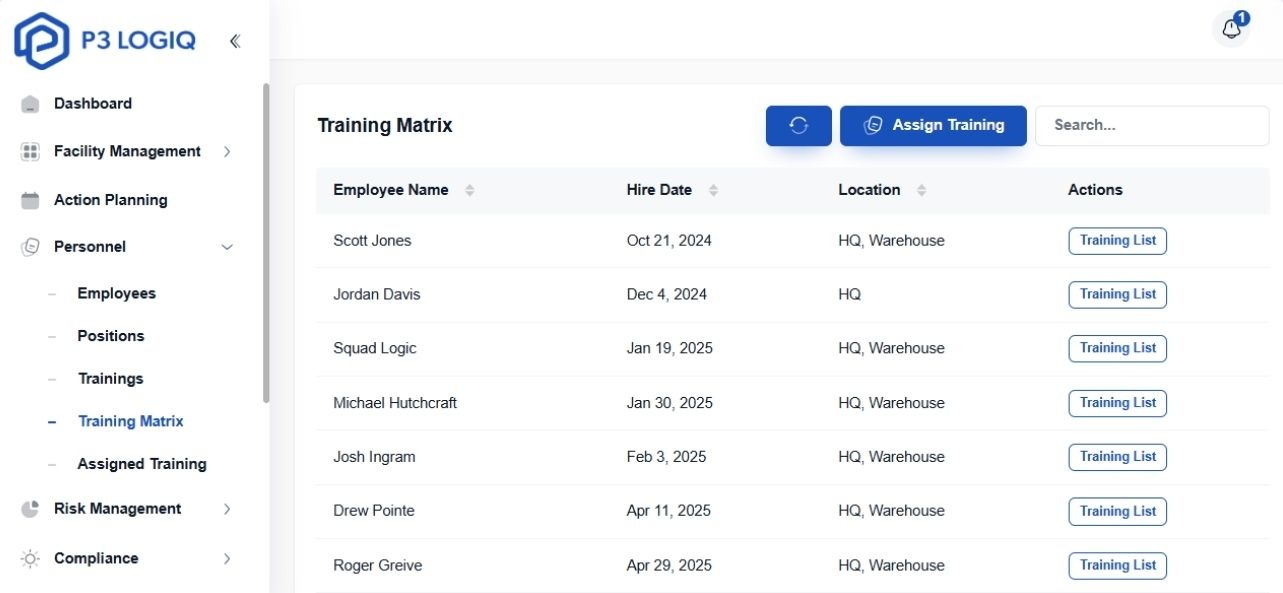
Training management tracks employee learning against compliance roles and document versions. The advanced training matrix helps ensure employees receive training that matches their specific job responsibilities.
Digital record keeping, trainer and trainee sign-off, and automated reminders help organizations stay audit-ready year-round. This reduces the risk of missed training requirements before certification or surveillance audits.
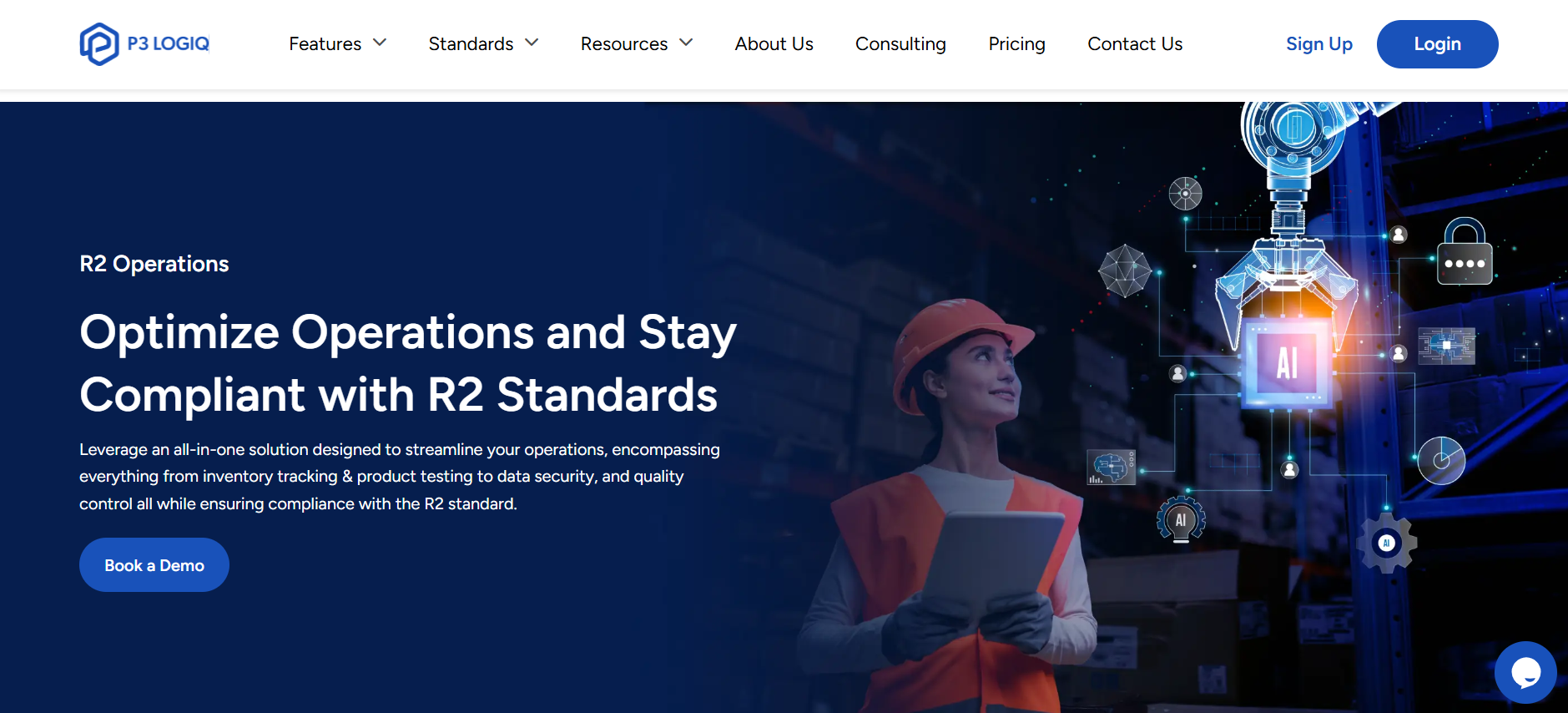
The platform also includes Calibration and Maintenance Management, Continuous Improvement Management, and R2 Operations.
For electronics recycling organizations, R2 Operations supports inventory tracking, product testing logs, stream classification, and data security requirements within a single system.
ISO 9001, ISO 14001, ISO 45001, RIOS Standard, and R2 Standard. For organizations managing more than one standard simultaneously, the platform handles all of them within one system rather than requiring separate tools or separate implementations per standard.
P3 LogiQ is used by organizations across manufacturing, electronics recycling, healthcare, construction, technology, logistics, and professional services that need a structured approach to ISO and R2 compliance management.
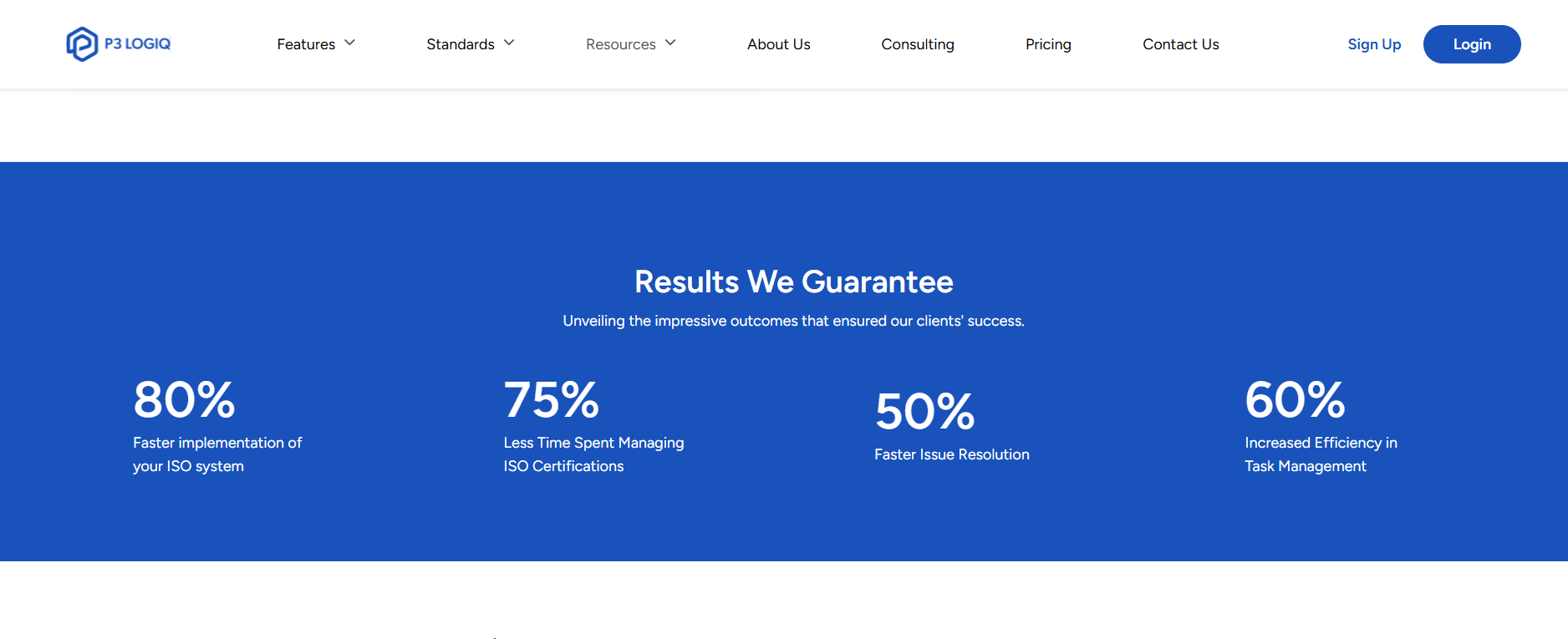
Organizations using P3LogiQ have reported up to 80% faster ISO implementation, 75% less time managing certifications, 50% faster issue resolution, and 60% greater efficiency in compliance task management.
Pricing is another area where P3LogiQ stands out from Vanta. While Vanta hides its numbers behind a sales call, P3LogiQ publishes its plans openly. This makes it easier for your organization to estimate costs and budget before speaking with a sales team.
Up to 25 users, 5 GB storage, basic compliance tools, real-time notifications, basic reporting, and email support.
Up to 50 users, 50 GB storage, automated task assignments, automated reminders, advanced reporting, customizable templates, integration with Zoho, Slack, and Google Workspace, document version control, approval workflows, priority email support, quarterly webinars, compliance template library, and custom branding options.
Unlimited users, unlimited storage, predictive compliance insights, 24/7 dedicated support across email, phone, and chat; dedicated account manager; personalized onboarding and training sessions; custom integration development; SLA guarantees; and early access to new features.
Annual subscriptions save up to 15% across all tiers. Add-ons include documentation packages, additional user licenses, and expanded storage options.
A 14-day free trial is available. Start your free trial today or book a demo to see how P3 LogiQ can simplify ISO compliance management.
Growing organizations in manufacturing, electronics recycling, healthcare, construction, logistics, and technology that need a structured, affordable platform to manage ISO and R2 compliance without enterprise complexity.
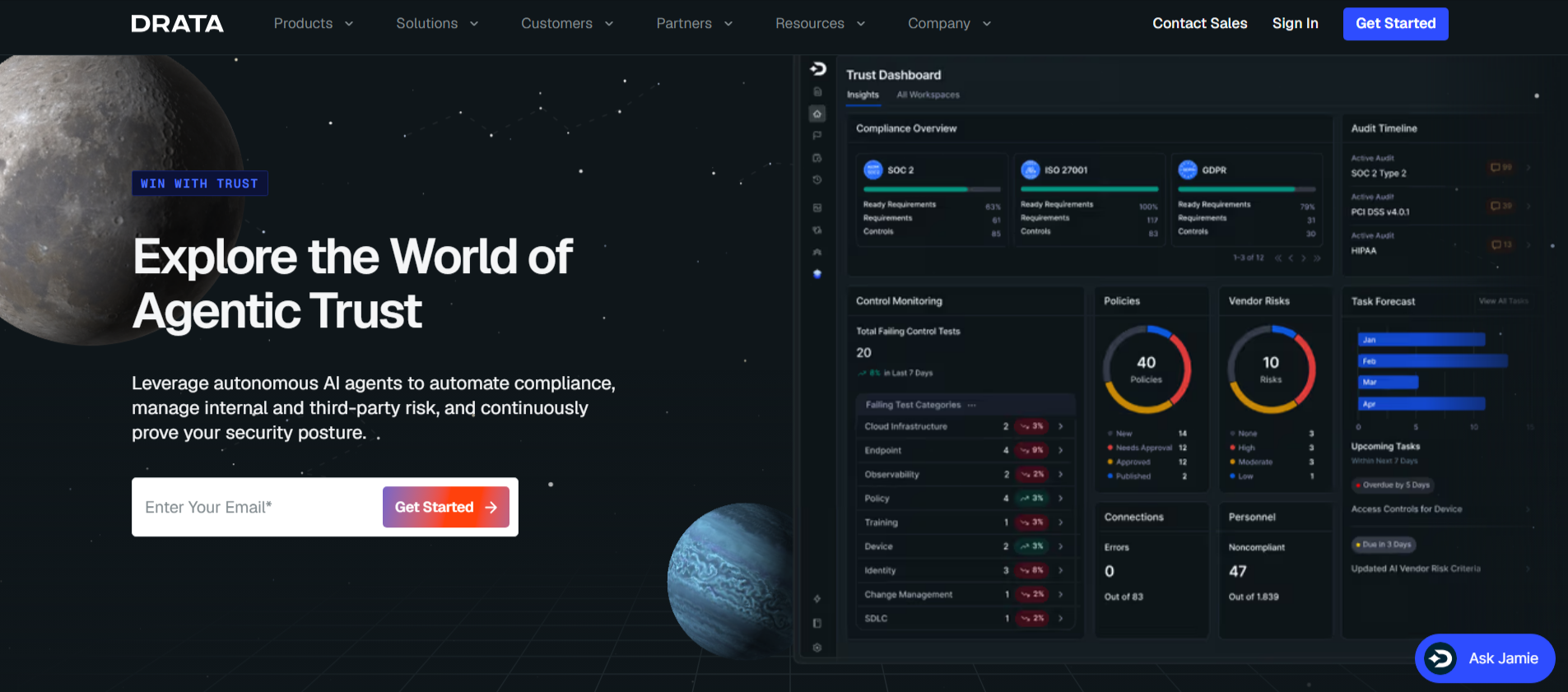
Drata is the closest competitor to Vanta in terms of features and target audience. It connects to your cloud infrastructure, identity providers, HR tools, and code repositories. From there, it runs automated tests, collects timestamped evidence, and surfaces a real-time dashboard so your audit is mostly ready before an auditor even walks in.
If you are comparing platforms, it helps to look at the best ISO risk and document management software to understand how different tools handle automation, evidence collection, and audit readiness at scale.
Take Brex, the fintech company managing compliance across a complex, fast-moving infrastructure. After moving to Drata, Brex was able to modernize its entire GRC program, bringing governance, risk, and compliance into one place and giving their security team real visibility instead of guesswork. That kind of outcome is what Drata is built for.
Drata pricing varies based on your organization’s requirements, including the number of users, compliance frameworks, and features you need. Contact the Drata team directly to get a customized quote for your compliance program.
Growth-stage SaaS and cloud-native companies that want deeper automation and better support than Vanta's base tier offers.
4.7/5 (1,329 reviews on G2)
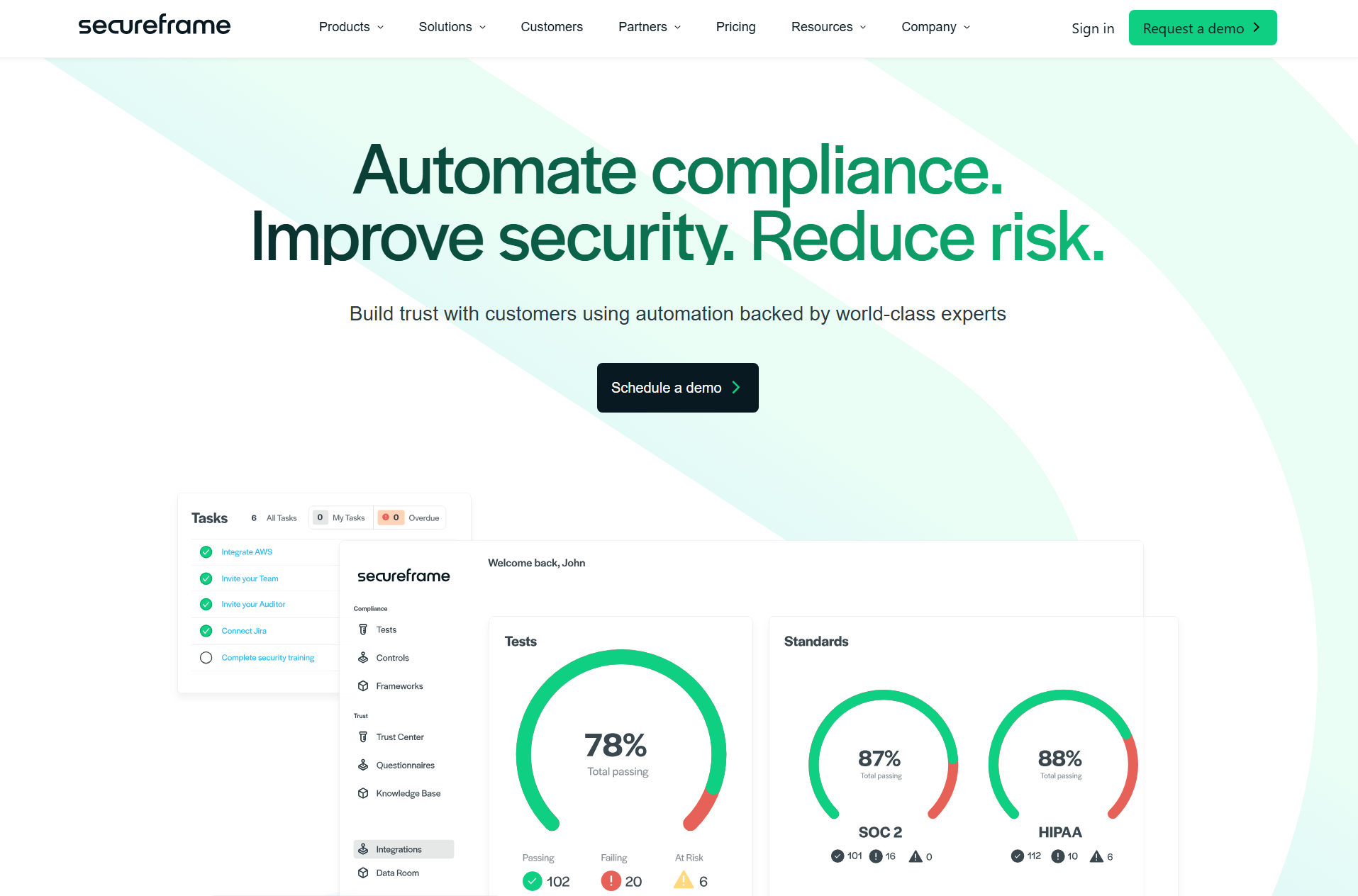
Secureframe is built for teams that want to get compliant quickly without hiring a full-time compliance manager. It combines automated evidence collection, a large policy library, security awareness training, and risk management into one package. The focus is on making the first audit as straightforward as possible.
It works across three distinct buyer profiles. Small businesses use it to boost security compliance without building a dedicated team. Enterprise teams use it to give compliance functions time back through automation. Defense contractors use it specifically for CMMC requirements, with a dedicated Defense product that handles SSP, POA&M, managed CUI enclave, and virtual desktops.
For organizations looking to understand broader compliance frameworks and operational requirements, the guide to R2 certification can also help contextualize how structured compliance programs are typically designed and managed across industries.
Secureframe has three packages: Fundamentals, Complete, and Defense. All three are quote-based. You can request a quote directly from their website.
Small businesses, enterprise teams, and defense contractors that want a guided compliance experience across multiple frameworks without building a dedicated in-house compliance function.
4.7/5 (802 reviews on G2)
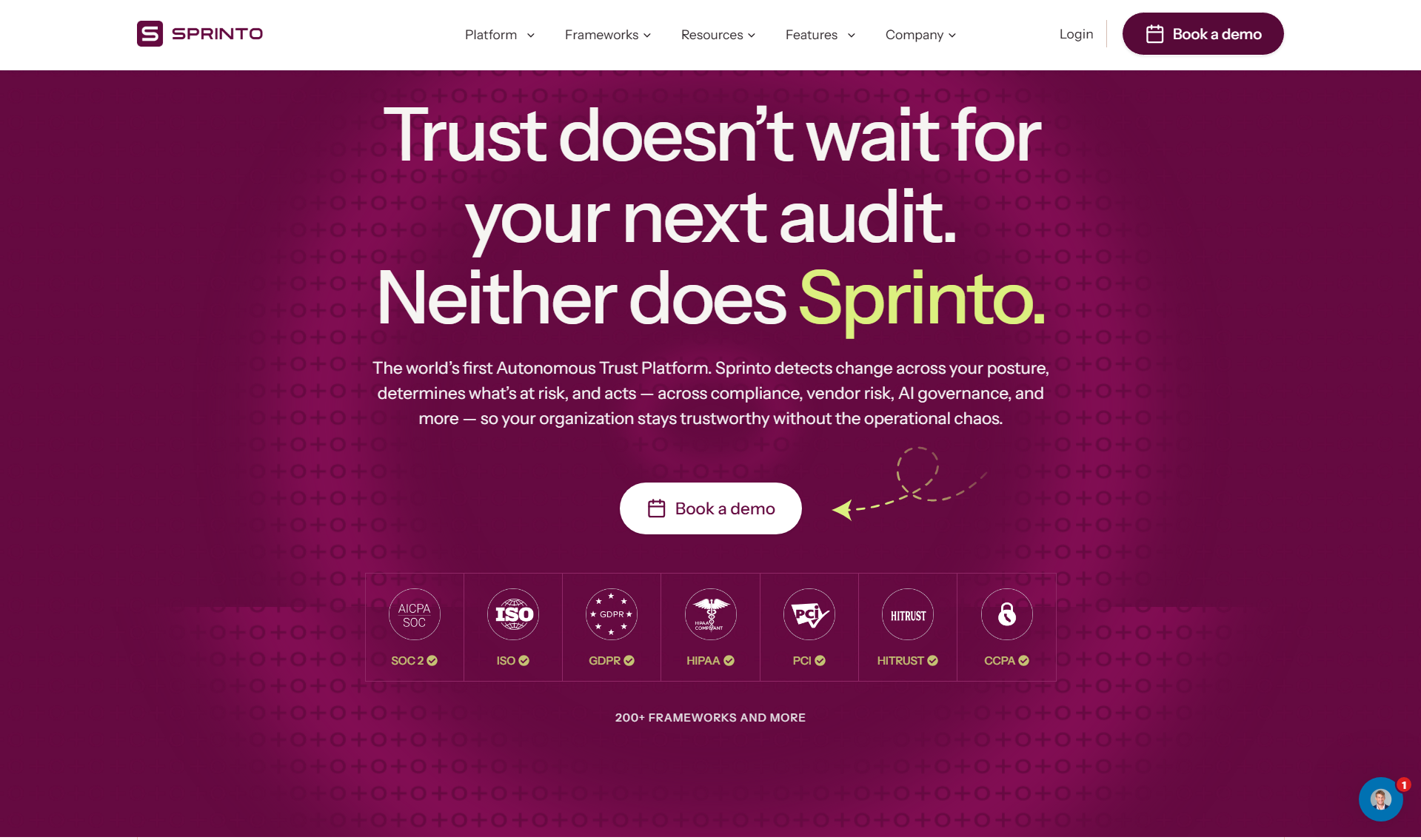
Sprinto is not just another compliance tool. It calls itself an autonomous trust platform, and the distinction matters. Where most platforms help you prepare for audits, Sprinto runs compliance operations on autopilot so your team is not constantly pulled into evidence collection, policy updates, or vendor risk checks.
The founding story is worth knowing. Girish Redekar and Raghuveer Kancheria built Sprinto after running their own SaaS company and experiencing firsthand how compliance felt like a tax on innovation. Governance was unnecessarily complex, effort-intensive, and constantly at odds with business momentum, especially when teams had to rely on fragmented systems instead of a centralized document management system and automated workflows.
They set out to make trust accessible, frictionless, and fast for every business. That original frustration is still visible in how the product is designed today.
The platform does not disclose public pricing. Your cost will depend on factors such as users, selected features, and implementation requirements, so a customized quote is required.
Fast-growing startups and scaling SaaS companies that want compliance running on autopilot across multiple frameworks without dedicated GRC headcount.
4.8/5 (1,655 reviews on G2)
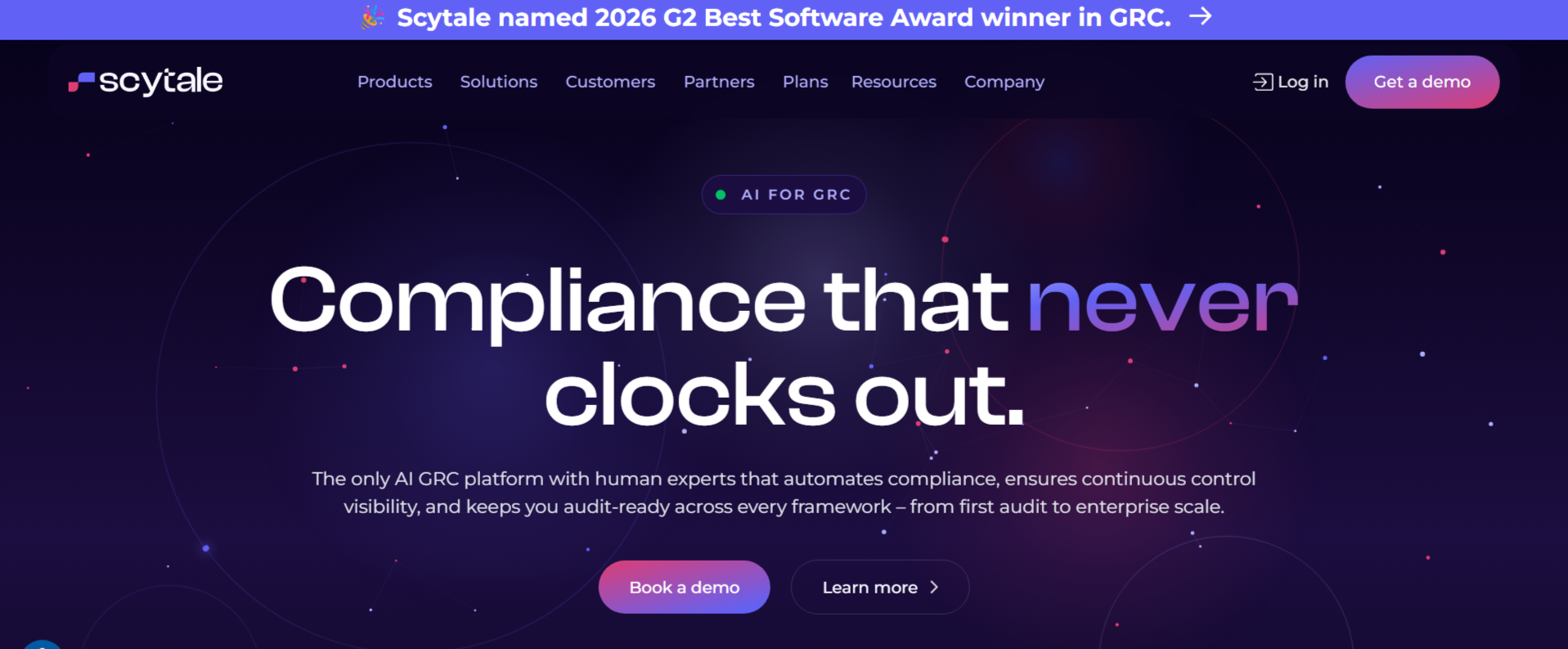
Scytale describes itself as the only AI GRC platform that pairs software with human experts, automating compliance, ensuring continuous control visibility, and keeping you audit-ready across every framework from first audit to enterprise scale.
Instead of handing you a platform and wishing you luck, it assigns dedicated GRC experts who guide your team through the entire process, which reflects how compliance management tools simplify the process for teams navigating complex frameworks
The growth story here is worth noting. Scytale started with one employee in 2021; grew to 31 by 2023; 45 by 2024; and crossed 100 employees in 2025. That kind of growth does not happen without product-market fit. They were named the 2026 G2 Best Software Award winner in GRC and the AWS Rising Star Partner of the Year 2025. For fast-moving startups, having a compliance partner that is itself scaling quickly means the product keeps pace with where your business is going.
Scytale has three startup bundles: Build Starter, Build DFY, and Build Stronger. You will have to book a demo to get exact pricing. Visit their website to book a call.
Startups and growing companies that want expert-guided compliance from first audit to enterprise scale without building an in-house GRC team.
4.8/5 (672 reviews on G2)
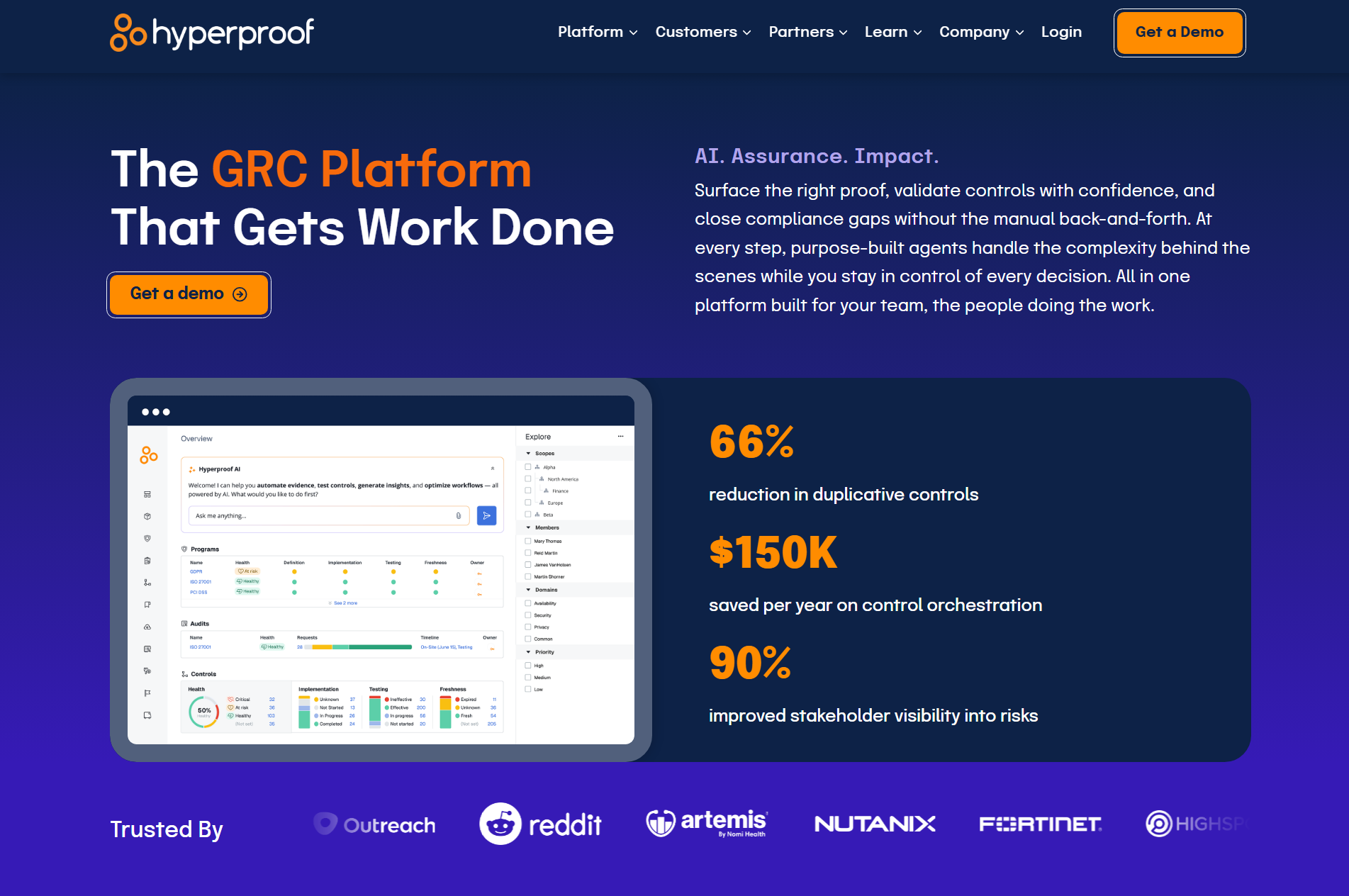
Hyperproof was born out of a specific frustration. Founder Craig Unger spent years managing high-stakes audits using nothing but spreadsheets and email. Manual tools could not keep up with modern security needs, so he built a central system that automates the busy work of proving compliance, freeing teams to focus on their actual work.
The result is a platform that sits closer to a compliance operations hub than a standard audit prep tool. Where most platforms focus on getting you through your first audit, Hyperproof focuses on what happens after. Running a mature, multi-framework compliance program across departments and geographies is a fundamentally different problem, and Hyperproof is built for exactly that.
Hyperproof does not disclose public pricing. Your cost will depend on factors such as users, selected features, and implementation requirements, so a customized quote is required.
Mid-market and enterprise companies with a dedicated GRC or security team that need to manage multiple compliance frameworks simultaneously across departments and geographies.
4.5/5 (217 reviews on G2)
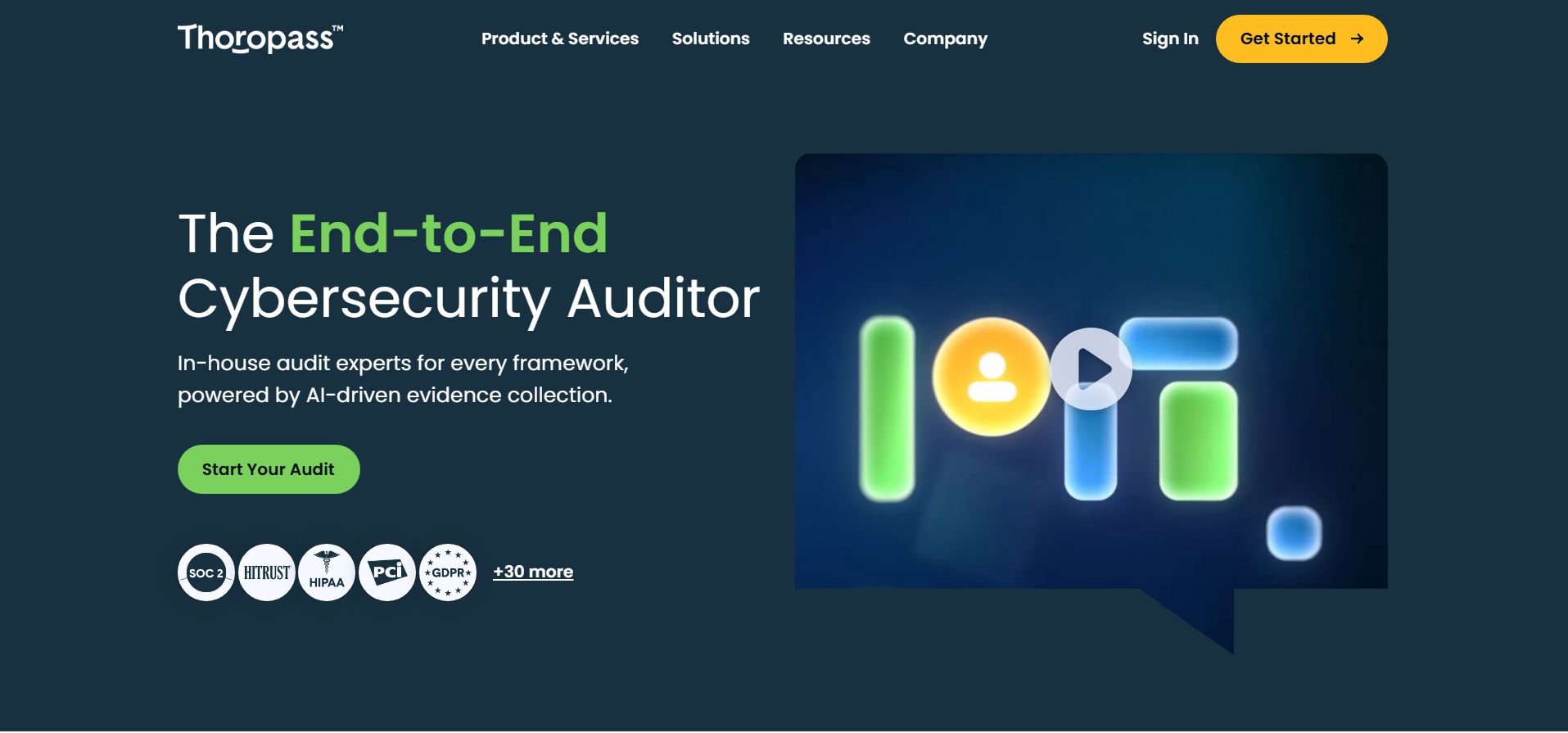
Thoropass was born in 2019 after founder Sam Li watched compliance being treated as both a necessary thing and an unnecessary blocker to innovation. His mission was simple: fix that common problem. The solution Thoropass built is different from every other platform on this list in one fundamental way. It does not just help you prepare for an audit. It conducts the audit itself.
With 165 in-house auditors on staff, Thoropass combines AI-powered compliance automation with expert human auditors so there are no handoffs, no surprises, and no coordination between two separate vendors. They call it the OrO Way, a closed-loop compliance and audit solution powered by smart technology and expert guidance.
Thoropass does not disclose public pricing. Your cost will depend on factors such as users, selected features, and implementation requirements, so a customized quote is required.
Startups and growing companies in SaaS, healthcare, and fintech that want one vendor to handle compliance automation and the audit itself, with no handoffs and no surprises.
4.7/5 (578 reviews on G2)
There is no single solution that fits every organization because compliance needs vary widely. Some teams prioritize fast SaaS compliance for standards like SOC 2 and ISO 27001, while others need more structured workflows for ISO or R2-driven environments.
The right choice ultimately depends on your priorities, whether that is automation, scalability, pricing clarity, or multi-framework support. What matters most is selecting a platform that reduces manual effort, keeps you audit-ready, and grows with your compliance maturity.
For teams looking for a structured, transparent, and workflow-driven approach to compliance, P3 LogiQ is built to simplify ISO and R2 compliance while keeping processes clear, consistent, and audit-ready.
P3LogiQ helps you manage ISO 9001, ISO 14001, ISO 45001, RIOS, and R2 in one place. It removes the need for spreadsheets and scattered tools.
It keeps your team ready for audits with simple workflows for documents, training, risks, and audits. Pricing starts at USD 99 per month with clear plans.
No confusion. No heavy setup. Just simple compliance.
See how P3LogiQ works for your business before you decide. Book a demo to see it in action. Or you can also sign up for a free trial and get started today.
Vanta is used for automating security compliance like SOC 2, ISO 27001, and HIPAA. It helps SaaS companies collect evidence, monitor controls, and get audit-ready faster. It is mainly built for cloud-based security and not deep ISO operational compliance workflows.
Companies look for Vanta alternatives because of pricing, limited customization, and framework focus. Some teams need ISO, R2, or manufacturing compliance, which Vanta does not fully support. Others want more control, better pricing, or built-in audit services.
P3 LogiQ is one of the best Vanta alternatives for startups that need to manage ISO, R2, or operational compliance requirements. It helps growing businesses streamline document control, audits, risk management, and compliance workflows in one platform. Startups focused only on SOC 2 automation may also evaluate other tools, but P3 LogiQ is a stronger fit for organizations managing broader compliance programs.
P3 LogiQ is one of the few tools focused on ISO 9001, ISO 14001, ISO 45001, and R2 compliance. Most other Vanta alternatives focus on SOC 2 and security frameworks, not operational or manufacturing compliance standards.
Drata is often seen as more advanced in automation and integrations compared to Vanta. It provides deeper monitoring and better support for growing SaaS companies. However, both are strong choices for SOC 2 and cloud security compliance.
P3 LogiQ is one of the best Vanta alternatives for enterprises that need to manage structured compliance programs across multiple standards, teams, and workflows. It helps organizations centralize document control, audits, risk management, corrective actions, and continuous improvement processes. Enterprises with broader operational compliance needs beyond SaaS security frameworks can benefit from P3 LogiQ’s integrated compliance management approach.
No, Vanta alternatives are not only for SaaS. Tools like P3 LogiQ, Hyperproof, and Scytale also support manufacturing, healthcare, and industrial compliance needs. SaaS-focused tools mainly cover SOC 2 and cloud security.
P3 LogiQ is one of the easiest Vanta alternatives for organizations managing ISO and R2 compliance. It simplifies implementation with structured workflows and centralized compliance management; and avoids the complexity of traditional enterprise setups while helping teams achieve faster compliance adoption.
Yes, compliance tools help build trust with enterprise buyers. A strong Trust Center and certifications like SOC 2 or ISO 27001 speed up sales cycles. They reduce security review time and improve conversion rates in B2B deals.
Vanta mainly focuses on SaaS security compliance. It is less suitable for industries that need operational standards like ISO 9001, ISO 14001, or R2. Some companies also find its pricing and customization options limited as they scale.



Businesses need document management systems (DMS) to ensure ISO and R2 compliance, improve efficiency, and stay audit-ready. The article highlights key features like version control, security, and automation while reviewing the top 5 DMS solutions. P3 LogiQ stands out for its compliance-focused automation and secure document tracking
Read More
Recycling businesses gain efficiency, compliance, and sustainability with RIOS certification. It streamlines quality management, environmental responsibility, and worker safety, helping companies avoid legal risks and boost credibility. P3 LogiQ simplifies the certification process with automation, document control, and compliance tracking, making operations smarter and safer.
Read More
Audit Management Software (AMS) automates compliance tracking, streamlines workflows, and reduces audit risks. Key features include automated scheduling, compliance checklists, CAPA tracking, vendor risk management, and integrations.
Read More
Learn how audit management systems simplify ISO and R2 compliance by automating audits, managing documentation, and minimizing compliance risks efficiently.
Read More
In 2025, many businesses still face challenges in compliance management due to outdated methods like spreadsheets and fragmented software. This inefficiency leads to missed deadlines, increased risk, and regulatory penalties. The blog emphasizes the importance of modern compliance tools that automate workflows, enhance risk management, and streamline regulatory processes to meet ISO and R2 standards.
Read More
The rise in e-waste and environmental concerns makes responsible electronics recycling essential. The R2 Certification sets a global standard for safe, sustainable, and data-secure recycling practices. Developed by Sustainable Electronics Recycling International (SERI), R2 helps businesses manage environmental risks, data security, worker safety, and legal compliance.
Read More
Businesses face increasing challenges in managing complex regulatory compliance. Manual methods such as spreadsheets and paperwork can lead to missed deadlines, inefficiencies, and costly penalties. Compliance management software offers a streamlined solution to reduce risks, automate processes, and improve operational efficiency.
Read More
Maintaining R2 Certification is crucial for businesses in the e-waste recycling industry, ensuring regulatory compliance, sustainability, and strong stakeholder trust. This guide outlines 10 best practices to help businesses simplify operations, reduce risks, and stay compliant.
Read More
Unlock the value of ISO risk management certification. Explore its impact on compliance, risk mitigation, and business expansion.
Read More
Explore the top 5 ISO risk management software tools for 2025, including document management solutions for streamlined compliance and increased efficiency.
Read More
Find the ideal document management software (DMS) for your business. Learn how to choose with expert tips, key features, and insightful guidance
Read More
Unlock the power of a Document Management System (DMS). Learn how it can revolutionize your business operations.
Read More






.png)


.png)








.jpg)
.jpg)










.jpg)



.png)

.png)
.png)




.png)

