.jpg)

A small fabrication shop in Ohio had been operating for eleven years.
Twenty-three employees. Steady work. A reputation built on reliability and turnaround time.
Most of their contracts came through referrals. Long-term clients who knew the work and trusted the team. The kind of relationships where a handshake still meant something.
Then a larger manufacturing company reached out. A real opportunity. Bigger volume, longer contract, better margins.
The proposal process felt normal at first. Pricing, timelines, capacity. The usual back and forth.
Then came a requirements document.
Buried near the bottom, one line stopped the owner cold.
"Vendor must demonstrate a documented occupational health and safety management system."
He read it twice.
They had safety practices. Helmets, protocols, equipment checks. If something went wrong, it got fixed fast. Nobody had ever been seriously hurt.
But a documented system? One that could be reviewed, audited, and verified by an outside party?
That did not exist.
They lost the contract.
Not because the shop was unsafe. Not because the work was not good enough.
Because they could not prove it.
That story is not unusual. According to Pie Insurance's Workplace Safety Report, 75% of small businesses in the US reported workplace injuries in 2024, costing more than USD 20,000 each in injury-related expenses. Half of those injuries were considered preventable.
The cost is not just financial. It shows up in lost contracts, failed audits, and opportunities that quietly disappear because a business cannot show how safety is managed.
That is the gap ISO 45001 fills. It is not a legal requirement for small businesses in the US. But having a structured, documented safety system is increasingly what clients, insurers, and procurement teams expect before saying yes.
For businesses that are not yet there, ISO 45001 software makes the process significantly more manageable. Instead of tracking risk assessments, training records, and corrective actions across spreadsheets and paper files, everything sits in one place, accessible, auditable, and ready when it needs to be.
That is exactly what this guide covers.
For many small businesses in the US, safety is not something written into a system. It is something managed through experience.
Things get done because the team knows how to do them. Risks are handled when they appear. Training happens when there is time. And for a long time, that approach has been enough to keep operations running.
But in 2026, that gap between “doing safety work” and “proving safety is managed” is becoming harder to ignore.
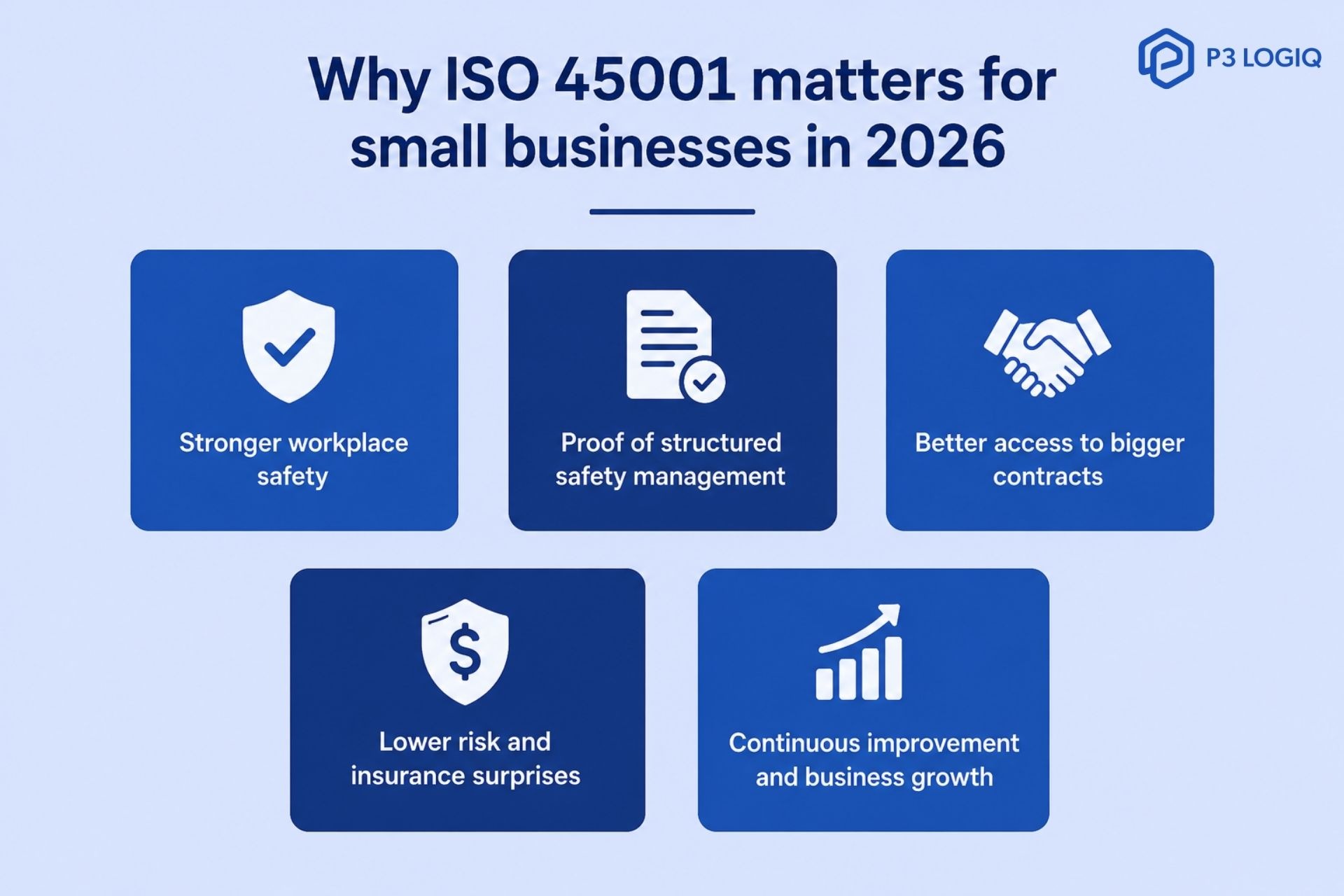
Larger clients are no longer satisfied with informal practices. Before awarding contracts, they want evidence that safety is structured, repeatable, and continuously monitored. Insurance providers are also paying closer attention to how risks are managed, not just whether incidents are low.
This is where standards like ISO 45001 start to matter.
It is not about adding more paperwork. It is about creating a system that shows how risks are identified, controlled, and improved over time.
For small businesses, this shift is less about compliance pressure and more about access. Access to bigger contracts, more stable partnerships, and fewer surprises during audits.
ISO 45001 is an international standard that defines how an organization should manage workplace health and safety in a structured way.
It is not a list of safety rules or a one-time certification checklist. Instead, it is a management system that helps businesses identify risks, put controls in place, and continuously improve how safety is handled across operations.
It is designed for organizations of all sizes, but it is especially relevant for small and mid-sized businesses that want to:
ISO 45001 applies to any business where workplace safety matters, which includes manufacturing shops, construction contractors, logistics companies, and service-based operations with physical work environments.
For small businesses, the key shift is this: it turns safety from an informal responsibility into a documented and auditable system.
At this stage, many businesses also start comparing ISO 14001 vs. ISO 45001. In real-world contracts, these two often appear together because clients want both environmental impact and workplace safety to be managed.
The difference is simple. ISO 14001 focuses on how a business affects the environment. ISO 45001 focuses on keeping people safe at work. They work side by side, but they address different risks.
When businesses start structuring safety like this, the real challenge is not understanding the standard but managing the documentation and consistency across teams.
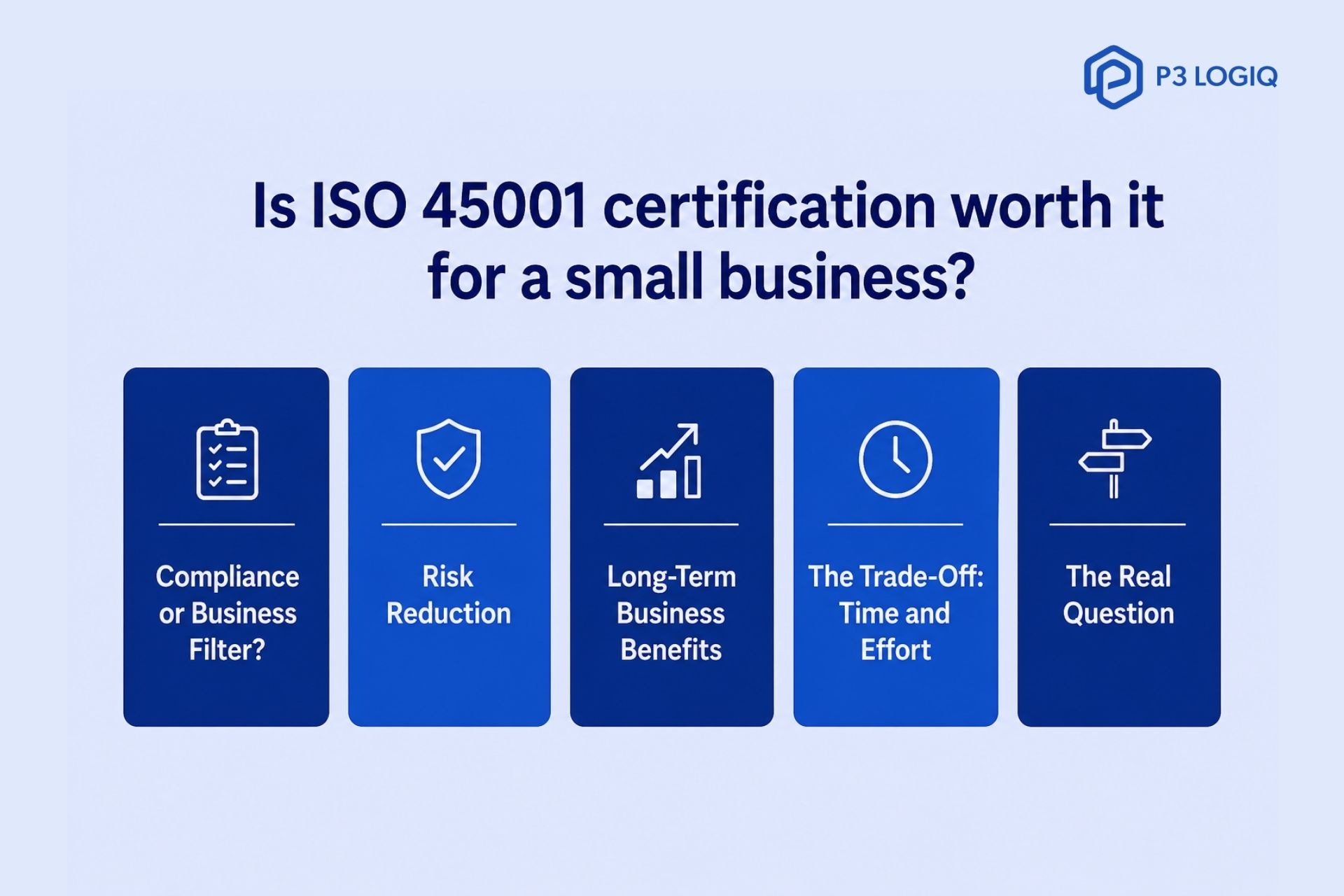
For small businesses, certification decisions usually come down to one question: does this directly affect revenue, risk, or growth?
ISO 45001 is often seen as a compliance requirement, but in practice, it behaves more like a business filter.
Many smaller companies in the US don’t realize this until they hit a contract requirement they cannot move past. A growing number of larger clients, contractors, and procurement teams now expect a documented safety management system before onboarding vendors. In some cases, it is not negotiable.
There is also the risk side. Insurance providers and auditors are increasingly focused on whether safety is actively managed or just informally handled. When something goes wrong, having a structured system can reduce both liability exposure and operational disruption.
The risk side is more immediate than many small business owners realize. According to OSHA data, small businesses with under 10 workers account for more than 75% of OSHA citations in the US. Having a structured system is not just about winning contracts. It is also about not being the most exposed.
For small businesses, the return is not always immediate. It shows up in three areas over time:
The trade-off is effort. ISO 45001 requires time to document processes, train teams, and maintain consistency. But compared to reactive safety management, it shifts the business into a more predictable and defensible position.
So the real question is not whether it is “worth it” in general, but whether the business is moving toward clients and contracts where it will eventually be required.
For many small businesses, that answer is already starting to change.
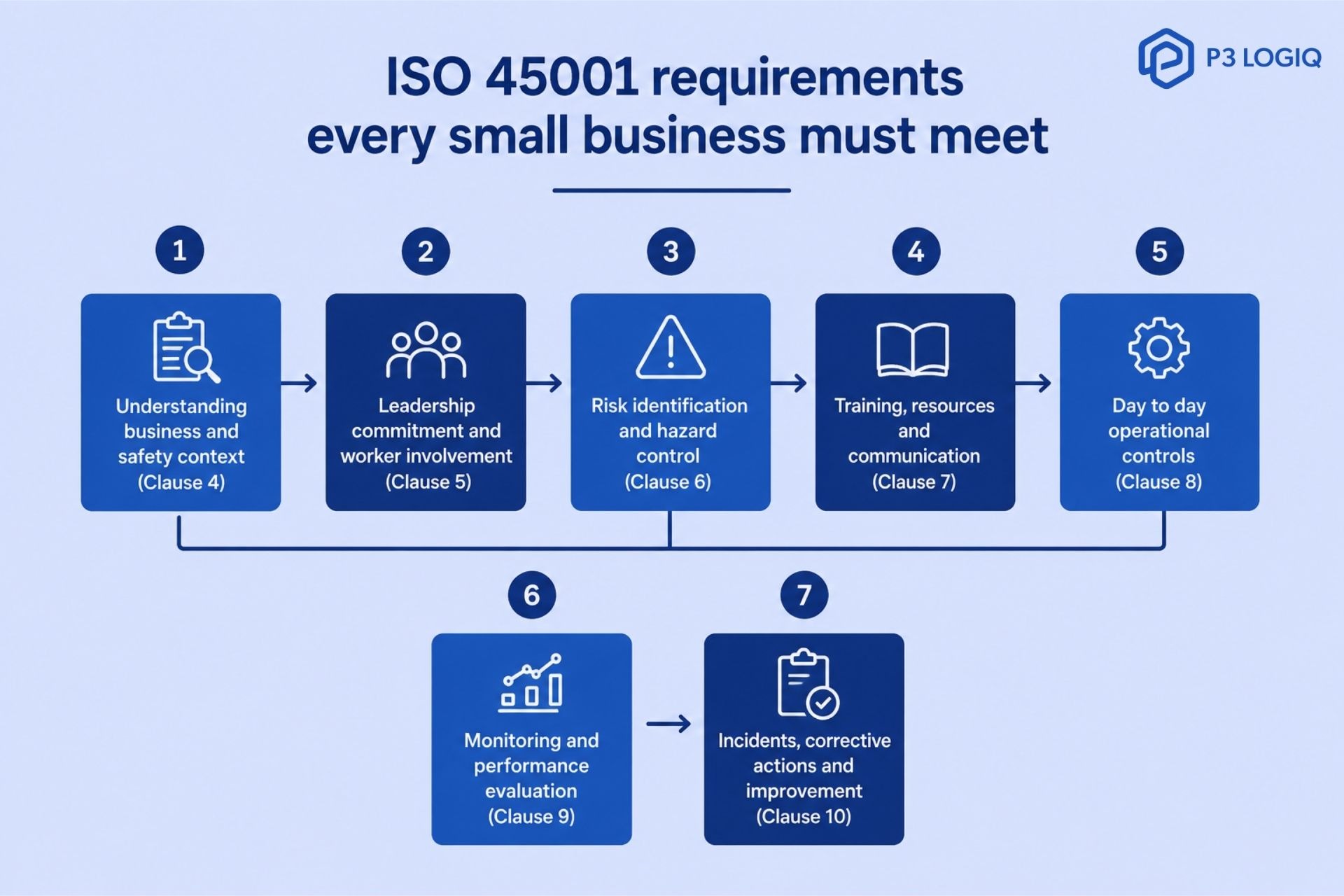
Before you get into checklists or certification, it helps to understand what ISO 45001 is actually asking you to build, including the main ISO 45001 clauses that define how the system is structured.
At its core, it is not about adding more rules. It is about putting structure around things you may already be doing informally.
This means knowing where safety risks actually exist in your operations and what external expectations you are responsible for meeting.
For a small business, this is as simple as asking, "What could go wrong in our day-to-day work?" and “Who outside our team cares about how we manage it?” That includes clients, insurers, and regulators.
You do not need a complex analysis. You need a clear, documented answer.
Someone at the top needs to own safety, put their name on a policy, and make it visible to the team.
But it cannot stop there. ISO 45001 requires that workers be involved, not just informed. The people doing the work need a way to raise concerns, flag hazards, and feed into how safety decisions are made.
For a growing team, this can be as simple as a regular team check-in where safety is a standing agenda item.
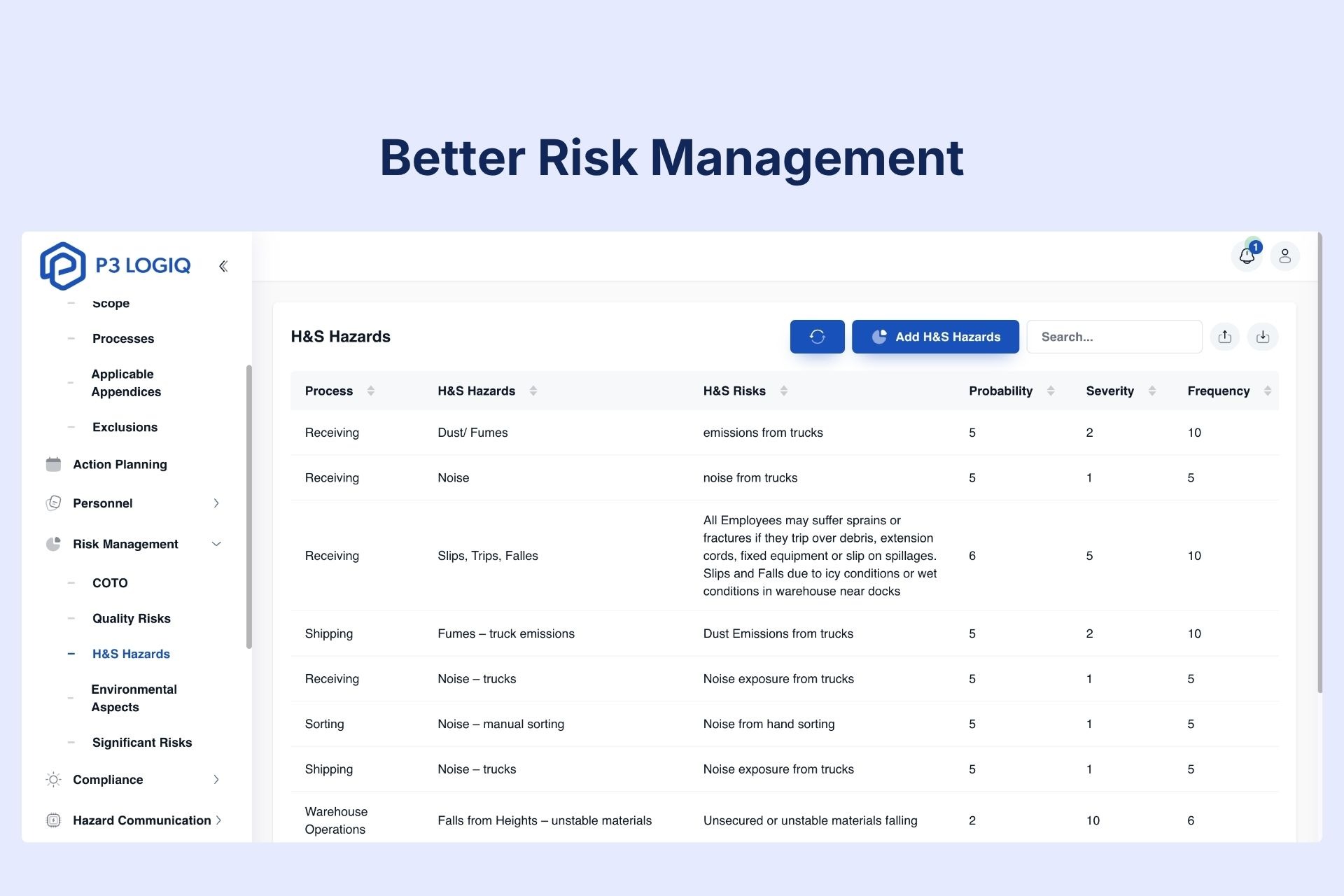
This is where you actively look for problems before they happen instead of reacting after the fact.
Walk through your operations. List every task where something could go wrong. Assess how likely it is and how serious the impact would be. Then decide what controls to put in place, starting with the highest-priority risks.
For a fabrication shop, that might mean machine-guarding procedures. For a logistics company, it might mean driver fatigue protocols. The hazards differ. The process is the same.
These requirements exist for a reason. The National Safety Council reported that work injuries cost US businesses $181.4 billion USD in 2024. This includes $54.9 billion USD in wage and productivity losses alone.
For small businesses operating on tighter margins, even a single serious incident can be operationally devastating.
The checklist below helps you identify gaps before they turn into incidents.
This clause is about making sure your team can actually do what the system requires.
In practical terms, your employees need training that is relevant to their specific roles, and you need records to prove it happened. Your safety procedures need to be written down and accessible. And someone needs to be formally responsible for keeping the system running.
For a ten-person shop, this does not need to be complicated. A simple training log, a shared folder with procedures, and a named safety lead cover the core of what this clause requires.
This is where your system moves from documentation into practice.
Controls need to be applied consistently, not just when an auditor is visiting. Equipment needs to be inspected on a regular schedule. High-risk tasks need written procedures. Contractors and visitors who enter your site need to be covered under your safety system as well.
If your team follows the process only when they remember to, this clause is where you will have gaps.
You need to check whether your system is actually working, not just assume it is.
This includes tracking safety incidents and near misses, measuring performance against your stated objectives, and conducting internal audits at planned intervals. Management also needs to formally review the system at least once a year.
For small businesses, this does not require sophisticated software. A simple tracking sheet and a documented review meeting are enough to satisfy this requirement if done consistently.
When something goes wrong or a gap is found, the system needs a clear process for fixing it and making sure it does not happen again.
This means logging incidents, investigating root causes, taking corrective action, and recording what was done. It also means using what you learn to improve the system over time rather than treating each problem as a one-off.
This clause is what separates a system that genuinely improves safety from one that just passes an audit.
Most small businesses already do parts of this informally. The difficulty is keeping everything consistent, visible, and audit-ready over time.
This is where a structured system becomes useful instead of scattered spreadsheets and notes.
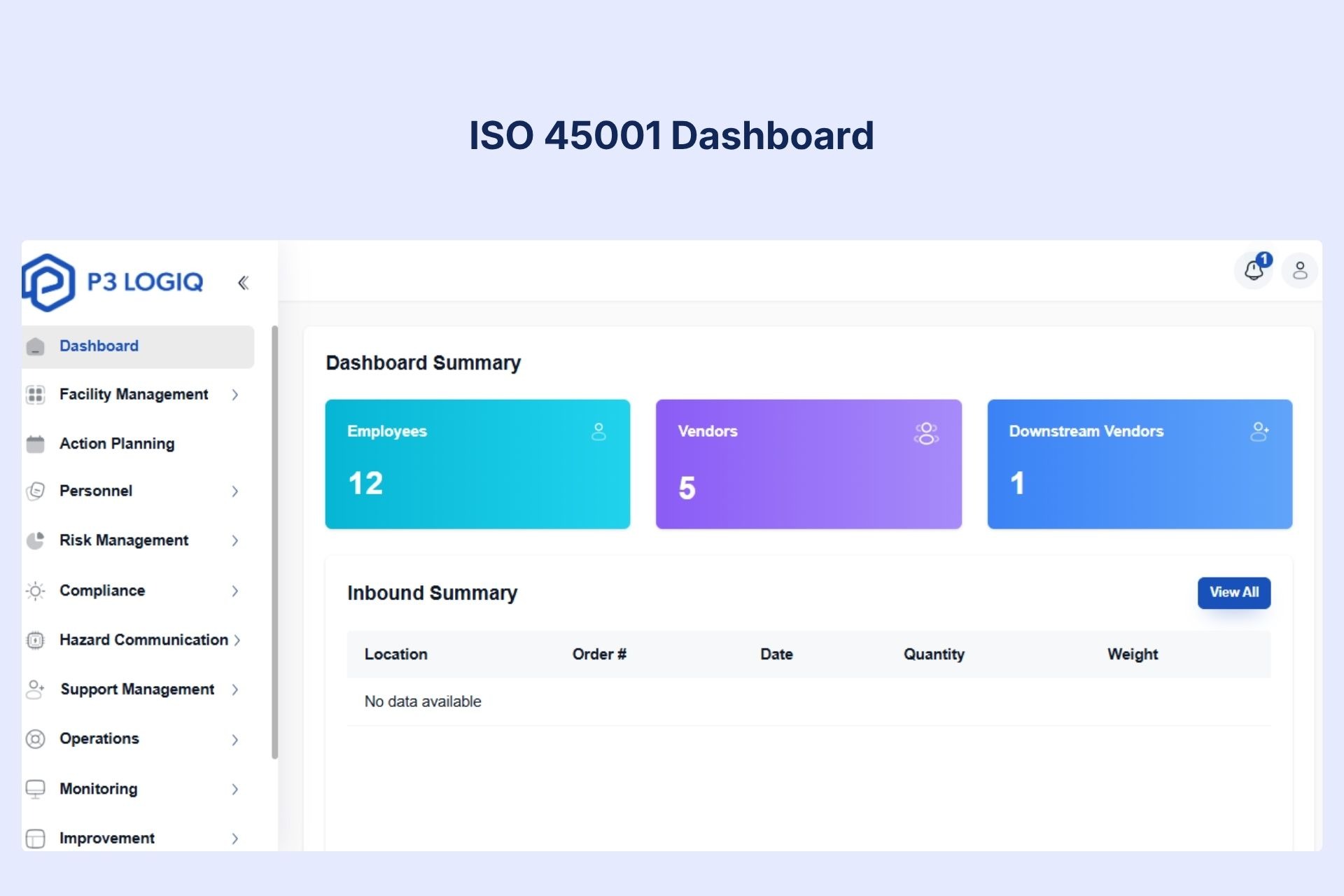
Image Name
p3 logiq-iso-45001-compliance-dashboard-tracking.jpg
Alt Tex
Interface of the P3 LogiQ dashboard tracking ISO 45001 readiness, safety compliance metrics, and real-time progress for small businesses.
Caption
The P3 LogiQ dashboard provides small businesses with a clear, data-driven view of their ISO 45001 readiness and ongoing safety performance.
Once you understand the requirements, use this checklist to assess where your business currently stands. Go through each area and mark it as ready, nearly ready, or needs work. This gives you a clear picture of what to prioritize before you engage a certification body.
For small businesses, the goal of this checklist is not a perfect score on day one. It is to identify your biggest gaps so you can address them systematically before your external audit.
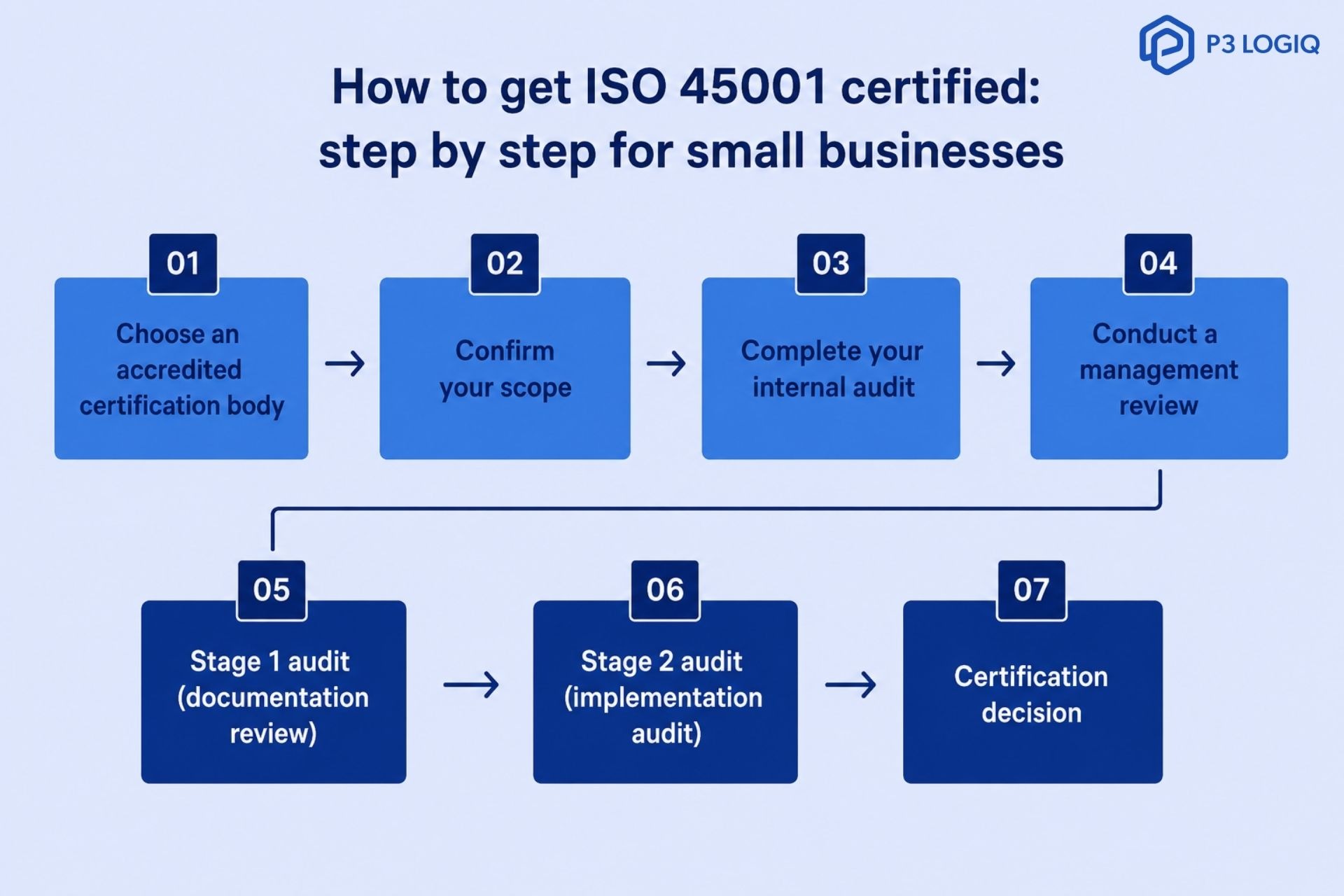
Once your system is in place and your checklist gaps are addressed, the process to get ISO 45001 certification becomes a structured and predictable journey. For small businesses, the key is showing that your safety system is not just documented but actually followed and improving over time.
In the US, look for bodies accredited by ANAB (ANSI National Accreditation Board). Providers like NQA, Amtivo, and IAS offer ISO 45001 certification with experience across small businesses. Get quotes from at least two before deciding.
Define exactly which parts of your business, which locations, and which activities will be covered under the certificate. A tighter, well-defined scope is easier to certify and maintain.
Before the external auditor arrives, conduct a full internal audit of your OH&S system. Identify any remaining gaps, document findings, and close them out. This step protects you from surprises in Stage 2.
Top management must formally review the OH&S system, evaluate performance, and document decisions. This is a hard requirement, and auditors check for it.
The certification body reviews your documented system against ISO 45001 requirements. They are checking that your policies, procedures, and records exist and are structured correctly. Any gaps at this stage are flagged before Stage 2.
This is the main audit. The auditor visits your site and verifies that your system is actually being used in day-to-day operations. They will speak to employees, observe processes, and review records. This is where documentation-only systems fail.
If your system meets the requirements, the certification body issues your ISO 45001 certificate. It is valid for three years, with annual surveillance audits in years one and two to confirm the system remains active and effective.
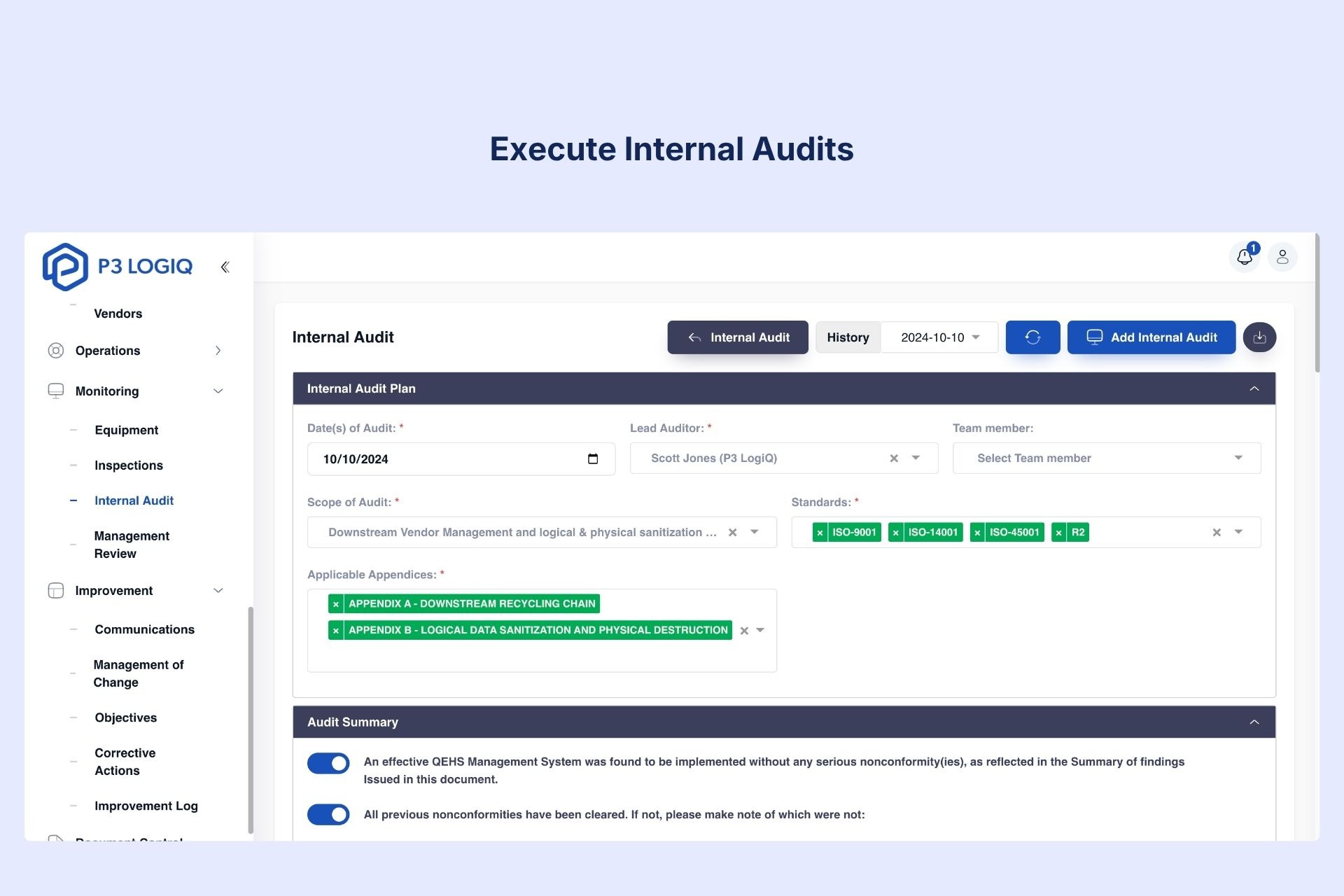
An internal audit is not about catching mistakes. It is about checking whether your system actually works in day-to-day operations.
For a small business, this does not need to be complex, but it does need to be consistent.
Start by deciding who will conduct the audit. This can be someone internal or an external consultant, but there is one important rule. The person auditing cannot review their own work. In very small teams, this can be a challenge, which is why some businesses rotate responsibilities or bring in an external reviewer for objectivity.
Next, define what you are going to review. Focus on key areas like risk assessment, training, documentation, and how incidents are handled.
Use your checklist as a guide and go through each area to see whether it is implemented, followed, and properly recorded.
As you review, document your findings clearly. This includes both what is working and where gaps exist.
Once the audit is complete, take corrective actions. Fix the gaps and record what was done so there is a clear trail of improvement.
In terms of frequency, you should run at least one internal audit before certification. After that, most small businesses conduct audits annually to stay aligned and prepared for surveillance reviews.
Done regularly, internal audits reduce surprises and make certification far more predictable.
For small businesses, ISO 45001 is usually a focused project rather than a long-term transformation.
In most cases, implementation takes between two to six months. The timeline depends on how structured your current safety practices already are.
If you already have basic processes in place, it moves faster. If everything is informal, it takes more time to organize and document.
The costs of ISO 45001 vary based on size, complexity, and whether you use external support. Breaking it down makes it easier to understand:
After certification, there are ongoing costs to consider:
The key point is that certification is only one part of the cost. Building and maintaining a system that actually works is where most of the effort goes.
The real cost challenge is not just certification fees but the ongoing effort of keeping everything updated, tracked, and audit-ready.
At this stage, many businesses start looking at ways to simplify compliance by reducing manual effort and improving visibility across documentation and workflows.
P3 LogiQ is designed for that shift, helping small businesses manage ISO 45001 without adding operational complexity. Sign up to see how it fits into your process.
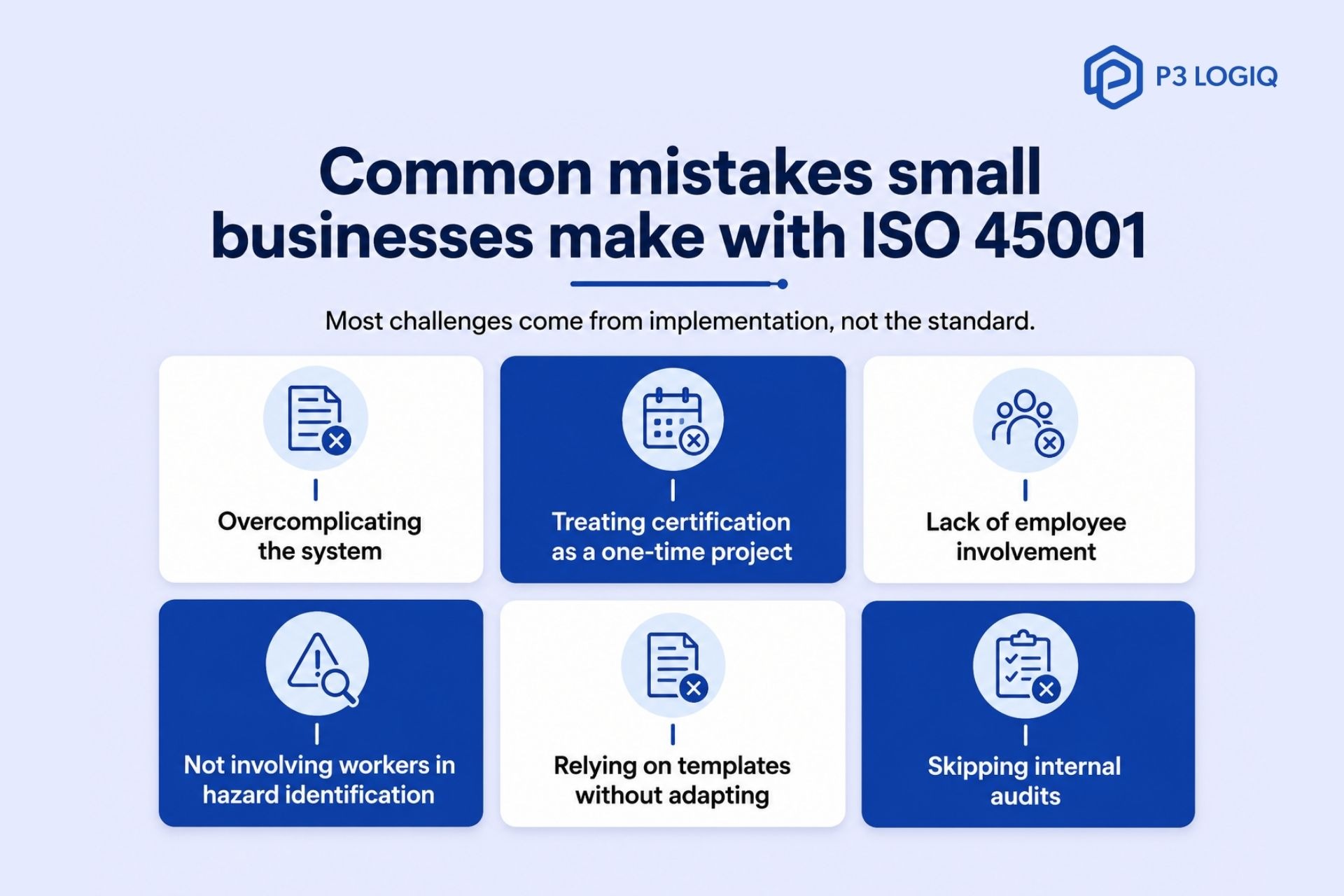
Most challenges with ISO 45001 do not come from the standard itself. They come from how it is implemented.
One common mistake is overcomplicating the system. Small businesses often create documentation that is too detailed for their size, which makes it harder to maintain.
Another issue is treating certification as a one-time project. Once the audit is done, processes are ignored until the next review, which defeats the purpose of having a system.
Lack of employee involvement is also a major gap. Safety cannot sit only with management. The people doing the work are the ones who understand where real risks exist.
A more specific version of this problem is not involving workers in hazard identification. In practice, this leads to risk assessments that look complete on paper but miss actual on-ground issues. ISO 45001 expects worker participation for this reason.
Some businesses rely heavily on templates without adapting them. This creates documentation that looks correct but does not match real operations.
Skipping internal audits is another common mistake. Without regular checks, gaps build up and usually surface at the worst possible time, during certification or client audits.
The biggest shift ISO 45001 brings for small businesses is not just better safety. It is a better positioning.
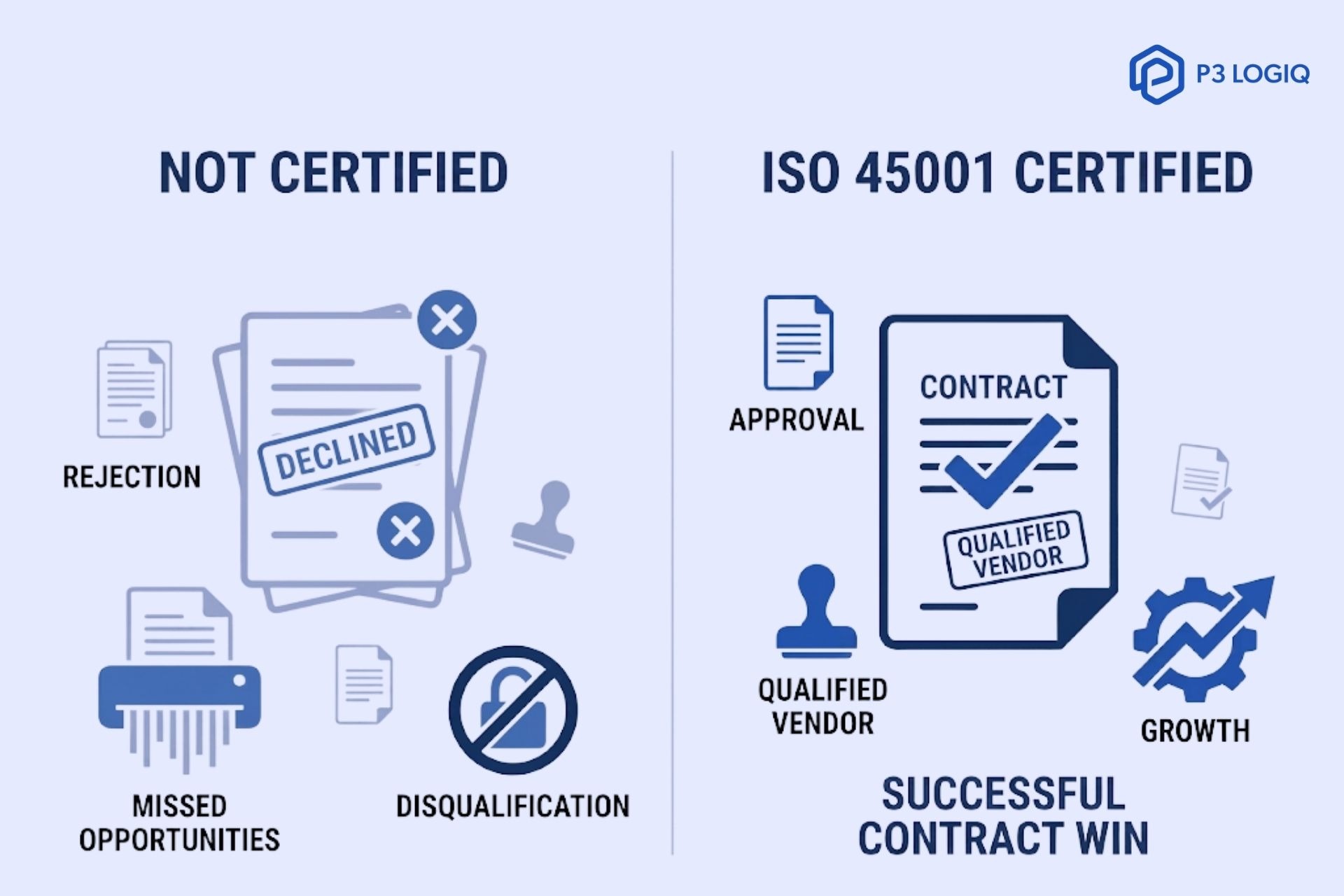
Many clients now expect vendors to show a structured safety system before onboarding. ISO 45001 helps you meet that requirement and removes a common barrier to growth.
When you can clearly show how safety is managed, it builds confidence. This matters during audits, contract reviews, and long-term partnerships.
Better risk management leads to fewer disruptions, less downtime, and lower costs related to accidents or rework.
OSHA estimates that effective safety and health programs can return $4 to $6 USD for every $1 invested. This makes safety systems one of the most measurable financial advantages for small businesses, watching their margins.
A structured system makes it easier to stay aligned with requirements from bodies like the Occupational Safety and Health Administration and reduces the chances of compliance issues.
Instead of relying on individuals, safety becomes part of how the business operates every day.
ISO 45001 is not static; the transition toward ISO 45001:2027 is already in progress, with the formal release expected next year.
Once published, there is typically a transition period of about three years for businesses to update their systems.
One important shift is that the standard is expected to become more practical for small and medium businesses. This includes clearer guidance and easier alignment with how smaller teams actually operate.
There is also a growing focus on areas that were less emphasized earlier. Mental health and overall worker well-being are expected to become more prominent as part of workplace safety.
For businesses starting certification now in 2026, this timing actually works in your favor. You build to the current standard, get certified, and have three years after the 2027 release to transition. There is no urgency to wait.
Another direction is better integration with broader business priorities, including sustainability and organizational responsibility.
For small businesses, this does not mean starting over.
If your system is clear, practical, and actively used, adapting to future updates will be a matter of refinement, not rebuilding.
For many small businesses, safety has never really been the problem. The work gets done, risks are handled, and teams know what they are doing.
What has changed is the expectation around it.
Clients want visibility. Auditors want consistency. Insurers want structure. And increasingly, opportunities depend on how clearly you can show that safety is managed, not assumed.
That is the gap ISO 45001 fills.
It does not replace what you are already doing. It organizes it. It gives your processes a structure that others can understand, evaluate, and trust.
For a small business, that shift matters.
It is the difference between relying on experience and building a system that supports growth, reduces risk, and holds up under scrutiny.
The checklist, the process, and even the certification all come down to one simple idea.
Can your business clearly show how it keeps people safe every day, without depending on memory or informal practices?
If the answer is not yet, the next step is not more paperwork. It is having the right system to make all of this easier to manage, track, and improve.
That is where tools like P3 LogiQ come in.

Whether you are just starting with ISO 45001 or preparing for certification, P3 LogiQ helps you bring everything into one place, from risk assessments and training records to audits and corrective actions, without overcomplicating the process.
Want to see how it fits your business?
Start with a free sign up and explore how your safety processes can be structured, or book a demo to see how P3 LogiQ supports ISO 45001 implementation step by step
Sometimes the difference between being ready and not ready is simply having a system that works with you, not against you.
No, it is not legally required. However, many clients, contractors, and procurement teams expect it when evaluating vendors. For small businesses, it often becomes necessary when bidding for larger contracts or working with enterprise clients that require structured safety systems.
It depends on your current setup. If you already follow basic safety practices, implementation is mostly about organizing and documenting them. If everything is informal, it takes more effort, but the process is still manageable when approached step by step.
Yes, many small businesses do it internally. The trade-off is time. A consultant can speed things up and reduce mistakes, but if you have someone who can manage documentation and processes, certification can be achieved without external support.
The Occupational Safety and Health Administration sets legal safety requirements in the US. ISO 45001 provides a structured management system to meet and maintain those requirements consistently. It does not replace OSHA but helps businesses stay organized and audit-ready.
Certification is valid for three years, but it requires ongoing effort. Businesses must conduct internal audits regularly and undergo annual surveillance audits to ensure the system is still being followed and improved over time.
For most small businesses, the biggest benefit is access. It helps meet client requirements, improves credibility during audits, and makes it easier to win larger contracts. At the same time, it reduces risk by making safety practices more consistent and structured.
No. There is no separate ISO 45001 small business certification scheme. The same standard applies to all organizations regardless of size. What changes is the scale of implementation. A small business with fifteen employees will have a simpler system than a manufacturer with five hundred, but both are certified to the same standard. The effort scales down. The certificate does not.
Small businesses typically need a documented OH&S policy, risk assessments, training records, incident logs, corrective action reports, internal audit records, and management review notes. These documents demonstrate compliance with ISO 45001 requirements and show that safety processes are consistently implemented, monitored, and improved across daily operations.
Implementation time varies based on existing safety maturity. Small businesses with basic processes can achieve ISO 45001 readiness in two to three months, while those starting from scratch may take four to six months to document, train employees, and align operations with certification requirements.
Yes, ISO 45001 can help reduce insurance costs by demonstrating strong risk management and fewer workplace incidents. Many insurers view certified businesses as lower risk, which can lead to better premiums, fewer claims, and improved eligibility for coverage, especially in industries with higher safety exposure and operational hazards.



Businesses need document management systems (DMS) to ensure ISO and R2 compliance, improve efficiency, and stay audit-ready. The article highlights key features like version control, security, and automation while reviewing the top 5 DMS solutions. P3 LogiQ stands out for its compliance-focused automation and secure document tracking
Read More
Recycling businesses gain efficiency, compliance, and sustainability with RIOS certification. It streamlines quality management, environmental responsibility, and worker safety, helping companies avoid legal risks and boost credibility. P3 LogiQ simplifies the certification process with automation, document control, and compliance tracking, making operations smarter and safer.
Read More
Audit Management Software (AMS) automates compliance tracking, streamlines workflows, and reduces audit risks. Key features include automated scheduling, compliance checklists, CAPA tracking, vendor risk management, and integrations.
Read More
Learn how audit management systems simplify ISO and R2 compliance by automating audits, managing documentation, and minimizing compliance risks efficiently.
Read More
In 2025, many businesses still face challenges in compliance management due to outdated methods like spreadsheets and fragmented software. This inefficiency leads to missed deadlines, increased risk, and regulatory penalties. The blog emphasizes the importance of modern compliance tools that automate workflows, enhance risk management, and streamline regulatory processes to meet ISO and R2 standards.
Read More
The rise in e-waste and environmental concerns makes responsible electronics recycling essential. The R2 Certification sets a global standard for safe, sustainable, and data-secure recycling practices. Developed by Sustainable Electronics Recycling International (SERI), R2 helps businesses manage environmental risks, data security, worker safety, and legal compliance.
Read More
Businesses face increasing challenges in managing complex regulatory compliance. Manual methods such as spreadsheets and paperwork can lead to missed deadlines, inefficiencies, and costly penalties. Compliance management software offers a streamlined solution to reduce risks, automate processes, and improve operational efficiency.
Read More
Maintaining R2 Certification is crucial for businesses in the e-waste recycling industry, ensuring regulatory compliance, sustainability, and strong stakeholder trust. This guide outlines 10 best practices to help businesses simplify operations, reduce risks, and stay compliant.
Read More
Unlock the value of ISO risk management certification. Explore its impact on compliance, risk mitigation, and business expansion.
Read More
Explore the top 5 ISO risk management software tools for 2025, including document management solutions for streamlined compliance and increased efficiency.
Read More
Find the ideal document management software (DMS) for your business. Learn how to choose with expert tips, key features, and insightful guidance
Read More
Unlock the power of a Document Management System (DMS). Learn how it can revolutionize your business operations.
Read More








.png)


.png)





.jpg)



.jpg)
.jpg)










.jpg)



.png)

.png)
.png)





.png)

