
Think about something as simple as ordering food from your favorite restaurant. You expect the food to arrive on time, taste the same every time, and meet a certain standard. The moment quality drops, delays happen, or mistakes become frequent, trust starts to fade.
The same idea applies to the oil and gas industry, just on a much larger and far more complex scale. Every process, from exploration and drilling to production and distribution, depends on consistency, accuracy, and quality.
Even small process gaps can lead to delays, higher costs, compliance issues, or operational risks.
As BSI notes, ISO 9001 has a strong track record of improving organizational performance and reducing operating risk across this sector, which is exactly why it has become so important here.
In an industry where precision and reliability matter every day, ISO 9001 can play a key role in improving both operational performance and long-term business success. DNV, one of the world's leading certification bodies for oil and gas companies, points to consistency, continual improvement, and customer satisfaction as the core, tangible business benefits organizations gain once ISO 9001 is properly implemented.
Let’s take a closer look at how ISO 9001 supports oil and gas companies, from improving operational efficiency to strengthening quality, compliance, and long-term performance.

The oil and gas industry operates in one of the most complex and high-risk environments. From exploration and drilling to refining and distribution, every stage involves strict quality requirements, operational risks, and heavy regulatory oversight. Even a small issue in one process can affect safety, efficiency, compliance, and overall business performance.
This is where ISO 9001 becomes valuable. It helps you build a structured quality management system that improves process consistency, reduces inefficiencies, strengthens quality control, and supports continuous improvement across operations.
The value of ISO 9001 becomes clearer when you look at how it fits into daily operations. It helps bring more structure, accountability, and consistency to different stages of the oil and gas lifecycle.
Here’s how it supports key areas across the industry.
In the exploration stage, accuracy and data reliability are critical. ISO 9001 helps you standardize processes for data collection, analysis, and decision-making, reducing the chances of costly errors early in the project.
Drilling operations involve complex coordination between teams, equipment, and suppliers. ISO 9001 helps improve process control, reduce operational risks, and ensure quality standards are followed consistently.
During production, maintaining efficiency and minimizing disruptions are key priorities. ISO 9001 helps you monitor workflows, improve operational consistency, and identify areas for process improvement.
Refining requires strict control over processes, equipment performance, and product quality. ISO 9001 supports better documentation, process monitoring, and quality control to maintain consistent output.
In distribution, delays and supply chain disruptions can directly affect business performance. ISO 9001 helps improve coordination, streamline workflows, and maintain consistency across delivery operations.
Oil and gas companies depend heavily on equipment reliability and supplier performance. ISO 9001 helps you evaluate suppliers, monitor performance, and maintain quality standards across the supply chain.

In an industry where even small inefficiencies can lead to major delays, safety concerns, or higher costs, having a strong quality management system can make a real difference. ISO 9001 helps you bring more structure, consistency, and control to your operations.
The biggest value of ISO 9001 is that it helps you improve how your business runs while also strengthening quality, compliance, and customer trust.
When processes are clearly defined and managed properly, your operations become more efficient. Teams understand their responsibilities better, workflows become smoother, and daily operations run with fewer disruptions.
This helps you reduce inefficiencies, improve coordination across teams, and create more standardized processes across operations.
Maintaining consistent quality is critical in the oil and gas industry. Even minor quality issues can affect safety, performance, and reliability.
ISO 9001 helps you build stronger quality control processes so you can reduce defects, minimize errors, and maintain more consistent product and service quality.
The oil and gas industry faces risks at every stage, from operations and equipment failures to supply chain disruptions and compliance issues. Identifying these risks early can prevent larger problems later.
ISO 9001 helps you take a more proactive approach by improving risk identification, process monitoring, and issue resolution.
Regulatory compliance is a major priority in oil and gas. Managing documentation, maintaining records, and staying audit-ready can quickly become challenging without the right system in place.
ISO 9001 helps you improve documentation, maintain better traceability, and prepare more effectively for audits and compliance requirements.
Your operations depend heavily on suppliers, vendors, and external partners. Delays, poor-quality materials, or inconsistent supplier performance can directly impact operations.
ISO 9001 helps you evaluate suppliers more effectively, improve supplier performance, and strengthen overall supply chain reliability.
Strong quality management often leads to stronger customer trust. When you consistently deliver reliable products and services, clients are more likely to view your business as dependable and credible.
This can improve your reputation, strengthen stakeholder confidence, and support long-term business growth.
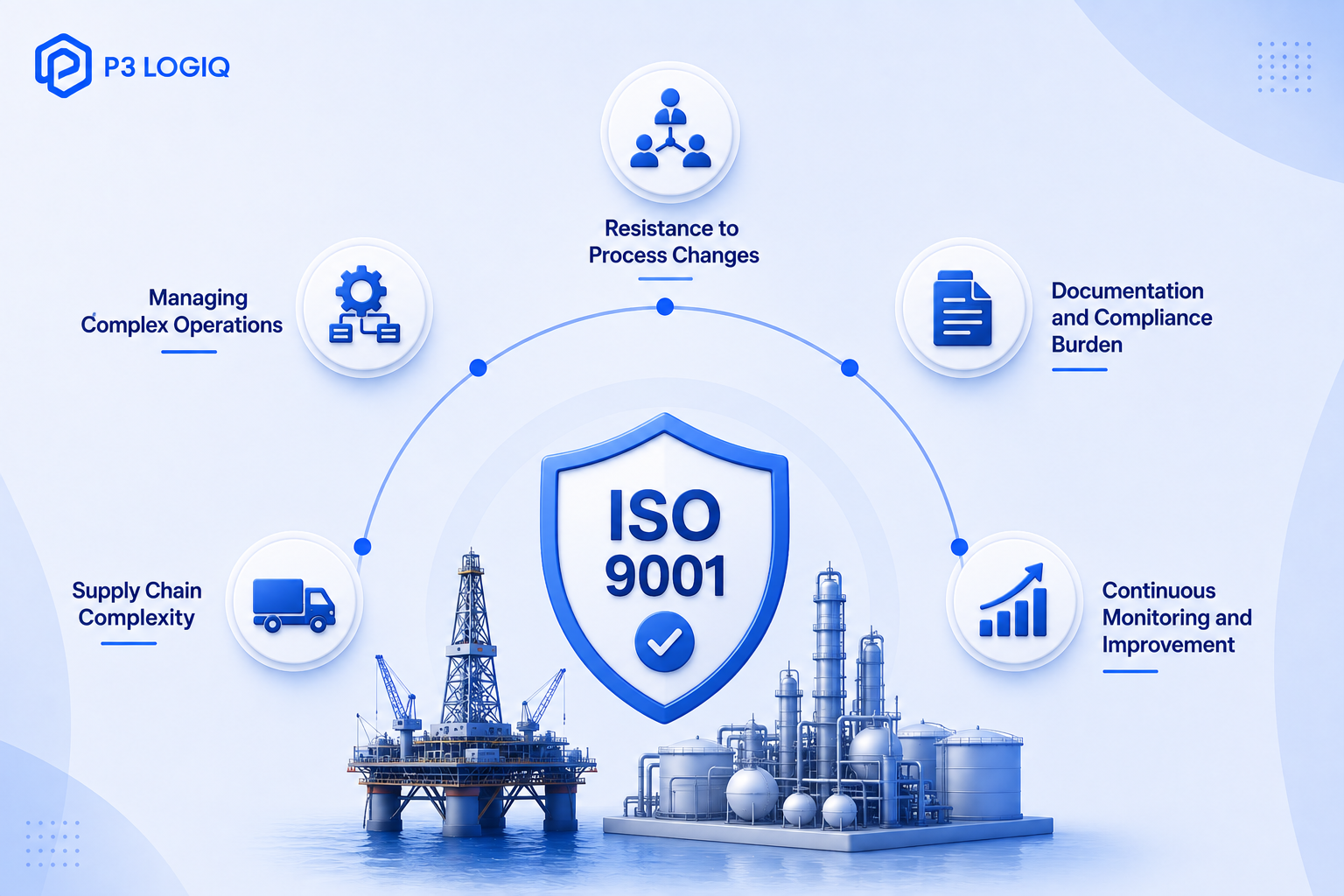
While ISO 9001 offers clear long-term benefits, implementation is not always straightforward, especially in an industry as complex as oil and gas. From large-scale operations to strict compliance requirements, there are several challenges that can make implementation difficult.
Understanding these challenges early can help you prepare better and build a smoother path toward successful ISO 9001 adoption.
Oil and gas operations often involve multiple departments, large-scale workflows, and teams working across different locations. Keeping everything aligned while maintaining consistent quality can be challenging.
This complexity can make it harder to standardize processes, improve coordination, and ensure quality requirements are followed across operations.
Implementing ISO 9001 often requires changes in how teams work, document processes, and manage quality. Not everyone adapts to change at the same pace.
You may face resistance from employees who are used to existing workflows or see new processes as additional work rather than long-term improvement.
ISO 9001 requires strong documentation, accurate records, and consistent process tracking. In oil and gas, the volume of documentation can be significant.
Managing large amounts of records while keeping everything accurate, updated, and audit-ready can become a major challenge without the right systems in place.
Many oil and gas companies work with suppliers, contractors, and vendors across multiple locations and regions. Maintaining consistent quality across such a broad network is not easy.
Supplier delays, inconsistent quality, or communication gaps can directly affect your operations and overall performance.
ISO 9001 is not a one-time implementation. Maintaining compliance requires ongoing monitoring, regular reviews, and continuous improvement.
Tracking KPIs, reviewing performance, and updating processes regularly take time and consistent effort, especially in fast-moving operational environments.
Implementing ISO 9001 in the oil and gas industry can feel overwhelming, especially when you're managing complex operations, strict compliance requirements, and large volumes of documentation.
That’s where P3 LogiQ can help.
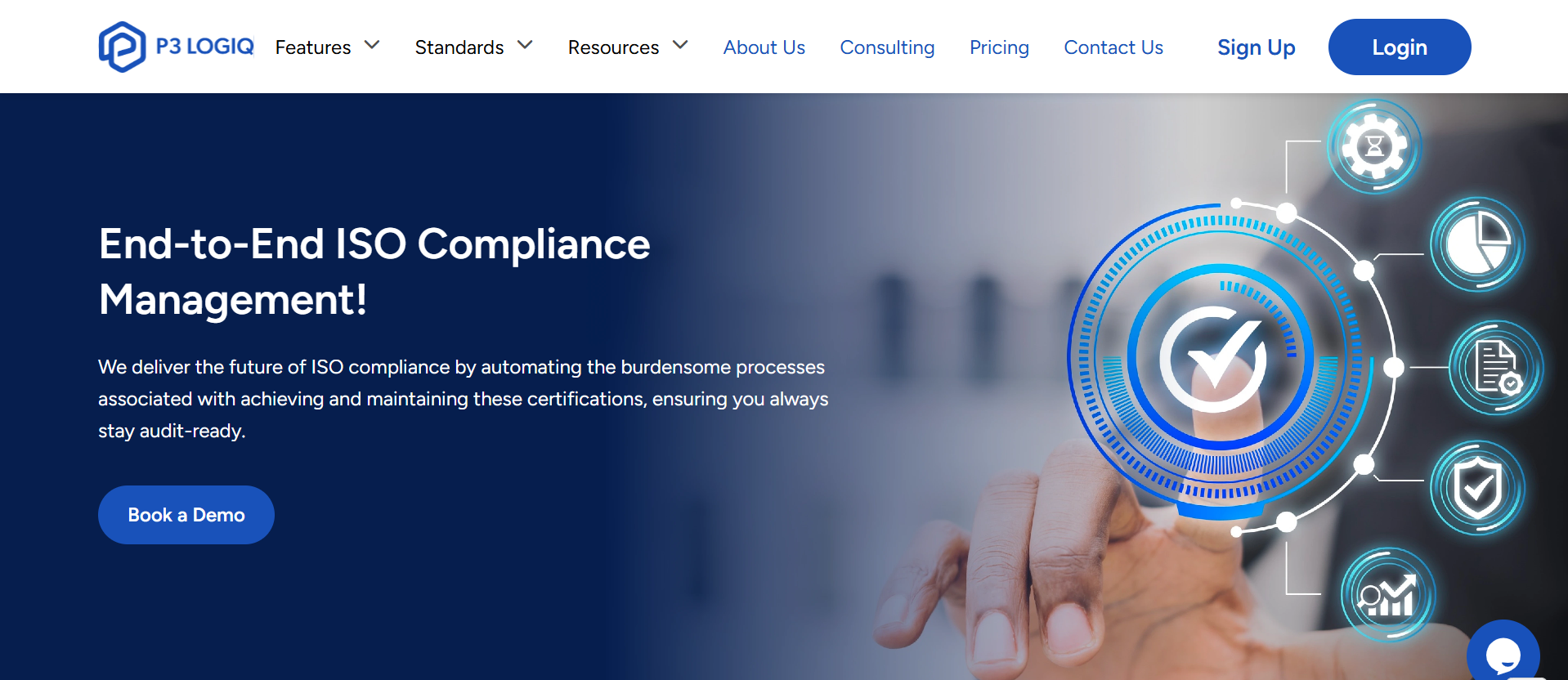
We help you simplify ISO 9001 implementation by bringing your quality management processes into one centralized platform. From document control and audit management to corrective actions, risk tracking, and compliance monitoring, it gives you better visibility and control across your operations.
Whether you're preparing for ISO 9001 certification or improving an existing quality management system, P3 LogiQ helps you reduce manual effort, improve process consistency, and stay audit-ready at every stage.
Book a free demo or sign up with us to see how you can streamline ISO 9001 compliance and build a stronger quality management system for your oil and gas operations.
ISO 9001 is an internationally recognized standard for quality management systems (QMS). It helps businesses build structured processes to improve quality, consistency, and overall operational performance.
In the oil and gas industry, ISO 9001 supports better process control across exploration, drilling, production, refining, and distribution. It helps reduce inefficiencies while improving compliance and quality management.
The oil and gas industry operates in a high-risk environment where quality, safety, and consistency are critical. Even small operational gaps can lead to delays, higher costs, or compliance issues.
ISO 9001 helps you create a more structured approach to managing processes, improving efficiency, and reducing operational risks across the business.
ISO 9001 offers several benefits, including improved operational efficiency, stronger quality control, better risk management, and improved compliance readiness.
It also helps strengthen supplier management, improve customer confidence, and support long-term business growth through continuous improvement.
ISO 9001 helps you standardize processes, monitor performance, and identify areas for improvement. This creates better consistency across operations and improves overall quality control.
By reducing errors, improving documentation, and strengthening workflows, it becomes easier to maintain quality across complex operations.
One of the biggest challenges is managing complex operations involving multiple teams, workflows, and suppliers. Standardizing processes across such a large environment can be difficult.
Other common challenges include resistance to process changes, documentation management, compliance requirements, and maintaining long-term improvements.
Yes, ISO 9001 can support regulatory compliance by improving documentation, record management, process control, and audit readiness.
While ISO 9001 itself is not a legal requirement, it helps create stronger systems that make compliance easier to manage.
Yes. ISO 9001 is suitable for organizations of all sizes, including smaller oil and gas businesses. The standard can be adapted based on the size and complexity of operations.
Even smaller companies can benefit from improved efficiency, better process control, and stronger quality management practices.
The implementation timeline depends on the size of your organization, operational complexity, and current quality management practices.
For some businesses, implementation may take a few months, while larger organizations with complex operations may need significantly more time.
Supplier performance plays a major role in the oil and gas industry. Delays or poor-quality materials can directly impact operations and project timelines.
ISO 9001 helps you evaluate suppliers, monitor performance, and improve supply chain consistency through better quality controls and communication.
P3 LogiQ helps simplify ISO 9001 implementation by centralizing quality management activities such as documentation, audits, corrective actions, and compliance tracking.
This makes it easier for oil and gas companies to stay organized, improve process visibility, and maintain long-term compliance more efficiently.



Businesses need document management systems (DMS) to ensure ISO and R2 compliance, improve efficiency, and stay audit-ready. The article highlights key features like version control, security, and automation while reviewing the top 5 DMS solutions. P3 LogiQ stands out for its compliance-focused automation and secure document tracking
Read More
Recycling businesses gain efficiency, compliance, and sustainability with RIOS certification. It streamlines quality management, environmental responsibility, and worker safety, helping companies avoid legal risks and boost credibility. P3 LogiQ simplifies the certification process with automation, document control, and compliance tracking, making operations smarter and safer.
Read More
Audit Management Software (AMS) automates compliance tracking, streamlines workflows, and reduces audit risks. Key features include automated scheduling, compliance checklists, CAPA tracking, vendor risk management, and integrations.
Read More
Learn how audit management systems simplify ISO and R2 compliance by automating audits, managing documentation, and minimizing compliance risks efficiently.
Read More
In 2025, many businesses still face challenges in compliance management due to outdated methods like spreadsheets and fragmented software. This inefficiency leads to missed deadlines, increased risk, and regulatory penalties. The blog emphasizes the importance of modern compliance tools that automate workflows, enhance risk management, and streamline regulatory processes to meet ISO and R2 standards.
Read More
The rise in e-waste and environmental concerns makes responsible electronics recycling essential. The R2 Certification sets a global standard for safe, sustainable, and data-secure recycling practices. Developed by Sustainable Electronics Recycling International (SERI), R2 helps businesses manage environmental risks, data security, worker safety, and legal compliance.
Read More
Businesses face increasing challenges in managing complex regulatory compliance. Manual methods such as spreadsheets and paperwork can lead to missed deadlines, inefficiencies, and costly penalties. Compliance management software offers a streamlined solution to reduce risks, automate processes, and improve operational efficiency.
Read More
Maintaining R2 Certification is crucial for businesses in the e-waste recycling industry, ensuring regulatory compliance, sustainability, and strong stakeholder trust. This guide outlines 10 best practices to help businesses simplify operations, reduce risks, and stay compliant.
Read More
Unlock the value of ISO risk management certification. Explore its impact on compliance, risk mitigation, and business expansion.
Read More
Explore the top 5 ISO risk management software tools for 2025, including document management solutions for streamlined compliance and increased efficiency.
Read More
Find the ideal document management software (DMS) for your business. Learn how to choose with expert tips, key features, and insightful guidance
Read More
Unlock the power of a Document Management System (DMS). Learn how it can revolutionize your business operations.
Read More









.png)

.png)





.jpg)




.jpg)
.jpg)










.jpg)



.png)

.png)
.png)



.png)

