
.png)
You don't really think about where old laptops, broken servers, or outdated office phones go once they're tossed out. They just disappear from your workspace and feel like "someone else's problem." But in reality, those devices carry a lot more than just scrap value. They hold sensitive data, environmental risks, and sometimes even legal responsibility.
Think about a typical office upgrade. New systems come in, the old ones get boxed up, and a vendor takes them away. Job done, right? Not quite. If those devices are not handled properly, customer data can still be recovered, toxic materials can end up in the wrong place, and companies can run into serious compliance issues without even realizing it.
Now think about how often this cycle repeats. Companies in the US upgrade equipment regularly, especially in IT, healthcare, education, and corporate setups. That means a constant flow of electronics needs to be handled in a safe and traceable way, not just disposed of casually.
This is where R2 certification comes in. It is a recognized standard that defines how electronics recycling and IT asset disposition should be done in a responsible, secure, and environmentally safe way.
The standard is developed and maintained by Sustainable Electronics Recycling International (SERI), the official governing body behind R2. SERI is an ANSI-accredited Standards Development Organization, and its R2 program is the most widely adopted certification for used electronics globally. Their website is the definitive resource for understanding the standard, finding certified facilities, and tracking updates to the current version, R2v3.
It is also worth noting that the U.S. Environmental Protection Agency (EPA) actively encourages all electronics recyclers to become certified under one of two recognized programs: R2 or e-Stewards. The EPA's endorsement underscores that R2 is not just an industry preference, it is tied directly to broader federal efforts around safe e-waste management and environmental compliance.
In this guide, you will see what R2 certification actually means, how to get R2 certification, and how the step-by-step process works to get certified without confusion or guesswork.
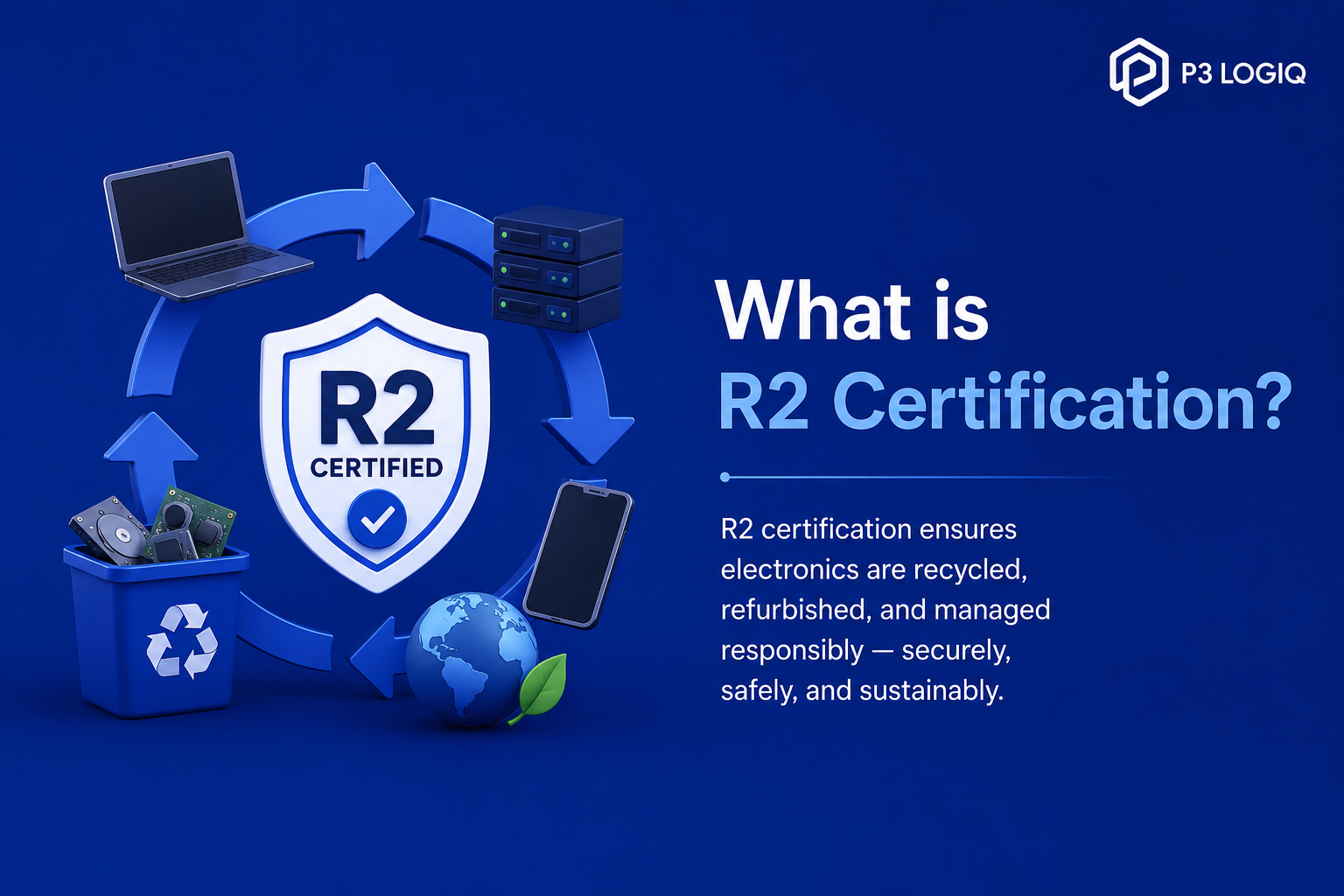
If you are dealing with old laptops, servers, phones, or any kind of electronic equipment in your work, R2 certification is basically a rulebook that tells you how to handle all of it in the right way.
R2 stands for Responsible Recycling. It is an internationally recognized standard created for companies that recycle or refurbish electronics so that nothing is done in a careless or unsafe way. That includes how devices are collected, how data is removed, how parts are reused, and how waste is finally disposed of.
The current version of the standard is R2v3, which was introduced by Sustainable Electronics Recycling International (SERI). R2v3 places a stronger emphasis on areas such as data security, downstream vendor management, worker health and safety, environmental protection, and greater traceability throughout the electronics recycling process. It also introduces more detailed requirements for facilities based on the services they provide, making the certification more comprehensive than earlier versions.
Meeting these requirements is not just about following the right procedures. Businesses also need to maintain consistent documentation, track operational records, and keep audit evidence readily available throughout the certification process.
This is why many organizations invest in R2 Audit Compliance Management Tools to centralize compliance activities and stay prepared for certification and ongoing surveillance audits.
So, if you are someone running or managing an IT asset disposition (ITAD) process, R2 certification helps ensure your "simple recycling job" does not turn into a data breach, regulatory issue, or environmental problem later.
What makes it important is that it is not just about recycling. It is about control and accountability at every step. If a device leaves your hands, there should still be a clear record of where it goes, how it is processed, and whether any sensitive information on it has been permanently destroyed.
In the United States, R2 certification is widely adopted by electronics recyclers and ITAD providers because organizations want assurance that their retired equipment is being managed responsibly, securely, and in compliance with recognized industry best practices rather than simply being discarded.
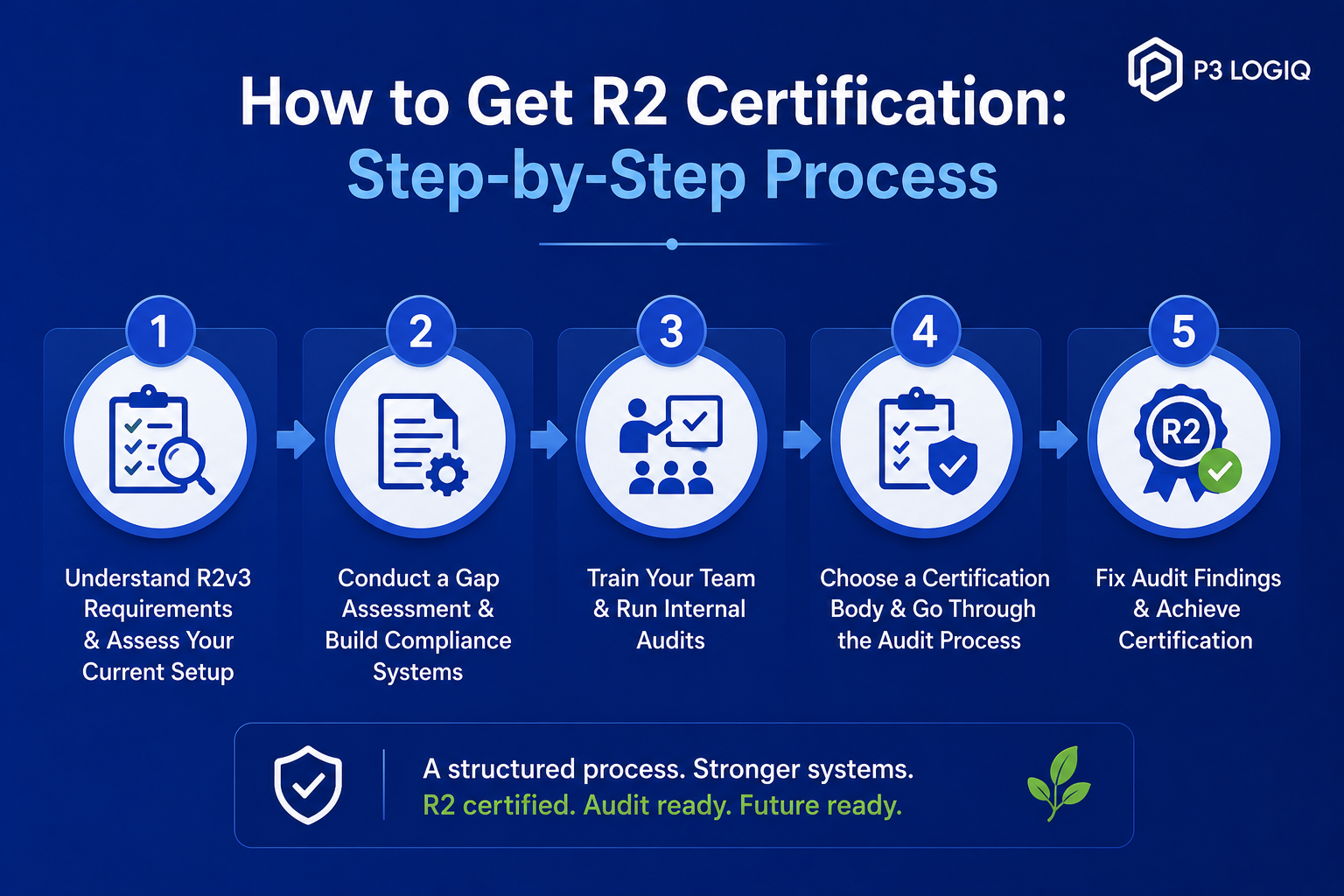
Getting R2 certified is not a one-time action. It is a structured process where you gradually build systems, fix gaps, and then prove everything through an audit. Here is the same journey simplified into five clear steps.
Start by getting a clear understanding of what R2v3 actually requires from your business. This includes how electronics are handled, how data is destroyed, how materials are tracked, and how everything is documented. If you have ever worked with an ISO 9001 compliant guide, you'll notice a similar approach. Both standards emphasize following documented processes, maintaining consistency, and being able to prove that your systems work as intended. Without this base understanding, the rest of the process becomes confusing very quickly.
Once you are familiar with the requirements, the next step is to look at your current operations honestly. You need to compare what you are already doing with what the standard expects. This includes your recycling workflow, IT asset handling, vendor processes, and internal documentation practices.
This step is basically a reality check. It shows you how close or far you are from being audit ready. Most businesses realize at this stage that they already do some parts correctly, but not in a structured or documented way.
Having this clarity early saves a lot of time later because you stop guessing and start building processes with a clear roadmap instead of relying on assumptions. This makes the transition to R2v3 much more organized and manageable.
After understanding where you stand, the next step is identifying the exact gaps. This is where you break down what is missing in your current system compared to R2 requirements.
These gaps usually show up in areas like documentation, data security controls, vendor tracking, or safety procedures.
A proper gap assessment helps you prioritize what needs immediate attention instead of trying to fix everything at once. If your business is already familiar with ISO 45001 benefits, you'll recognize why workplace safety is evaluated alongside operational processes. R2v3 also expects organizations to manage health and safety risks in a structured and documented way, making these requirements naturally complement each other.
Once the gaps are clear, you start building the actual compliance systems. This includes environmental and safety policies, structured data destruction processes, and a proper downstream vendor management system.
At this stage, your operations start becoming more organized and standardized. It is no longer informal handling but a structured process that can be followed, verified, and continuously improved over time.
Even if your systems are well designed, they only work if your team follows them correctly. That is why training becomes an important part of the process.
Your team needs to clearly understand how to handle devices, how to manage data securely, and how to follow documented procedures without shortcuts. This reduces mistakes during real operations and during audits. The same principle is central to the ISO 14001 certification process, where documented procedures, employee awareness, and consistent execution are essential for an environmental management system to work effectively. R2v3 follows a similar approach by focusing on whether these processes are actually being followed in day-to-day operations.
After training, you run an internal audit. This is like a practice check where you review your own systems before the official audit happens. It helps you spot mistakes early and fix them before they become formal issues.
This step builds confidence that your process is not just written down but down, but actually working in practice. By the time the certification audit begins, your team is already familiar with the expectations and has had the opportunity to correct any weaknesses beforehand.
Once your systems are ready, you need to select an accredited R2 certification body. This is the organization that will officially audit your business and decide whether you meet the standard.
The audit usually happens in two stages. The first stage focuses on documentation. The auditor checks whether your policies, records, and systems are properly defined and aligned with R2 requirements. This structured review is similar to the ISO 9001 certification process, where auditors first evaluate whether an organization has documented its quality management system before verifying how those processes are carried out in day-to-day operations.
The second stage is more practical. The auditor visits your site and reviews how your operations actually work. They will check whether your real processes match what you have documented.
This is the most important checkpoint in the entire journey because it validates both your system design and your real-world execution. A well-prepared audit shows that your business is not only following documented procedures but is also applying them consistently across its operations.
After the audit, you may receive findings or observations. These are issues or gaps that need to be corrected before final approval can be given.
You will need to address each finding properly and provide evidence that the issues have been fixed. This step is important because certification is not granted until all critical gaps are resolved. A good ISO 45001 certification guide also emphasizes that audit findings are not considered failures. Instead, they are opportunities to strengthen your management system before certification is finalized. The same mindset applies to R2v3, where timely corrective actions demonstrate that your organization can identify issues, resolve them effectively, and prevent them from recurring.
Once the auditor reviews and approves your corrective actions, your R2 certification is officially granted. At this point, your business is recognized as meeting the R2 standard.
From here, you move into ongoing compliance, which includes surveillance audits and continuous maintenance of your systems to stay certified. Maintaining certification is an ongoing commitment, not a one-time achievement, and regular reviews help ensure your processes remain effective as your business evolves.
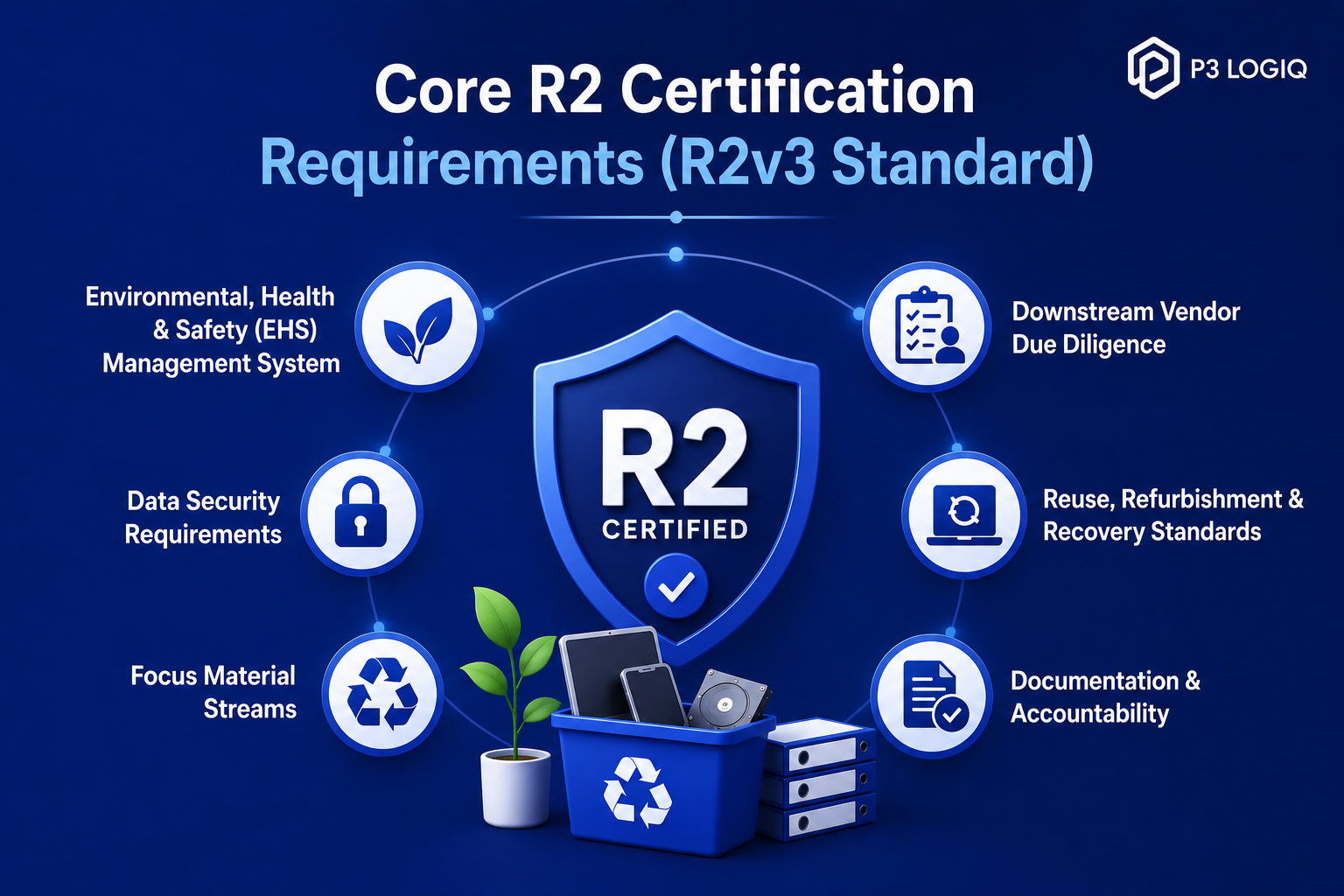
If you are trying to understand what R2 certification actually expects from you, this is the section that makes everything real. It is not just about recycling electronics. It is about building a system where every device, every process, and every decision is controlled, documented, and traceable.
Here is what the R2v3 standard focuses on in practice.
This is the foundation of the entire certification. You need a structured system that defines how your workplace handles safety, environmental impact, and operational risks.
It is not just paperwork. It is about having clear policies and procedures that people actually follow in day-to-day operations.
If you are working with computers, servers, or phones, data is the biggest concern.
R2 requires you to properly sanitize, destroy, and verify that no recoverable data remains on any device you process.
This is not optional. It needs documented proof that data destruction actually happened.
Some materials in electronics are more sensitive than others, like batteries, mercury-containing parts, and circuit boards.
R2 expects you to identify these materials and handle them in a controlled and safe way instead of treating everything as general scrap.
Your responsibility does not end when the equipment leaves your facility.
You need to know exactly who you are sending materials to, and whether those downstream vendors are also handling them responsibly.
This includes approval, monitoring, and tracking of where everything goes.
If devices are being repaired or resold, there are clear expectations around testing and quality checks.
You cannot just repair and resell blindly. Each unit needs to be properly tested and verified before it re-enters the market.
If it is not documented, it does not count in R2 certification.
You need complete records of processes, device handling, data destruction, vendor movement, and audits.
This is what makes the system traceable and audit ready at any point in time.
Meeting every R2v3 requirement is easier when you have the right guidance from the start. Instead of figuring out documentation, process controls, and audit expectations on your own, work with experts who can help you build a compliant system that fits your operations.
At P3 LogiQ, we provide end-to-end R2 certification consulting, from gap assessments and documentation to implementation and audit readiness. Book a free demo or sign up to take the next step toward R2 certification with confidence.
R2 certification goes beyond responsible electronics recycling. It helps businesses protect sensitive data, meet customer and regulatory expectations, and follow a standardized process for managing end-of-life electronics.
If you are handling old electronics in your business, it is easy to think the risk ends once the devices leave your office. In reality, that is usually where the biggest risks begin.
Let’s say you upgrade your company laptops and hand the old ones to a recycling vendor. From your side, it feels done. But if even one of those devices still contains recoverable data, it can turn into a security issue later. That could mean customer information, internal files, or access credentials ending up somewhere they should not.
This is one of the main reasons R2 certification matters. It gives you a structured way to make sure electronics are not just disposed of, but properly processed with clear checks for data destruction and responsible handling at every step.
There is also a business side to it. In the US, more companies now ask vendors and recycling partners for proof that they follow recognized standards. If you are trying to work with larger clients, especially in IT, healthcare, or enterprise sectors, R2 certification often becomes a basic requirement instead of an added advantage.
Having R2 certification also shows that your organization follows established industry practices, which can strengthen credibility during vendor evaluations and procurement processes.
Another important angle is environmental responsibility. Electronics contain materials that need careful handling. Without a proper system, they can easily end up being processed in unsafe ways, creating long-term environmental damage.
So, from a practical perspective, R2 certification is not just about compliance. It helps reduce operational risk, builds trust with clients, and ensures your electronics disposal process follows recognized environmental and data security standards.
There is no universal timeline for R2 certification because every organization starts from a different point. Some businesses already have documented processes and compliance controls in place, while others need to build them from the ground up before the certification audit.
The biggest factor is not the audit itself. It is how prepared your organization is before the auditor arrives. The table below highlights the key factors that typically influence how long the R2 certification process takes.
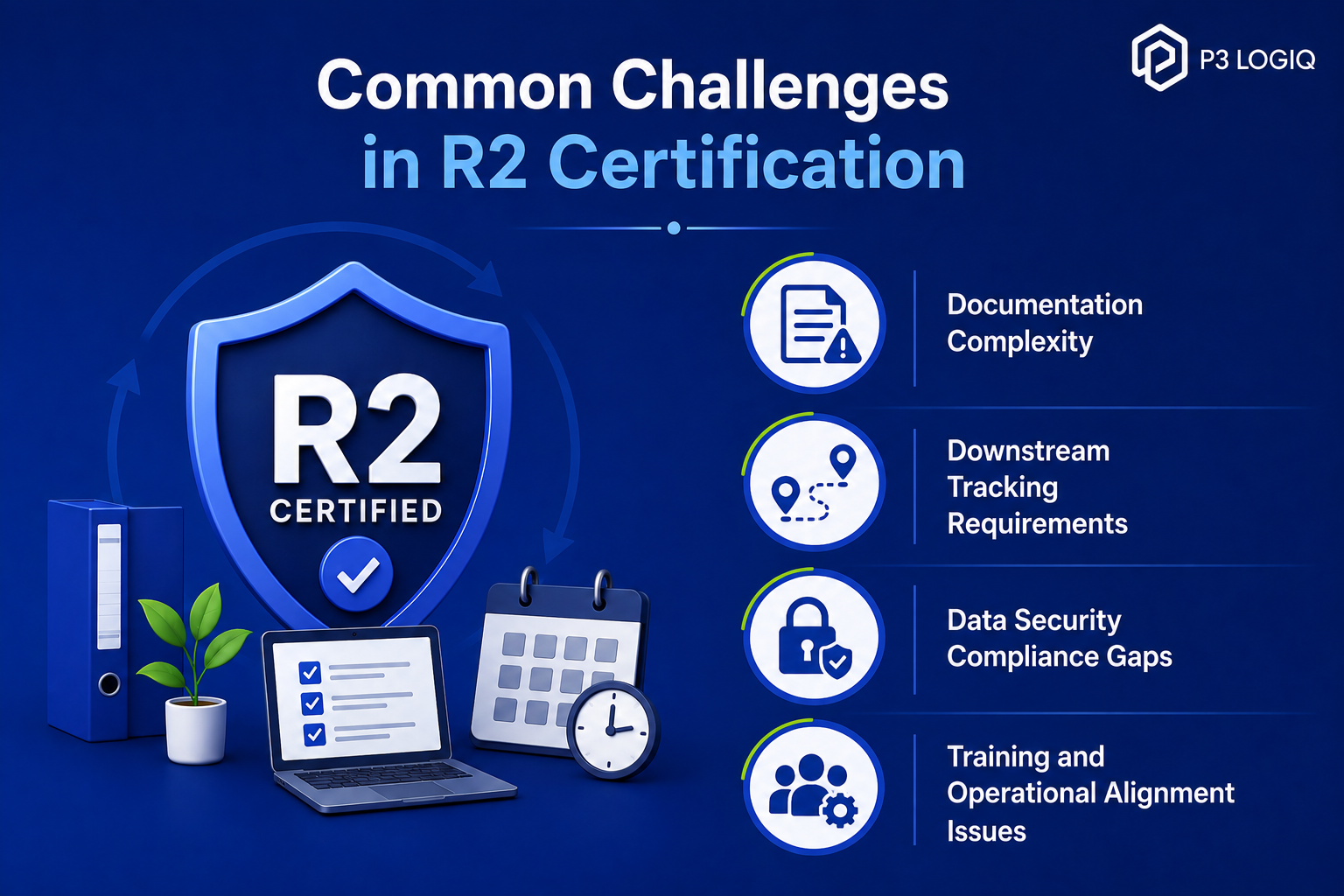
If you are going through R2 certification for the first time, the process can feel straightforward on paper. In real operations, a few recurring challenges tend to slow things down or create confusion. Most businesses run into at least one of these.
One of the biggest challenges is simply keeping up with documentation. R2 expects clear records for almost every part of your process, from device intake to final disposal or resale.
For many teams, the issue is not doing the work but proving it consistently in a structured format.
Once electronics leave your facility, R2 still expects you to know exactly where they go and how they are processed.
Tracking multiple downstream vendors, verifying their practices, and maintaining updated records can become complicated, especially if you work with multiple partners.
Data handling is a critical part of R2, and this is where many gaps appear.
If your data destruction methods are not fully documented or consistently followed, it can lead to non-conformities during the audit. Even small inconsistencies can become issues if they are not backed by proof.
Even when systems are properly designed, teams do not always follow them the same way in daily work.
Some employees may skip steps, misunderstand procedures, or rely on old habits. This creates misalignment between documented processes and actual operations, which auditors quickly notice.
Overall, these challenges are common, but they usually come down to one thing. R2 certification is not just about setting rules. It is about making sure those rules are consistently followed and properly recorded across the entire workflow.
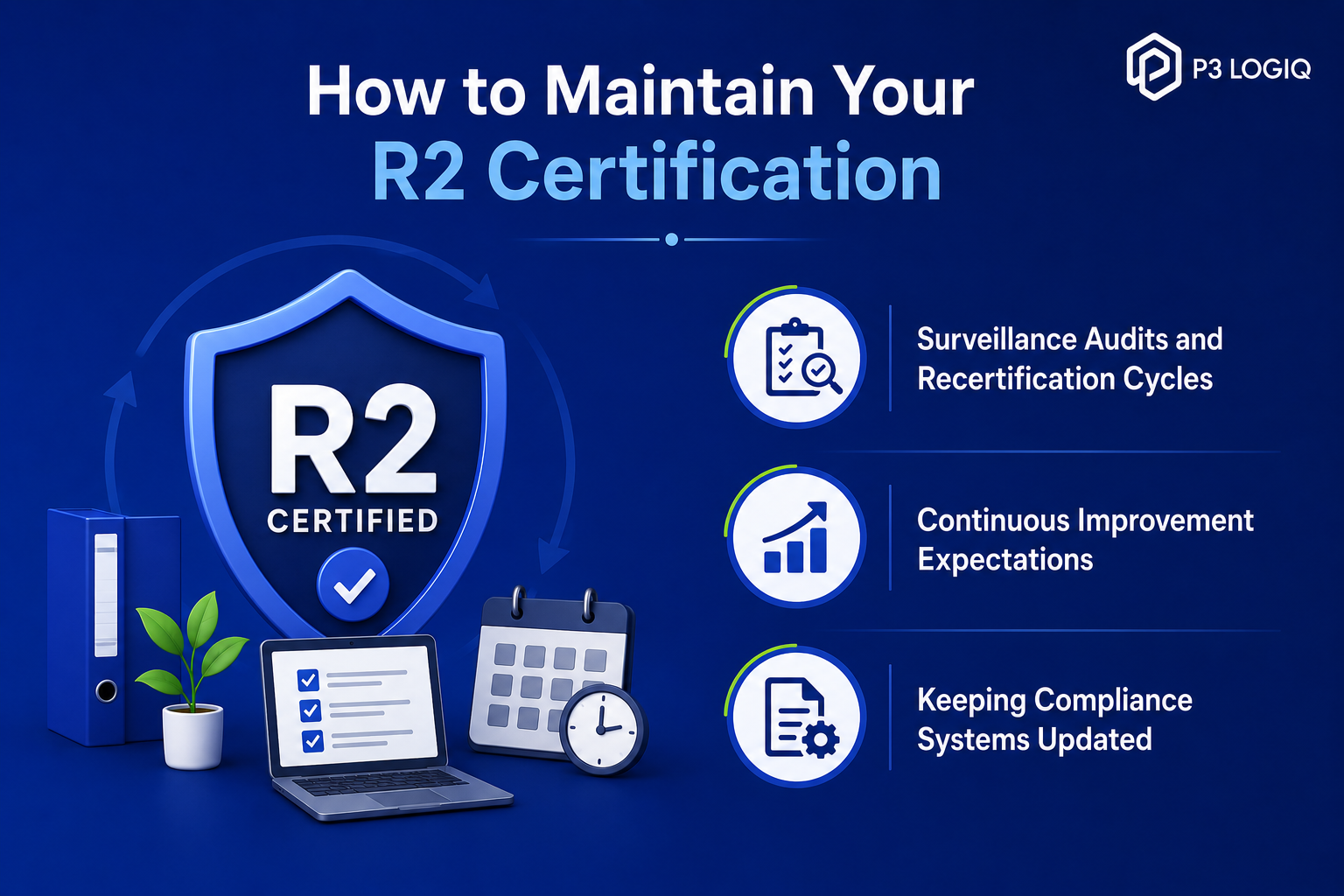
Getting R2 certified is not the end of the process. Once you achieve it, the focus shifts to keeping your systems consistent, updated, and ready for ongoing review.
After certification, your operations are still reviewed through surveillance audits. These are periodic checks to confirm that you are continuing to follow R2 requirements in real day-to-day work.
Over time, you will also go through recertification cycles, where your entire system is reassessed to ensure it still meets the latest standard.
R2 is not designed for a “set it and forget it” approach.
You are expected to continuously improve your processes, especially in areas like data security, environmental handling, and downstream tracking. Even if your system is working well, you still need to look for ways to make it more reliable and more transparent over time.
As your business grows or changes, your compliance system needs to keep up.
That means updating documentation, refining internal procedures, and making sure your team is still aligned with the required processes. If your operations evolve but your compliance system does not, gaps start to appear during audits.
In simple terms, maintaining R2 certification is about consistency. Once you build the system, the real work is making sure it stays accurate, current, and followed without shortcuts.
Getting R2 certification is not just about clearing an audit. It is about having your processes, documentation, and compliance systems actually work together without breaking under real scrutiny. Most delays happen when teams are still relying on scattered records, unclear workflows, or inconsistent tracking.
If you are planning to get R2 certified, the biggest challenge is not understanding the standard, it is building and maintaining a system that actually holds up during audits.
That is where having the right compliance platform can make a real difference.
P3 LogiQ helps you structure your processes, manage documentation, and keep your compliance system audit ready without last-minute confusion.
Instead of dealing with scattered files and manual tracking, you get a centralized way to manage everything from policies to records in one place. P3 LogiQ helps electronics recyclers manage R2 documentation, audit evidence, corrective actions, training records, and compliance workflows from one centralized platform.
If you want to simplify your certification journey and reduce the back and forth during audits, you can book a demo or sign up with us and see how it fits into your workflow. It is built to help you stay consistent, organized, and ready for certification requirements with far less operational stress.
R2 certification stands for Responsible Recycling certification. It is a globally recognized standard designed for businesses that recycle, refurbish, or manage end-of-life electronics in a safe and responsible way.
It focuses on areas like data security, environmental safety, downstream tracking, and proper handling of electronic waste. The goal is to ensure electronics are processed responsibly from start to finish.
R2 certification is mainly relevant for electronics recyclers, IT asset disposition providers, refurbishers, and businesses involved in processing used electronic equipment.
If your business handles devices such as laptops, servers, mobile phones, batteries, or other electronic assets after their usable life, R2 certification can help demonstrate responsible handling and compliance.
The certification timeline depends on how prepared your business already is. In many cases, the process can take anywhere from a few weeks to several months.
Businesses with strong documentation, trained teams, and existing compliance systems usually move faster. Companies building everything from scratch often need more time to prepare for audits.
The cost of R2 certification varies depending on your company size, operational complexity, and audit requirements. There is no fixed cost that applies to every business.
Expenses usually include certification audit fees, implementation costs, employee training, and ongoing compliance management. The final investment depends heavily on your current readiness level.
R2 certification is not legally mandatory for every business. However, in many industries, it has become an important requirement for working with enterprise clients, OEMs, and government-related contracts.
Many organizations prefer working with R2-certified partners because it provides confidence in data security, environmental responsibility, and operational compliance.
Both R2 and e-Stewards are certifications for responsible electronics recycling, but they differ in their approach and requirements.
R2 is widely adopted for balancing recycling, reuse, and operational flexibility, while e-Stewards is often viewed as more restrictive with stricter controls around downstream processing and export practices.
The main requirements include environmental and safety management systems, secure data destruction, downstream vendor due diligence, and proper documentation.
Businesses also need strong traceability systems to prove that electronics are handled, reused, recycled, or disposed of according to R2 standards.
The audit generally takes place in two stages. First, auditors review your documentation, policies, and compliance systems.
Next, they conduct an on-site assessment to evaluate your actual operations. They check whether your real processes align with your documented procedures and R2 requirements.
R2 certification is not a one-time process. Businesses must maintain compliance through regular surveillance audits and periodic recertification cycles.
This ensures companies continue meeting R2 requirements even as operations, teams, and compliance expectations evolve over time.
Yes, R2 certification can still be valuable for small businesses, especially those looking to build trust and improve operational credibility in electronics recycling or IT asset disposition.
It can also create growth opportunities by helping smaller businesses qualify for partnerships, enterprise clients, and contracts that require recognized compliance standards.



Businesses need document management systems (DMS) to ensure ISO and R2 compliance, improve efficiency, and stay audit-ready. The article highlights key features like version control, security, and automation while reviewing the top 5 DMS solutions. P3 LogiQ stands out for its compliance-focused automation and secure document tracking
Read More
Recycling businesses gain efficiency, compliance, and sustainability with RIOS certification. It streamlines quality management, environmental responsibility, and worker safety, helping companies avoid legal risks and boost credibility. P3 LogiQ simplifies the certification process with automation, document control, and compliance tracking, making operations smarter and safer.
Read More
Audit Management Software (AMS) automates compliance tracking, streamlines workflows, and reduces audit risks. Key features include automated scheduling, compliance checklists, CAPA tracking, vendor risk management, and integrations.
Read More
Learn how audit management systems simplify ISO and R2 compliance by automating audits, managing documentation, and minimizing compliance risks efficiently.
Read More
In 2025, many businesses still face challenges in compliance management due to outdated methods like spreadsheets and fragmented software. This inefficiency leads to missed deadlines, increased risk, and regulatory penalties. The blog emphasizes the importance of modern compliance tools that automate workflows, enhance risk management, and streamline regulatory processes to meet ISO and R2 standards.
Read More
The rise in e-waste and environmental concerns makes responsible electronics recycling essential. The R2 Certification sets a global standard for safe, sustainable, and data-secure recycling practices. Developed by Sustainable Electronics Recycling International (SERI), R2 helps businesses manage environmental risks, data security, worker safety, and legal compliance.
Read More
Businesses face increasing challenges in managing complex regulatory compliance. Manual methods such as spreadsheets and paperwork can lead to missed deadlines, inefficiencies, and costly penalties. Compliance management software offers a streamlined solution to reduce risks, automate processes, and improve operational efficiency.
Read More
Maintaining R2 Certification is crucial for businesses in the e-waste recycling industry, ensuring regulatory compliance, sustainability, and strong stakeholder trust. This guide outlines 10 best practices to help businesses simplify operations, reduce risks, and stay compliant.
Read More
Unlock the value of ISO risk management certification. Explore its impact on compliance, risk mitigation, and business expansion.
Read More
Explore the top 5 ISO risk management software tools for 2025, including document management solutions for streamlined compliance and increased efficiency.
Read More
Find the ideal document management software (DMS) for your business. Learn how to choose with expert tips, key features, and insightful guidance
Read More
Unlock the power of a Document Management System (DMS). Learn how it can revolutionize your business operations.
Read More






.png)






.jpg)




.jpg)
.jpg)









.jpg)

.png)

.png)
.png)



.png)

