.png)
Imagine spending months marketing your electronics recycling business and still seeing very little business come through.
You don’t seem to be receiving much interest. Then you realise you can’t even mention R2 compliance in your marketing because your certification is still in progress.
Meanwhile, other recyclers seem to be staying pretty busy. At some point, it’s fair to ask: Is not having R2 holding the business back?
That question clarifies why R2 certification matters beyond simply having another credential on your website.
R2, short for Responsible Recycling, is the standard developed by Sustainable Electronics Recycling International (SERI) for managing areas such as data security, worker safety, environmental responsibility, and downstream vendors.
For certified facilities, maintaining all of this means managing documentation, training, corrective actions, vendor records, and audit requirements on an ongoing basis. That’s where R2 compliance software can help bring those processes into one system.
In this blog, I’ll compare the 5 best R2 certification and compliance software solutions in 2026 so you can see which one fits your operation best.
These are the factors against which I checked all software in this list:
None of this replaces testing a platform with your own documents and your own team. But it's enough to tell you which ones are worth your time and which ones probably aren't.
Managing R2 compliance means keeping your documentation, risk assessments, corrective actions, and downstream vendor records organized throughout the year. When audit time comes around, you should already have everything you need in place.
Before you get into the details, here’s a quick look at the platforms I reviewed and what each one is best suited for.
You’ve seen the overview, so now let’s take a closer look at each platform and what it can offer you. This should make it easier to see which one fits your business, workflow, and R2 compliance needs.
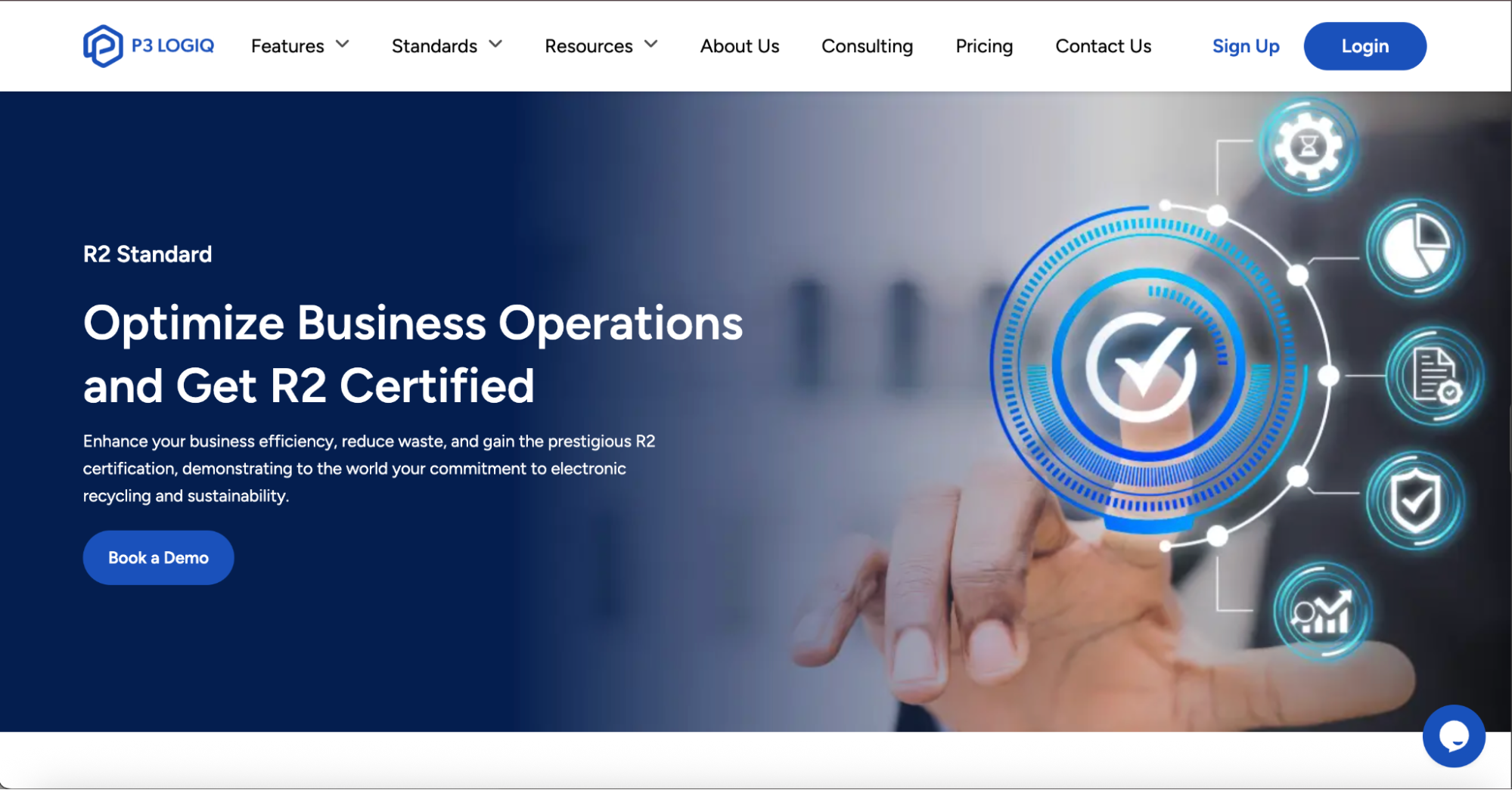
P3 LogiQ is a cloud-based compliance platform to help businesses earn and maintain ISO 9001, ISO 14001, ISO 45001, R2, and RIOS certifications.
Our R2 Operations module covers the parts of the standard that directly relate to electronics recycling. You can track incoming and outgoing shipments, maintain a running mass balance, record product testing with functional and cosmetic grades, and sort equipment into R2-controlled or unrestricted streams as it comes in.
Alongside your R2 records, we also bring document management, risk management, audit management, corrective actions, calibration and maintenance, QEHS monitoring, compliance, training, and improvement into one place.
We’ve also broken down how to get R2 certification into simple, step-by-step actions based on R2 requirements. This helps you know what comes next, from your initial gap analysis through audit readiness.
When you’re preparing for your R2 audit, our platform gives you the tools to keep the process organised. You can add your documents, set up workflows, and manage key areas such as audits, risks, and compliance tracking.
From there, our dashboards give you a clear view of where your R2 processes stand. That means a missed test or an expiring vendor certification is easier to spot before it becomes an audit finding.
You can also assign R2-related tasks to your team, track progress, and stay on top of deadlines with automatic reminders.

P3 LogiQ offers three flexible plans, and you can save up to 15% with annual billing.
A 14-day free trial is available before you commit. Not just that, but every plan includes built-in collaboration tools (Google Workspace integration, approval workflows, and version control) so your team isn’t working from disconnected spreadsheets.
Additional plan benefits include:
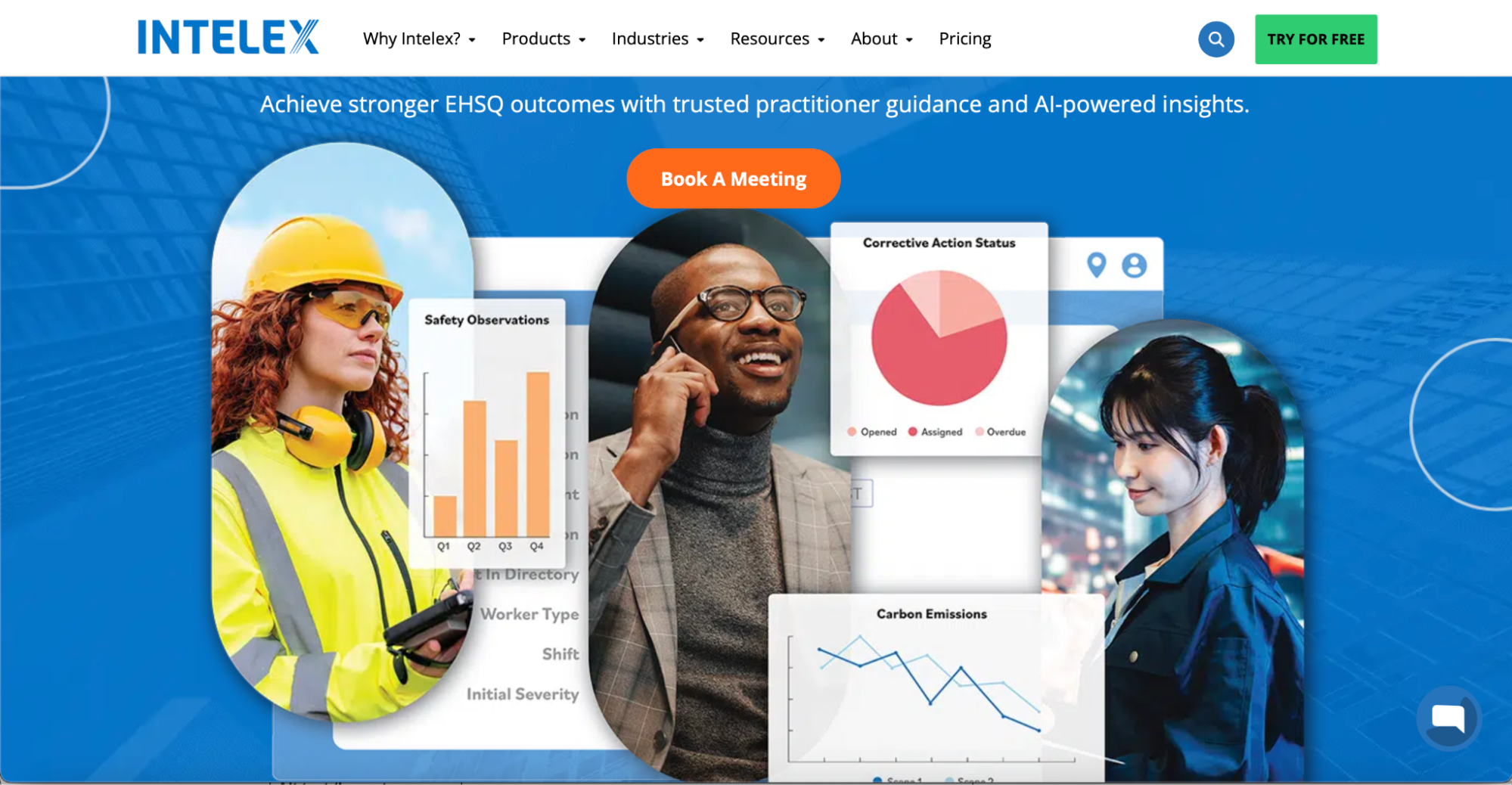
Intelex is a cloud-based EHSQ platform that can be a useful option if you want strong coverage across the safety and environmental areas of R2v3. Since worker health and safety are a major part of R2v3, these capabilities can matter alongside your core compliance workflows.
You can use Intelex for incident management, audits, document control, risk assessments, employee training, and environmental reporting, with mobile access for field teams.
You can use it across regulated industries such as manufacturing, automotive, and chemical processing, where structured EHS management is a key part of daily operations.
If you are looking to simplify your quality management workflows, reviewing how to get ISO 9001 certification can provide a practical overview of how integrated compliance software centralizes documentation and training records.
Intelex uses quote-based pricing, with the final cost depending on the modules you choose and your organization’s size. Its plans are offered across Essentials, Advanced, and Enterprise tiers.
4.1/5 (63 reviews) on G2
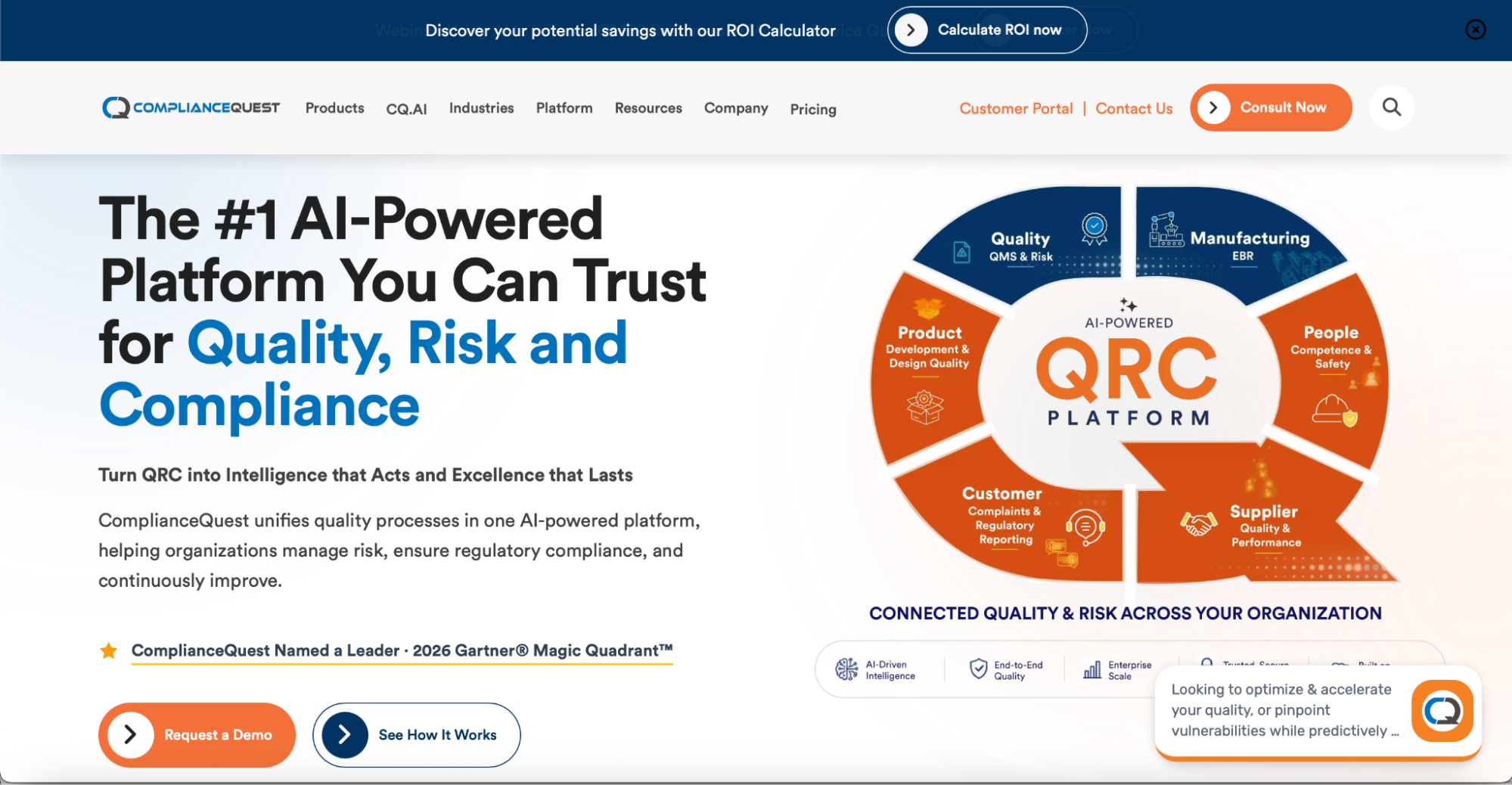
ComplianceQuest is a Salesforce-native Quality, Risk, and Compliance (QRC) platform. You can really benefit from its R2 use cases because its approach to document management systems ties directly into CAPA, change control, and audit management within the same platform.
For you, managing corrective actions from an R2 surveillance audit can actually contribute to removing a step that’s easy to lose track of manually.
ComplianceQuest does not publish flat pricing. It’s quote-based, depending on modules and user count. You can request pricing directly through their site.
4.3 out of 5 (82 reviews) on G2
CycleLution is a cloud ERP built specifically for the recycling and ITAD industries, so you’re getting a system designed around these operations from the start.
It’s a widely used cloud ERP in the ITAD and e-recycling space, with more than 150 OEM, IT asset recovery, and scrap recycling facilities using it in the US.
With CycleLution, you can manage the workflow beyond compliance documentation.
You also get the benefits of government and certification compliance tracking across its industry use cases. An understanding of how to get R2 certification provides essential context on how material traceability and data security requirements shape these software workflows.
Not publicly published; pricing is provided directly through a requested demo.
They don’t have independent third-party ratings yet (G2, Capterra).
Reliance offers 40+ ready-to-use applications covering document control, CAPA, audit management, training, and supplier quality, with no-code configuration.
That flexibility can be useful for R2 because your downstream vendor requirements can vary based on the material streams and appendices covered by your certification.
You can configure workflows around those specific requirements instead of forcing every operation into the same setup.
The platform is certified to ISO 9001:2015 and ISO 27001:2013, making it one of several best ISO compliance software options built to meet ISO 9001, ISO 14001, ISO 45001, IATF 16949, and FDA 21 CFR Part 11 requirements out of the box.
Not publicly published; quote-based depending on applications and user count.
4.3 out of 5 (616 reviews) on G2
The feature list will look similar across most of these platforms, so what differentiates them? The details. Before you commit to one of them, make sure to check each one against these specifically:
If you’re comparing R2, RIOS, and ISO certifications, the main difference comes down to what each framework is designed to cover. This is where and how they differ:
R2 certification can help you build trust with customers, reduce operational risk, and create more opportunities as your business grows. And this is where it can make a practical difference:
Many large organizations look for recognized recycling certifications when evaluating vendors. Being R2 certified can help you meet those requirements and qualify for opportunities that may otherwise be out of reach.
R2 certification gives customers independent assurance around responsible recycling and data destruction. That credibility can support stronger pricing for your services and recovered materials.
A documented R2 system gives you clear processes for handling electronics, data, and downstream vendors. It can help you reduce the risks associated with improper disposal, data breaches, and regulatory issues.
R2 requires you to manage, sort, and route materials responsibly. This gives you greater control over hazardous materials, downstream partners, and where recovered electronics ultimately go.
Once your R2 processes are established, expanding to another facility, service, or applicable appendix becomes easier to manage. You already have a structured framework to build from.
R2 includes worker health and safety requirements, helping your employees understand both what they need to do and why it matters. Clear processes and training can make it easier for your team to follow procedures consistently.
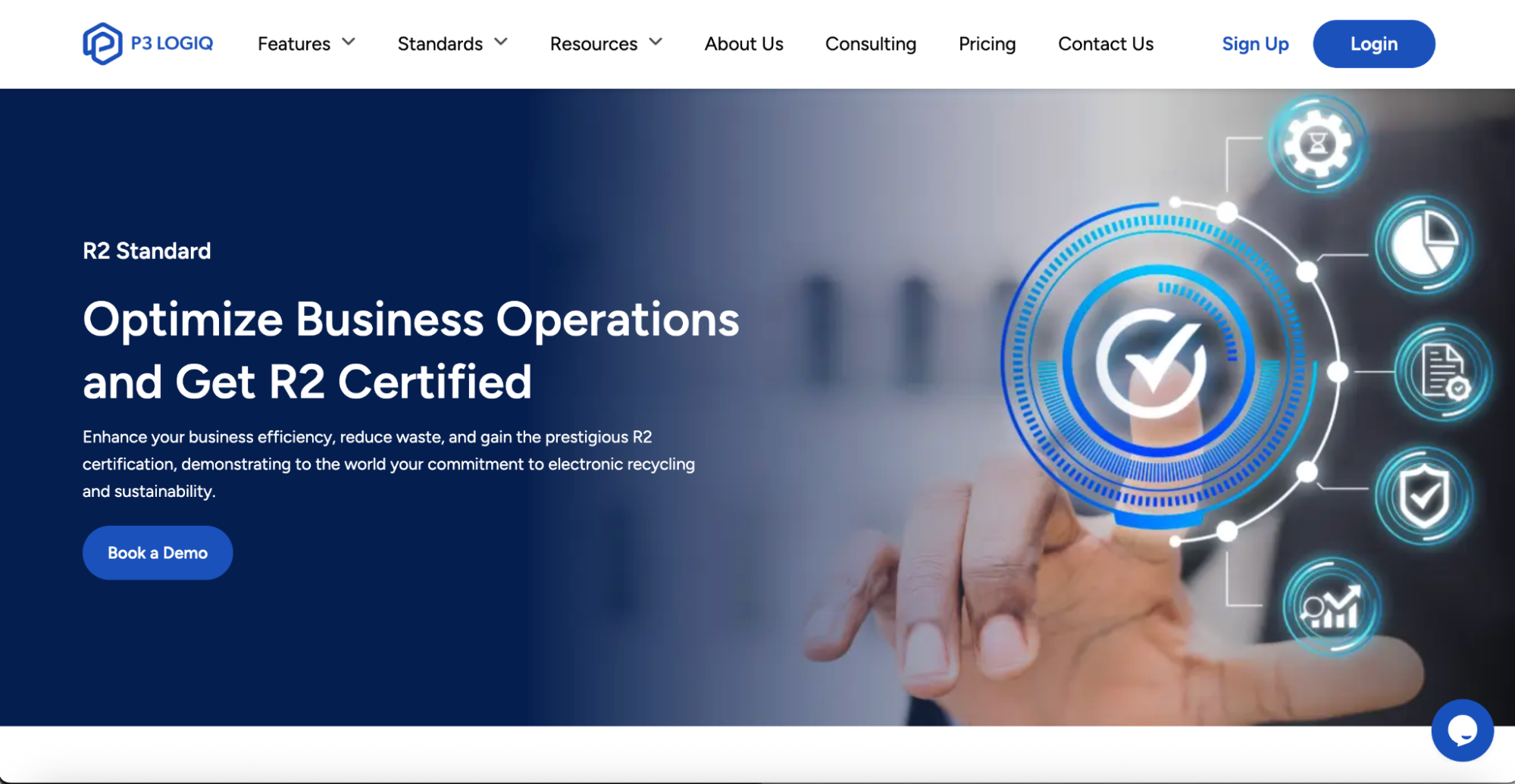
Choosing the right software can be the difference between a smooth certification and a stressful one.
Instead of managing scattered documents, downstream vendor records, and audit prep on your own, having a system built specifically for R2 makes the whole process faster and far less stressful.
With P3 LogiQ, we help you manage the entire R2 certification process, from documentation to audit readiness, all in one place.
We help you manage the full R2 compliance process, from organizing documents and tracking downstream vendors to handling corrective actions and preparing for audits. Your team can keep everything in one place and quickly see what needs attention.
Automated reminders and real-time updates help you stay on top of deadlines, audits, and vendor renewals throughout the year, so you’re not rushing to pull everything together before a surveillance audit.
That’s the gap P3 LogiQ is built to fill. You get one system for your R2 documentation, audits, corrective actions, and downstream vendor tracking, making compliance easier to manage day-to-day.
Book a free demo or sign up today, and let P3 LogiQ guide you through R2 certification journey with less complexity and more confidence. Keep your processes on track, stay audit-ready, and focus on growing your business.
R2 stands for Responsible Recycling. It's a certification for electronics recyclers, developed by SERI, that covers how you handle data security, worker safety, and environmental responsibility, not just how you sort scrap. Essentially, it proves your entire operation meets recognized standards for responsible, secure electronics processing.
Spreadsheets can work for a while, especially if you’re small. But once you’re tracking downstream vendors, corrective actions, and multiple appendices at once, things start slipping through the cracks. Software isn't mandatory; it just gets a lot harder to stay on top of everything manually as you grow.
R2 focuses specifically on electronics recycling. RIOS is a broader operating standard covering quality, environmental, and safety management that a lot of recyclers pursue alongside R2, since the two overlap in what they ask for. Many facilities pursue both to show customers and regulators a complete, well-rounded management system.
Your first certification usually takes 8 to 12 months, since it involves a full review of everything you do. After that, it's a 3-year cycle with shorter annual check-ins in between. Timelines can stretch if your first audit turns up gaps that need fixing before certification is granted.
Auditors review roughly 60 to 65% of your processes each year, but you don't find out exactly which ones until about a week before. That's why keeping everything documented year-round matters more than scrambling right before an audit. Auditors also verify that past corrective actions were genuinely implemented, not just documented.
Yes. R2 certification doesn't stop at your own facility; you're responsible for knowing where your materials go after they leave and for having documentation to prove it. That means vetting each downstream vendor, monitoring their compliance on an ongoing basis, and keeping records ready to show an auditor at any time.
It depends on the platform and your company's size. Some tools, like P3 LogiQ, publish clear monthly pricing starting around USD 99, which makes budgeting easier. Others are quote-based, so the real cost only becomes clear after talking to their sales team, which can slow down your decision.
Yes, most of the platforms in this guide are built to manage multiple certifications together, which helps if you're maintaining R2 alongside ISO standards instead of juggling separate systems for each. This saves time on audits since overlapping requirements only need to be documented once.
Treating it as a once-a-year thing instead of an ongoing habit. Since audits only check a portion of your processes each year and you don't know which ones in advance, everything needs to stay current, not just the parts you think will get reviewed.
No, smaller recyclers actually benefit the most, since they don't have a dedicated compliance team and need a system that keeps things organized without adding headcount. Larger companies can absorb the workload with more staff, but smaller teams rely on software to stay audit-ready year-round.


Businesses need document management systems (DMS) to ensure ISO and R2 compliance, improve efficiency, and stay audit-ready. The article highlights key features like version control, security, and automation while reviewing the top 5 DMS solutions. P3 LogiQ stands out for its compliance-focused automation and secure document tracking
Read More
Recycling businesses gain efficiency, compliance, and sustainability with RIOS certification. It streamlines quality management, environmental responsibility, and worker safety, helping companies avoid legal risks and boost credibility. P3 LogiQ simplifies the certification process with automation, document control, and compliance tracking, making operations smarter and safer.
Read More
Audit Management Software (AMS) automates compliance tracking, streamlines workflows, and reduces audit risks. Key features include automated scheduling, compliance checklists, CAPA tracking, vendor risk management, and integrations.
Read More
Learn how audit management systems simplify ISO and R2 compliance by automating audits, managing documentation, and minimizing compliance risks efficiently.
Read More
In 2025, many businesses still face challenges in compliance management due to outdated methods like spreadsheets and fragmented software. This inefficiency leads to missed deadlines, increased risk, and regulatory penalties. The blog emphasizes the importance of modern compliance tools that automate workflows, enhance risk management, and streamline regulatory processes to meet ISO and R2 standards.
Read More
The rise in e-waste and environmental concerns makes responsible electronics recycling essential. The R2 Certification sets a global standard for safe, sustainable, and data-secure recycling practices. Developed by Sustainable Electronics Recycling International (SERI), R2 helps businesses manage environmental risks, data security, worker safety, and legal compliance.
Read More
Businesses face increasing challenges in managing complex regulatory compliance. Manual methods such as spreadsheets and paperwork can lead to missed deadlines, inefficiencies, and costly penalties. Compliance management software offers a streamlined solution to reduce risks, automate processes, and improve operational efficiency.
Read More
Maintaining R2 Certification is crucial for businesses in the e-waste recycling industry, ensuring regulatory compliance, sustainability, and strong stakeholder trust. This guide outlines 10 best practices to help businesses simplify operations, reduce risks, and stay compliant.
Read More
Unlock the value of ISO risk management certification. Explore its impact on compliance, risk mitigation, and business expansion.
Read More
Explore the top 5 ISO risk management software tools for 2025, including document management solutions for streamlined compliance and increased efficiency.
Read More
Find the ideal document management software (DMS) for your business. Learn how to choose with expert tips, key features, and insightful guidance
Read More
Unlock the power of a Document Management System (DMS). Learn how it can revolutionize your business operations.
Read More




.png)

.png)



.jpg)



.jpg)
.jpg)




.jpg)

.png)

.png)
.png)


.png)

